
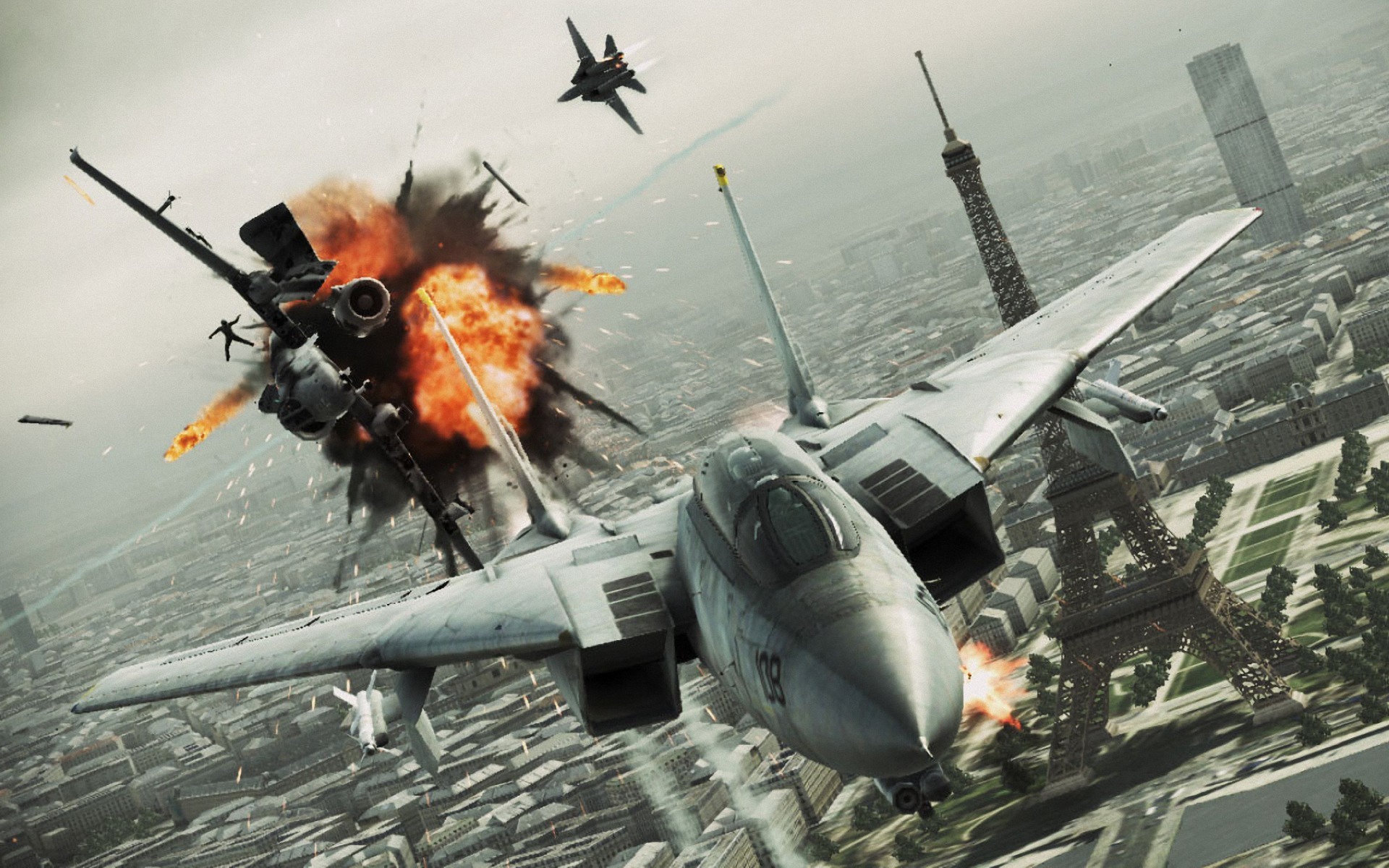
Cinema and aviation were born almost side by side, each emerging at the turn of the twentieth century and capturing the public imagination in remarkably similar ways. As humans first learned to leave the ground and challenge gravity, filmmakers were discovering how to tell stories through moving images. It is hardly surprising that airplanes, pilots, and the promise of flight became recurring subjects on the silver screen. Aviation films have long served as windows into moments of technical triumph, historical upheaval, and personal courage, while also providing spectacle, tension, and, at times, pure entertainment.
Some aviation movies focus on landmark achievements that reshaped history, documenting the bravery of test pilots, astronauts, and wartime crews who operated at the edge of human capability. Others explore the psychological pressure faced by airmen, where every mission carries the risk of failure or death. There are also films that approach aviation with humor or nostalgia, reminding audiences that flying is not only about danger and heroism, but also about passion, obsession, and wonder. Taken together, these films form a unique cinematic genre that reflects both humanity’s fear of the skies and its enduring desire to conquer them.
Below is a carefully chosen selection of films that represent the very best aviation has offered to cinema, spanning different eras, styles, and perspectives, while all remaining grounded in the fascination of flight.
The Right Stuff (1983)
Based on Tom Wolfe’s influential book, this film traces the origins of the United States’ journey into manned spaceflight, beginning well before astronauts ever rode rockets into orbit. It opens with the dangerous world of experimental test pilots, most notably Chuck Yeager, who famously broke the sound barrier in the rocket-powered X-1 aircraft. These early scenes establish the tone of the film: flight is presented not as glamour, but as a calculated dance with risk.
As the story progresses, the focus shifts to the Mercury Project and the group of military pilots selected to become America’s first astronauts. The film captures both the technical challenges of early spaceflight and the intense media attention surrounding these men, who were transformed into national heroes almost overnight. Behind the public image, however, lay constant pressure, professional rivalry, and personal sacrifice.
What sets this film apart is its balance between large-scale historical narrative and intimate human moments. It treats aviation and space exploration as extensions of a uniquely American drive to push limits, while never ignoring the costs paid by those who take part. Its reputation as a classic is reinforced by its attention to detail, strong performances, and a deep respect for the era it portrays.
Wings (1927)
Set during the First World War, this silent film established many of the visual and technical standards that later aviation movies would follow. At a time when aerial cinematography was still in its infancy, the filmmakers achieved an unprecedented level of realism in flight scenes and dogfights. Aircraft maneuver through the sky with a sense of weight and danger that remains impressive even by modern standards.
The production itself was a massive undertaking. Hundreds of pilots participated in filming, including personnel from the U.S. Army Air Corps, and the director was an experienced aviator who understood the mechanics and risks of flying firsthand. This knowledge translated directly onto the screen, lending authenticity to scenes that might otherwise have felt staged or artificial.
Beyond its technical achievements, the film also tells a personal story of friendship, rivalry, and romance shaped by the chaos of war. The emotional stakes on the ground are mirrored in the perilous battles in the air, reinforcing the idea that aviation, especially in wartime, is inseparable from human consequence. Its recognition at the Academy Awards cemented its place in film history and confirmed aviation as a powerful cinematic subject.
Top Gun (1986)
Few aviation films have left a cultural footprint as large as this one. From its iconic soundtrack to its stylized aerial sequences, the film became a defining product of its decade. Set at the U.S. Navy’s elite fighter weapons school, it follows a group of highly skilled pilots competing to prove themselves as the best of the best.
At the center of the story are two contrasting personalities: Maverick, a talented but reckless pilot, and Iceman, his disciplined and controlled rival. Their competition unfolds both in the cockpit and on the ground, framed by intense training exercises that showcase high-performance jet aircraft at their limits. The flying sequences, shot with unprecedented access to military hardware, helped set a new standard for realism and excitement.
Beyond entertainment, the film had a tangible impact on public perception of military aviation. Reports of increased naval aviation recruitment following its release highlighted how powerfully cinema can influence real-world attitudes toward flight. Love it or hate it, the film remains a landmark example of how aviation can be transformed into pure spectacle without losing its connection to real aircraft and real pilots.
The High and the Mighty (1954)
This early aviation thriller centers on a commercial airliner facing disaster during a routine trans-Pacific flight. When mechanical trouble threatens the aircraft, responsibility falls on a troubled co-pilot who must overcome his personal failures to guide the crew and passengers to safety. The confined setting of the aircraft cabin heightens tension, turning technical problems into emotional drama.
The film explores themes of fear, responsibility, and redemption, using aviation as the stage upon which human character is tested. Long before modern disaster films became common, it demonstrated how flight could serve as a powerful narrative device, where every decision has immediate and irreversible consequences.
Its influence can be seen in countless later movies that follow similar formulas, proving that aviation thrillers do not require combat or speed to be compelling. Sometimes, the most gripping stories unfold at cruising altitude with nowhere to escape.
The Dam Busters (1955)
Based on real events from the Second World War, this film tells the story of an innovative and highly dangerous bombing operation designed to cripple German infrastructure. Central to the plot is the development of a unique weapon and the bomber crews tasked with delivering it under extremely difficult conditions.
The film places equal emphasis on scientific ingenuity and operational bravery. Viewers are shown how technical problem-solving and precise flying were just as critical as courage in achieving mission success. The low-level flight sequences convey the immense skill required to operate heavy bombers under fire while maintaining exact speed and altitude.
Rather than glorifying war, the film presents aviation as a tool shaped by necessity and innovation. Its careful attention to historical detail and restrained storytelling have earned it lasting respect as one of the most serious and accurate portrayals of wartime aviation.
One Six Right (2005)
This documentary shifts focus away from military or commercial spectacle and toward the everyday world of general aviation. Centered on the history of Van Nuys Airport in Southern California, it tells a broader story about local airports as cultural and economic lifelines rather than mere transportation hubs.
Through interviews with pilots, air traffic controllers, historians, and enthusiasts, the film captures the passion that drives people to fly even when there is no fame or fortune involved. Aerial footage and a carefully composed musical score reinforce the emotional connection between aviators and the places they call home.
By highlighting the often-overlooked role of local airports, the film argues that aviation is not only about cutting-edge technology or global travel. It is also about community, tradition, and the simple joy of leaving the ground under one’s own control.
Memphis Belle (1990)
This film offers a grounded and human portrayal of bomber crews during the Second World War, focusing on the final mission of a B-17 Flying Fortress and its exhausted crew. Rather than presenting pilots as untouchable heroes, the story emphasizes fear, fatigue, and the psychological toll of repeated combat missions over enemy territory. Each crew member carries private doubts and personal motivations, all sharpened by the knowledge that one mistake could be fatal.
The aircraft itself is treated almost as a living presence. Tight interior shots, rattling metal, and engine noise reinforce how vulnerable these machines were despite their size and firepower. The film carefully reconstructs period aircraft, flight procedures, and aerial combat tactics, creating a convincing sense of authenticity without overwhelming the viewer with technical jargon.
What makes this movie resonate is its restraint. The drama grows naturally from character interaction and situational pressure rather than exaggerated action. Aviation here becomes a test of endurance, teamwork, and emotional resilience, reflecting the reality faced by thousands of aircrews whose stories rarely reached the headlines.
Twelve O’Clock High (1949)
Often cited as one of the most psychologically insightful aviation films ever made, this story explores leadership under extreme pressure within a U.S. Army Air Forces bomber group. Rather than focusing solely on missions, the narrative examines command responsibility and the emotional cost of sending men into danger day after day.
The central character is a new group commander tasked with restoring discipline and morale in a unit worn down by heavy losses. His strict approach initially creates resentment, but over time reveals the burden carried by those responsible for life-and-death decisions. Aviation serves as the environment where leadership is tested, not just through flying skill, but through moral resolve and emotional control.
The film’s influence extends beyond cinema. It has been studied in military academies and leadership courses for its nuanced portrayal of command psychology. Its depiction of aviation avoids spectacle for its own sake, instead showing how the pressure of flight operations shapes behavior and judgment at every level.
Flight (2012)
This modern aviation drama approaches flight from an unexpected angle, using an aircraft emergency as the starting point rather than the climax. The opening sequence features a commercial airliner suffering a catastrophic mechanical failure, followed by an unconventional maneuver that saves most passengers. The scene is intense, technically convincing, and deeply unsettling.
After the crash, the story shifts focus to the pilot’s personal life and the investigation that follows. Aviation becomes a lens through which issues of responsibility, addiction, and public perception are examined. The cockpit, usually a place of authority and control, is reframed as a space where human weakness can have enormous consequences.
The film stands out for refusing simple answers. It neither glorifies nor condemns its protagonist outright. Instead, it asks difficult questions about professionalism, trust, and the standards expected of those who operate complex machines carrying hundreds of lives. In doing so, it brings aviation drama firmly into the modern era.
The Aviator (2004)
This biographical film traces the life of Howard Hughes, one of the most complex figures in aviation history. Hughes is portrayed as both a visionary innovator and a deeply troubled individual, driven by ambition and obsession in equal measure. His work as an aircraft designer, test pilot, and airline owner reshaped the industry during a critical period of technological change.
The film pays close attention to the aircraft themselves, from experimental racers to massive flying boats. Test flights are shown as tense, uncertain events where engineering theory meets physical reality. These scenes highlight how progress in aviation often comes at significant personal and financial cost.
Beyond technology, the film explores how aviation innovation intersects with business, politics, and mental health. Hughes’s relentless pursuit of perfection mirrors the broader human drive to conquer the skies, while also revealing the personal toll such ambition can take.
Strategic Air Command (1955)
Set during the early years of the Cold War, this film offers a rare cinematic look at long-range bomber operations and nuclear deterrence strategy. It follows a professional baseball player recalled to active duty as an Air Force pilot, reintroducing him to a rapidly evolving military aviation landscape.
The story reflects the transitional nature of aviation at the time, as propeller-driven aircraft gave way to jet-powered bombers capable of intercontinental missions. Flying sequences emphasize precision, endurance, and the constant readiness required in an era defined by geopolitical tension.
While the film carries the patriotic tone of its time, it also captures the seriousness of strategic aviation. The crews depicted are not thrill-seekers but professionals tasked with maintaining a fragile balance of power. Aviation here is presented as a deterrent force, shaping global politics without ever firing a shot.
Catch-22 (1970)
This darkly satirical take on wartime aviation offers a sharp contrast to more traditional combat films. Set within a bomber squadron during the Second World War, it uses absurdity and repetition to convey the psychological strain of endless missions and illogical bureaucracy.
Aircraft and flying are ever-present, but often framed as routine rather than heroic. Missions blur together, losses accumulate quietly, and the rules governing flight assignments seem designed to trap airmen in a cycle with no escape. Aviation becomes both a literal and symbolic prison, representing the loss of control experienced by those caught in institutional systems.
The film’s unconventional tone challenges the romantic image of military aviation. By stripping away glamour, it exposes the mental exhaustion that accompanies prolonged exposure to risk, offering a different but equally valid perspective on life in the air.
Airplane! (1980)
At first glance, this film seems completely out of place in any serious discussion of aviation cinema, yet its connection to flying is far deeper than pure parody. Set almost entirely aboard a commercial airliner, the movie uses the structure and tension of classic aviation disaster films as the backbone for its relentless humor. Every cockpit exchange, cabin announcement, and emergency procedure is rooted in recognizable aviation scenarios, even as they are twisted into absurdity.
What makes the film especially relevant to aviation culture is how closely it mirrors the visual language of real airline operations from the era. The cockpit layout, crew coordination, radio chatter, and passenger behavior all feel authentic enough that the jokes land harder precisely because the setting is believable. Pilots, flight attendants, and air traffic control are exaggerated, but never completely detached from reality.
Beyond comedy, the film reflects how aviation had become a shared cultural experience by the late twentieth century. Flying was no longer exotic; it was familiar enough to be mocked. In that sense, the movie captures a turning point in aviation history, when air travel had fully entered everyday life and popular imagination.
Flying the Feathered Edge: The Bob Hoover Project (2014)
This documentary focuses on one of aviation’s most respected yet often overlooked figures: Bob Hoover. A combat pilot, test pilot, and airshow legend, Hoover embodied a rare blend of technical mastery and intuitive flying skill. The film traces his life from wartime experiences through decades of experimental flying and public demonstration.
The documentary stands out for how it communicates the art of flying rather than just the mechanics. Hoover’s demonstrations, including engine-off aerobatics and precision landings, are treated as expressions of deep aerodynamic understanding rather than mere spectacle. Interviews with fellow pilots and engineers reinforce the idea that Hoover represented a level of airmanship that cannot be taught through manuals alone.
In aviation cinema, this film occupies a special place because it bridges history, education, and inspiration. It does not rely on dramatic reenactments or exaggerated storytelling. Instead, it allows the aircraft, the physics of flight, and the pilot’s philosophy to speak for themselves, making it essential viewing for anyone interested in what flying looks like at its highest level.
Tora! Tora! Tora! (1970)
This film offers one of the most meticulous reconstructions of an aviation-centered military event ever put on screen. Focusing on the attack on Pearl Harbor, it tells the story from both Japanese and American perspectives, emphasizing preparation, intelligence failures, and execution rather than emotional dramatization.
Aviation is central to every phase of the narrative. Aircraft are not treated as background props but as strategic tools whose range, payload, and timing determine the course of events. The film pays close attention to formation flying, carrier operations, and the coordination required to launch a complex aerial attack across vast distances.
What distinguishes this film from later portrayals of the same event is its restraint. There is little romanticism or personal hero narrative. Instead, aviation is shown as an extension of planning, doctrine, and institutional momentum. That approach makes the film particularly valuable as an aviation study, illustrating how airpower reshaped warfare long before the jet age.
Apollo 13 (1995)
Although centered on spaceflight, this film is deeply rooted in aviation culture and mindset. The astronauts, engineers, and flight controllers are all products of a test pilot tradition that grew directly out of military and experimental aviation. The crisis depicted in the film is solved not through heroics, but through disciplined procedure, systems knowledge, and calm decision-making under pressure.
The film captures the continuity between high-performance aircraft and spacecraft. Cockpit logic, checklists, redundancy planning, and crew coordination feel familiar to anyone with an aviation background. Even in orbit, the story unfolds like an extended emergency diversion, with fuel limits, power constraints, and navigation challenges replacing altitude and airspeed.
As an aviation-related film, its strength lies in showing how flying principles extend beyond the atmosphere. It reinforces the idea that aerospace progress is cumulative, built on generations of pilots and engineers who learned to manage risk in unforgiving environments.
The Spirit of St. Louis (1957)
This biographical film centers on Charles Lindbergh’s historic solo flight across the Atlantic, an event that transformed aviation from a dangerous experiment into a credible mode of long-distance travel. Much of the film takes place inside a cramped cockpit, emphasizing isolation, endurance, and mental resilience rather than action.
The aircraft itself is portrayed as both tool and adversary. Limited visibility, fuel anxiety, navigation uncertainty, and physical exhaustion dominate the narrative. The film conveys how early aviators relied on instinct, dead reckoning, and sheer determination in an era before modern instruments and support systems.
What makes the film significant is its respect for the quiet side of aviation. There are no battles, no crowds, and no rapid cuts. Flight is presented as a solitary negotiation between pilot, machine, and environment. That perspective remains rare in aviation cinema and gives the film lasting relevance.
Hell’s Angels (1930)
This early aviation epic represents one of the most ambitious and technically daring film productions of its time. Produced during the transition from silent films to sound, it pushed the limits of aerial cinematography using real aircraft, real pilots, and real risks.
The flying sequences remain striking because they were filmed without the safety nets of modern technology. Aircraft collide, dive, and maneuver in close proximity, creating a visceral sense of danger that cannot be replicated digitally. Many of the pilots involved were veterans of wartime aviation, bringing real experience to the screen.
Beyond spectacle, the film documents a formative moment in aviation history, when flight was still new enough to be genuinely terrifying. It captures the raw, mechanical nature of early aircraft and the bravery required to fly them, making it not just a movie, but a historical artifact of aviation’s early years.
Sully (2016)
This film focuses on a real-world aviation incident in which a commercial airliner was safely landed on a river after losing engine power shortly after takeoff. Rather than dramatizing the landing alone, the narrative explores the investigation that followed and the intense scrutiny placed on the pilot’s decisions.
Flight is portrayed as a discipline governed by training, instinct, and experience. The emergency sequence emphasizes how quickly routine operations can turn critical, and how little time pilots have to analyze options. The aftermath highlights the pressure faced by aviation professionals even when outcomes are successful.
By examining both the technical and human dimensions of flight, the film reinforces the idea that aviation safety depends not only on machines, but on judgment developed through years of experience.
Why Aviation Films Continue to Matter
Aviation films endure because flight itself sits at the intersection of technology, risk, and human ambition. Whether set in wartime, commercial cockpits, experimental hangars, or small local airports, these stories reflect a fundamental desire to understand what it means to leave the ground and accept the consequences.
The best aviation movies do not rely solely on spectacle. They explore responsibility, fear, innovation, discipline, and obsession. As long as aircraft continue to evolve and humans continue to fly them, cinema will return to the sky as a place where character is revealed and limits are tested.