

Attack helicopters sit at the edge of modern warfare—fast, aggressive machines built to hunt tanks, support ground troops, and dominate hostile terrain with precision firepower. While the world has produced dozens of gunships over the years, only a select group has evolved into true battlefield titans, combining extreme maneuverability with advanced armor, guided-missile systems, digital targeting suites, and the ability to fight in nearly any weather or lighting condition. These helicopters are not simply airborne weapons; they act as mobile strike platforms, reconnaissance units, and frontline guardians that can turn the tide of a conflict in minutes.
What makes a helicopter “advanced” is never just raw speed or the size of its cannon. The best machines balance firepower with survivability, agility with endurance, and technology with real combat practicality. Nations invest billions into developing gunships that can withstand ground fire, fly low through complex terrain, and carry missiles capable of destroying tanks from miles away. As a result, each aircraft on this list represents years of engineering refinement and countless battlefield lessons.
In the following ranking, we break down the ten most advanced attack helicopters currently in service—aircraft that stand out due to their lethal weapon systems, cutting-edge avionics, sophisticated protection measures, and impressive real-world performance. These helicopters are powerful, heavily armed, and designed to survive missions where anything less than perfection could mean disaster. Whether developed for open-desert operations, dense urban warfare, or rugged forest combat, these machines embody the most formidable rotary-wing technology available today.
10. Mil Mi-24 Hind (Russia)

The Mi-24 Hind is one of the most iconic military helicopters ever created—a massive, intimidating gunship that combines transport ability with heavy attack firepower. Its rugged frame, armored cockpit, and ability to lift troops while still providing overwhelming weapon support made it unlike anything NATO forces had ever seen when it first appeared. Even though production ended in 1991, it remains active in dozens of countries because its design is tough, reliable, and combat-proven in conflicts across Africa, Asia, and Eastern Europe.
In terms of armament, the Hind carries a 23-mm twin-barrel cannon capable of shredding armored vehicles, along with 9M17P Skorpion (AT-2 Swatter) and 9M114 Shturm (AT-6 Spiral) anti-tank missiles that give it considerable punch against enemy armor columns. Its ability to operate in harsh conditions with minimal maintenance has kept it relevant far longer than many expected. Over time, various nations have upgraded avionics, targeting systems, and missile packages to keep the Hind lethal on modern battlefields, making it a living example of durability meeting firepower.
9. Boeing AH-64D Longbow Apache (USA)
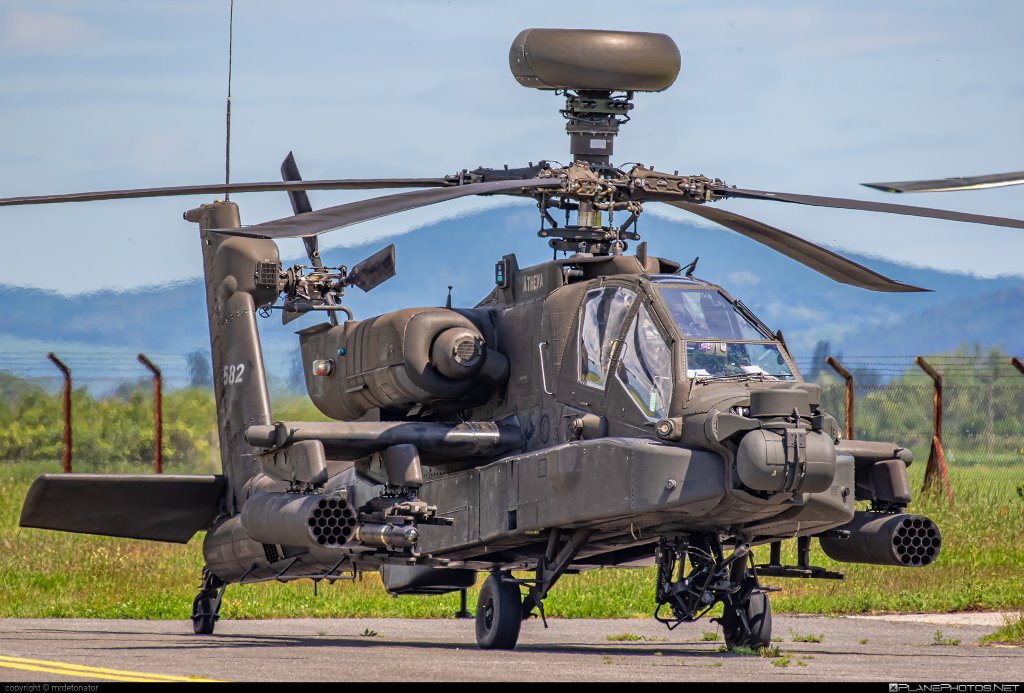
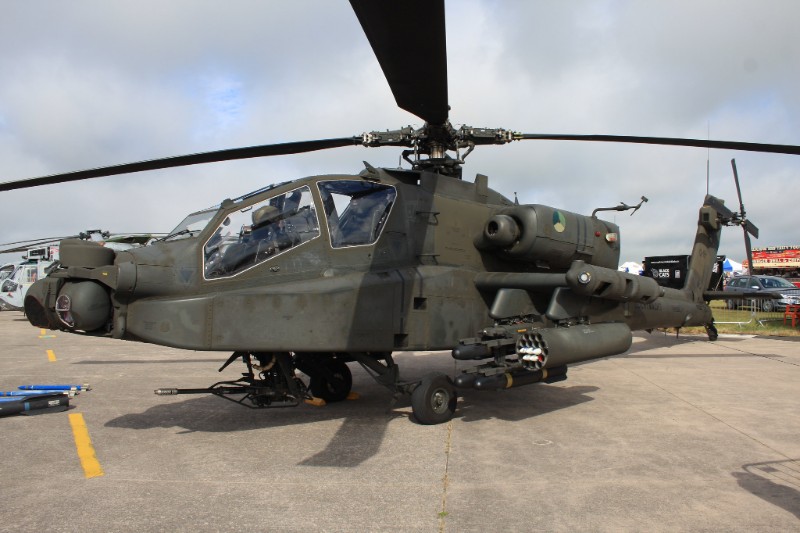
The AH-64 Apache has become synonymous with American attack helicopter doctrine. Designed as a hunter-killer platform, the Longbow variant refines the original concept with advanced radars, improved sensors, and enhanced survivability technology. Its mast-mounted Longbow radar allows it to detect and lock onto targets without exposing the aircraft fully, giving pilots a tactical advantage in both open terrain and urban combat scenarios.
Armed with a 30-mm M230 chain gun, the Apache carries up to sixteen AGM-114 Hellfire missiles, making it one of the most effective tank-destroyers ever produced. It can also be configured with Stinger or Sidewinder air-to-air missiles, allowing it to engage drones or enemy aircraft if necessary. The Apache’s digital flight systems, battlefield networking capabilities, and hardened armor make it a nightmare for ground forces facing it. Although newer variants have appeared, the AH-64D Longbow still maintains a strong reputation as an advanced, reliable, and exceptionally deadly platform.
8. Agusta A129 Mangusta (Italy)
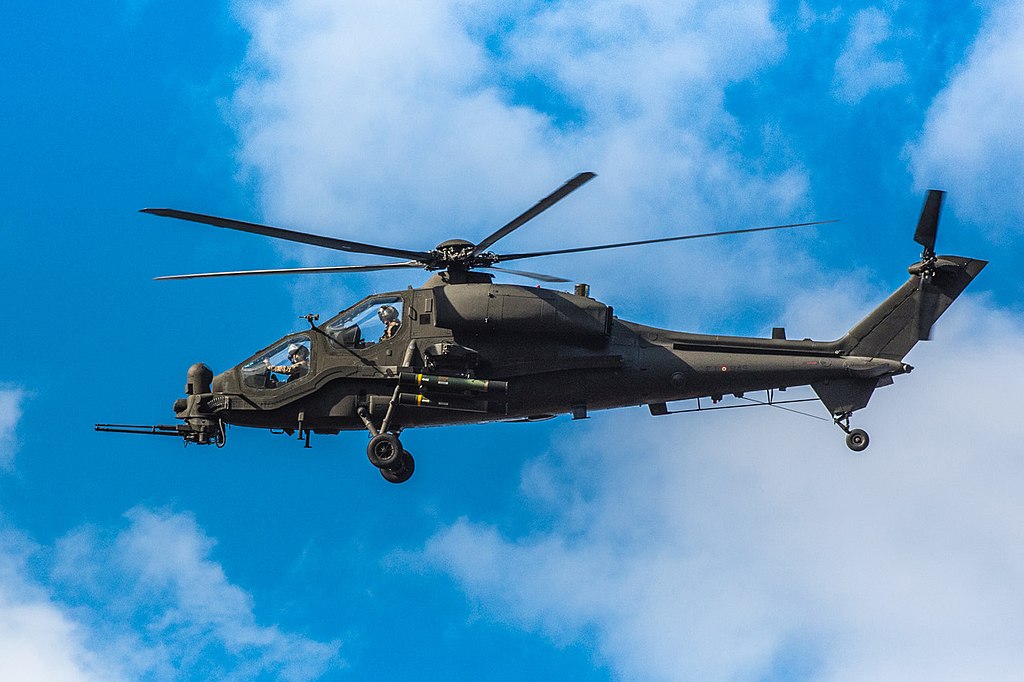
The A129 Mangusta was the first dedicated attack helicopter developed entirely in Western Europe, built with a balanced approach that emphasizes speed, agility, and precision. It is lighter than many competitors, but what it lacks in raw size, it makes up for with maneuverability and modern targeting systems designed for rapid strike missions. Its two-seat, twin-engine layout allows for excellent visibility and coordination between pilot and gunner, making it highly efficient in fast-moving battlefield operations.
Equipped with a 20-mm cannon and the ability to carry TOW-2A anti-tank missiles, 12.7-mm gun pods, and various rocket configurations, the Mangusta is versatile enough to take on armor, soft targets, and fortified positions. Its lightweight frame also helps reduce fuel consumption, giving it a surprisingly long operational range for its size. Over the years, Italy has implemented upgrades in avionics, night-operation systems, and missile compatibility, ensuring the Mangusta remains a competitive frontline helicopter.
7. Denel AH-2 Rooivalk (South Africa)
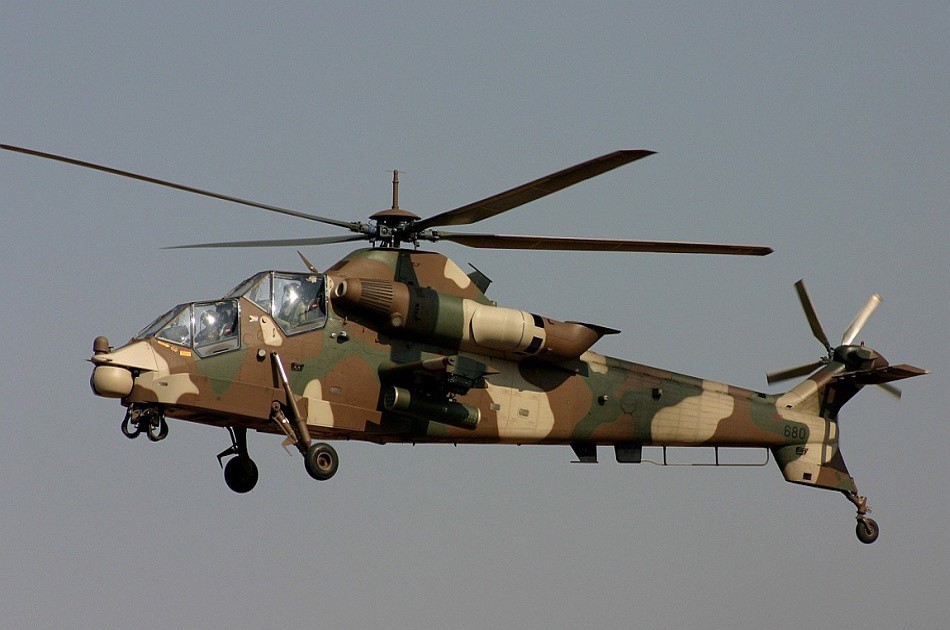
South Africa’s AH-2 Rooivalk stands out as a uniquely engineered attack helicopter designed specifically for African battlefield conditions—dust, heat, long distances, and rugged terrain. Built with a focus on reliability and long-term durability, the Rooivalk is capable of performing deep-strike missions, escort operations, and anti-armor roles with a high degree of autonomy. Its armored cockpit and redundant systems make it highly survivable in environments where maintenance resources may be limited.
Armed with a 20-mm cannon and four launcher sets capable of deploying TOW or Mokopa anti-tank missiles, the Rooivalk delivers formidable striking power. It can also carry 70-mm rockets for area suppression or close air support. What makes this helicopter especially impressive is its stability and smooth handling—essential when engaging moving targets or operating at low altitude. Though only operated by South Africa, the Rooivalk has proven itself during peacekeeping missions and real-world combat scenarios, earning respect as one of the most robust attack helicopters ever produced.
6. Z-10 (China)
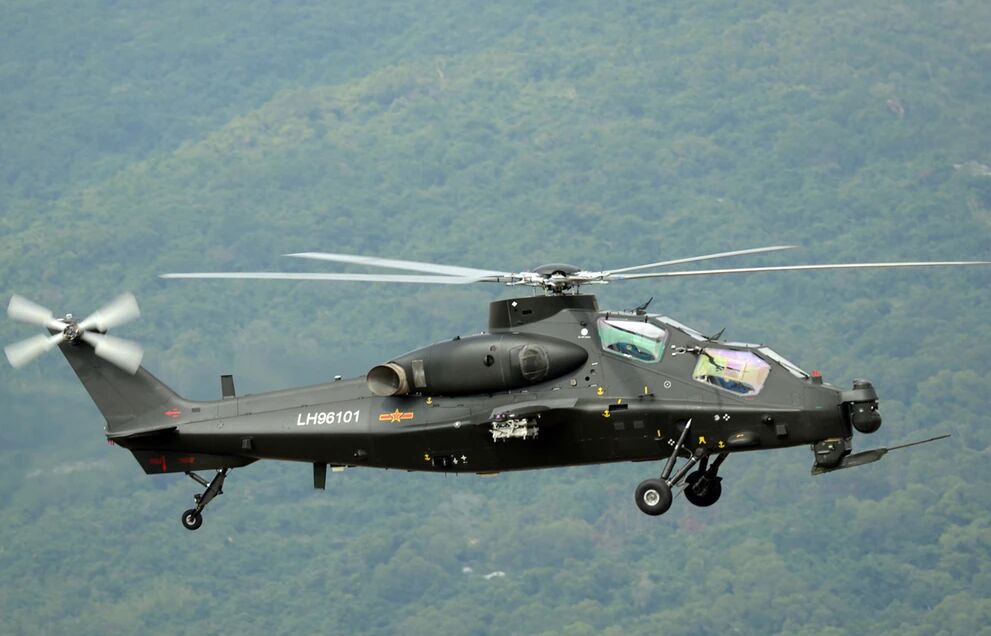
China’s Z-10 represents the country’s first fully dedicated modern attack helicopter, designed with clear influence from Western and Russian models but built with China’s own rapidly developing aerospace technology. Its narrow fuselage, stepped tandem cockpit, and streamlined body give it a sleek, aggressive look intended for high-performance maneuvering in dense combat areas. The Z-10 is optimized for anti-armor missions while remaining flexible enough for escort roles and direct fire support.
Its 30-mm cannon provides a strong primary weapon, supplemented by HJ-9 and HJ-10 anti-tank missiles that offer long-range precision attack capability. The inclusion of TY-90 air-to-air missiles gives it defensive strength against enemy helicopters or drones, while unguided rocket pods allow for fast strikes on infantry or light vehicles. With ongoing upgrades to sensors, engines, and defensive electronics, the Z-10 continues to evolve and gain sophistication as China expands its military aviation capabilities.
5. Eurocopter Tiger (France / Germany)
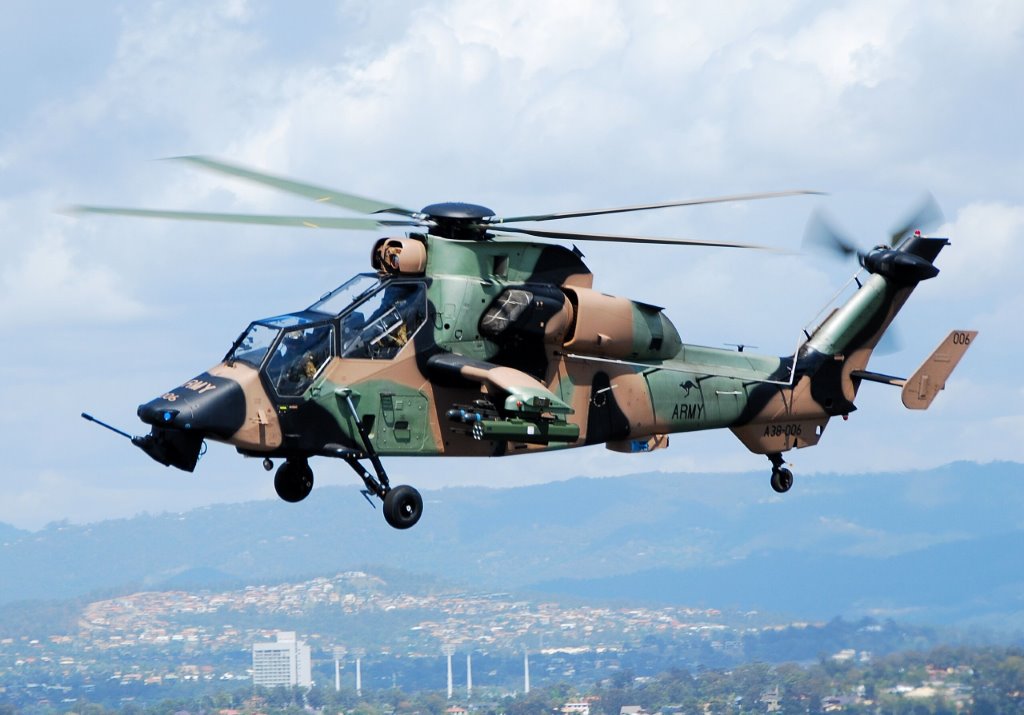
The Eurocopter Tiger is a product of European engineering collaboration, blending advanced composite materials, modern avionics, and high battlefield survivability into one agile platform. Known for its impressive maneuverability, the Tiger performs exceptionally in both high-speed forward flight and tight, low-altitude operations. Designed initially for NATO missions, it has been adapted to handle anti-tank missions, escort duties, and close air support in various conflict zones.
Armed with a 30-mm cannon and a choice of HOT 2, HOT 3, or Trigat anti-tank missiles, the Tiger can also mount Stinger or Mistral air-to-air missiles, as well as 68-mm rockets or gun pods. Its modular configuration means different nations customize the Tiger for their own mission needs. Sophisticated protection systems, lightweight materials, and advanced sensors make it one of the finest European attack helicopters ever built.
4. Mil Mi-28 Havoc (Russia)
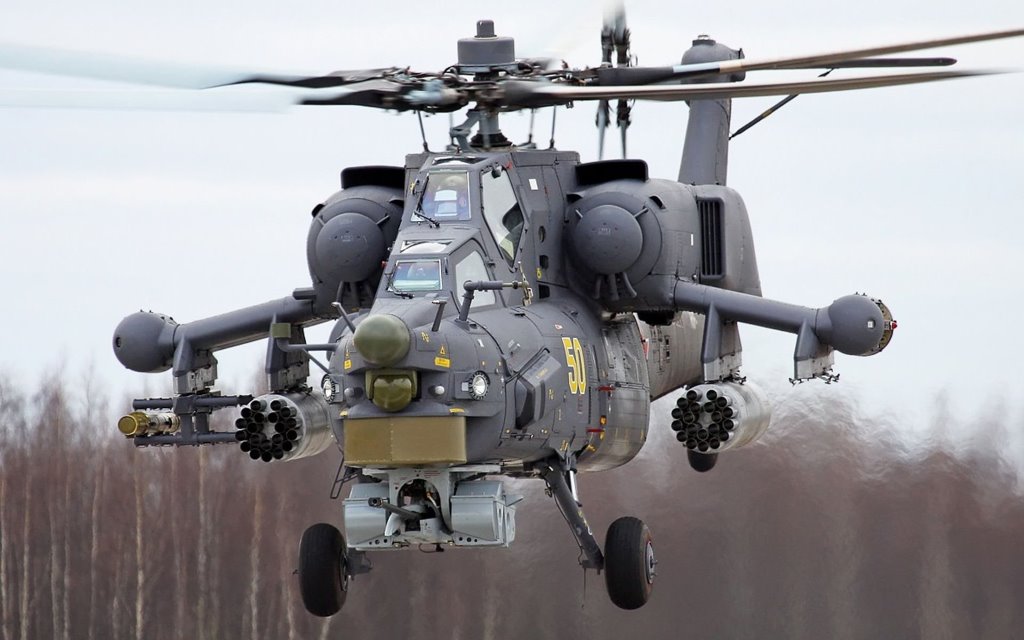
The Mi-28 Havoc is Russia’s answer to the need for a fully dedicated, heavily armored attack helicopter with no transport capability—pure offensive design. Built to withstand harsh weather, darkness, and battlefield chaos, the Havoc features an armored cockpit, advanced anti-armor weaponry, and a flight system engineered for resilience in the most demanding missions. Its ability to continue flying even after sustaining significant damage makes it particularly feared in ground-combat scenarios.
With a top speed of 320 km/h, the Havoc uses a 30-mm cannon mounted under the chin and carries missiles such as the Shturm-C and Vikhr, giving it a mix of explosive power and long-range precision. Its radar and night-vision systems allow full around-the-clock combat capability. Russia has continued refining the Mi-28 over the years, adding improved avionics and enhanced countermeasure suites to increase survivability.
3. Kamov Ka-52 Hokum-B (Russia)
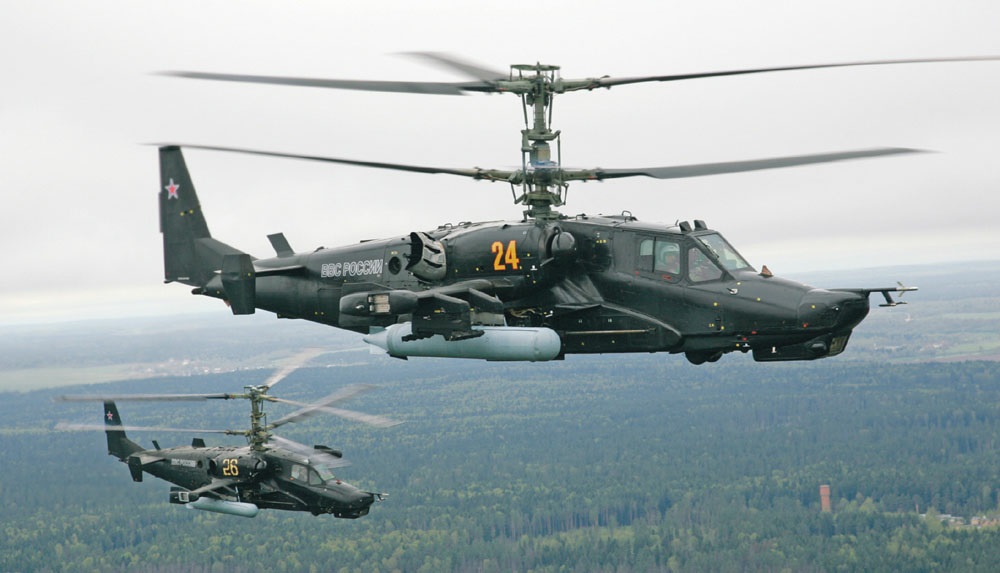
The Ka-52 Hokum-B is one of the most advanced combat helicopters in the world, featuring a distinctive coaxial rotor system that eliminates the need for a tail rotor. This design gives it exceptional agility, tight turning capability, and impressive stability during high-speed maneuvers. The two-seat configuration allows for improved mission coordination, especially during complex strike operations or reconnaissance missions.
Armed with a 30-mm cannon, twelve Vikhr anti-tank missiles, Igla-V air-to-air missiles, and various unguided rocket options, the Ka-52 is versatile and heavily armed. Its advanced threat-detection systems, ejection seats, and armored cabin elevate its survivability significantly. The helicopter’s ability to operate effectively at night, in poor weather, and in electronically contested environments makes it one of Russia’s greatest aviation achievements.
2. Bell AH-1Z Viper (USA)
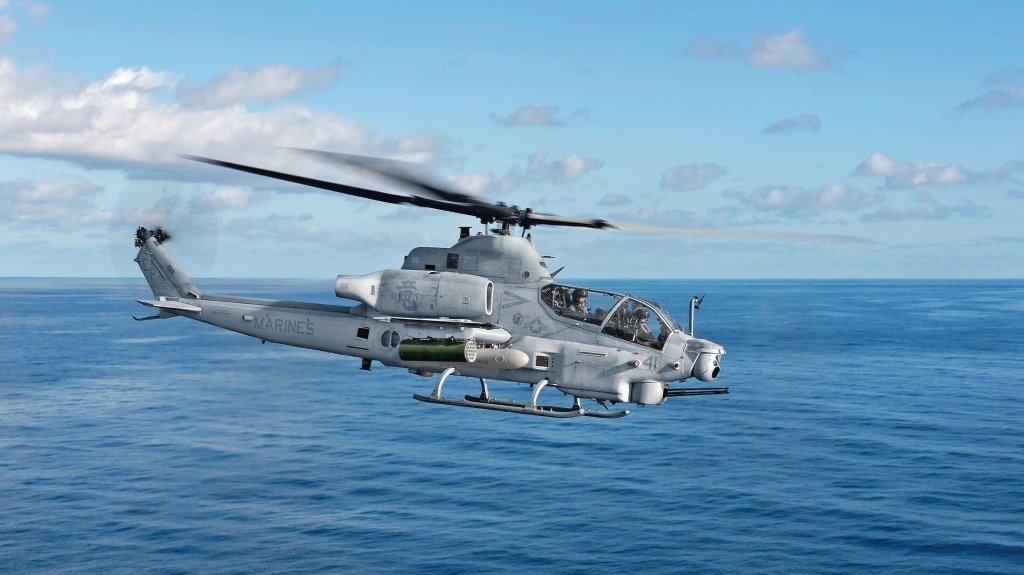
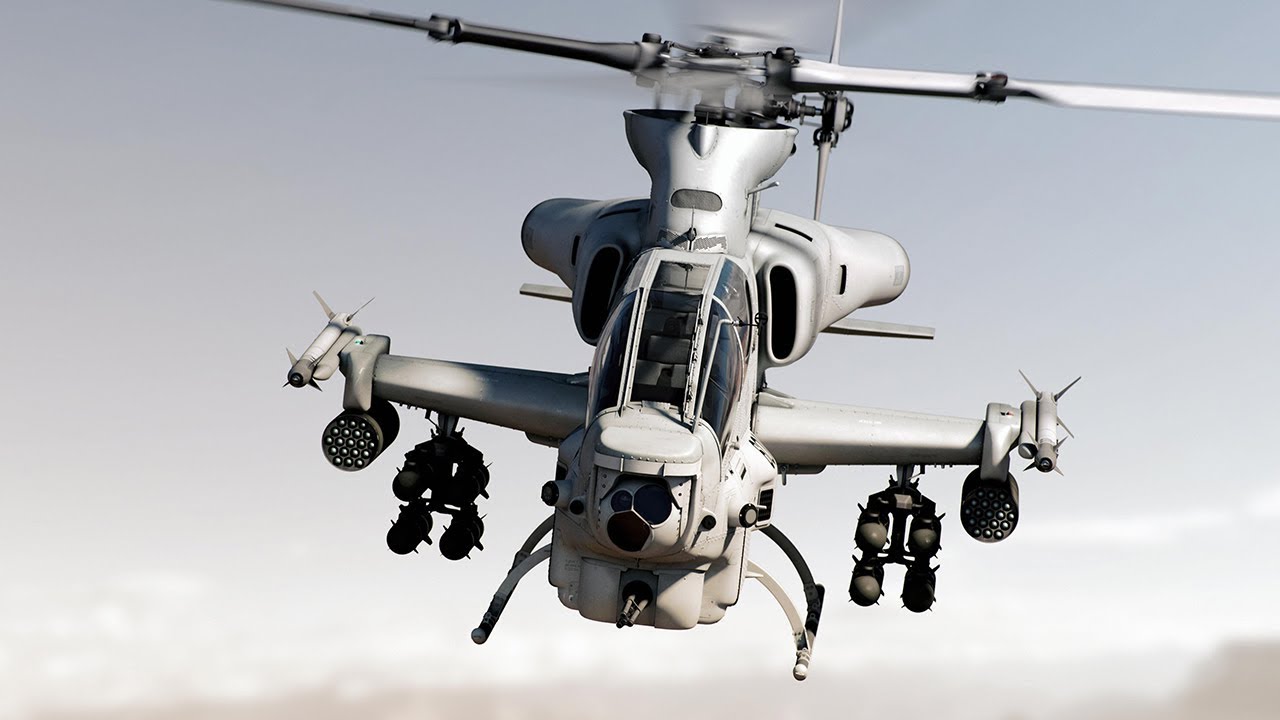
A direct evolution of the legendary Cobra, the AH-1Z Viper is engineered for modern warfare with upgraded targeting systems, exceptional battlefield awareness, and integration with the latest missile technologies. It is the only attack helicopter equipped with a fully integrated air-to-air missile system as a standard capability, giving it an edge against both aerial and ground threats.
Its weapon loadout includes a 20-mm three-barrel cannon with 750 rounds, AGM-114 Hellfire missiles, AGM-114F anti-ship variants, AIM-9 Sidewinder missiles, and an assortment of unguided rockets and free-fall bombs. This versatile arsenal allows the Viper to perform everything from precision strikes to direct combat support. With strong avionics, advanced sensors, and a highly durable frame, the AH-1Z is built to excel in both coastal and land-based missions.
1. AH-64E Apache Guardian (USA)
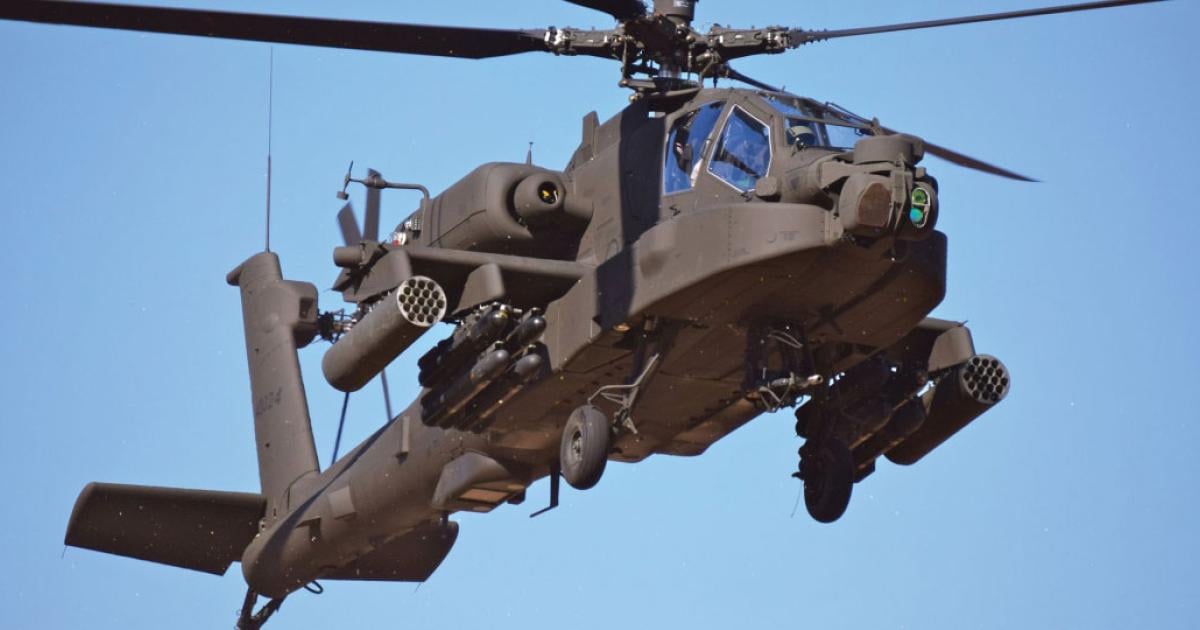
The AH-64E Apache Guardian represents the pinnacle of attack helicopter technology—an upgraded, modernized form of the original Apache concept, integrating cutting-edge avionics, improved engines, and advanced networking systems. This helicopter is designed not only to destroy armor and neutralize threats but also to operate as a command platform capable of coordinating drone support and sharing real-time battlefield data.
With a top speed of 300 km/h, the Apache Guardian wields a 30-mm cannon and carries a devastating mix of Hellfire missiles, Stinger or Sidewinder air-to-air missiles, Sidearm anti-radiation missiles, and Hydra 70 rocket pods. Its sensors allow pilots to detect and engage targets from long distances while staying hidden, giving it unmatched tactical value. Enhanced survivability features, including advanced countermeasures and reinforced armor, ensure the AH-64E remains the world’s most capable and lethal attack helicopter.