

Anti-tank guided missiles were created to give infantry forces the ability to defeat heavily armored vehicles without relying on aircraft, artillery, or large armored platforms. Over time, these weapons evolved from simple wire-guided systems into highly sophisticated precision tools capable of striking from above, operating autonomously after launch, and defeating advanced protective systems found on modern main battle tanks.
The effectiveness of a man-portable anti-tank missile is determined by several critical factors. Range dictates how far an operator can engage a target while remaining concealed. Penetration defines whether the missile can defeat layered armor and reactive defenses. Guidance systems influence survivability, accuracy, and operator exposure. Systems that combine long reach, top-attack profiles, and minimal operator involvement are generally considered the most capable on the modern battlefield.
The following ranking focuses exclusively on infantry-carried anti-tank guided missiles that are already operational and available. Vehicle-mounted, helicopter-launched, and experimental systems are excluded. Emphasis is placed on real-world performance, design philosophy, and battlefield adaptability rather than marketing claims.
So which systems stand at the very top, and what makes them so dangerous against modern armored threats?
Nr.1 MMP (France) – Fifth-Generation Multi-Role Precision Missile
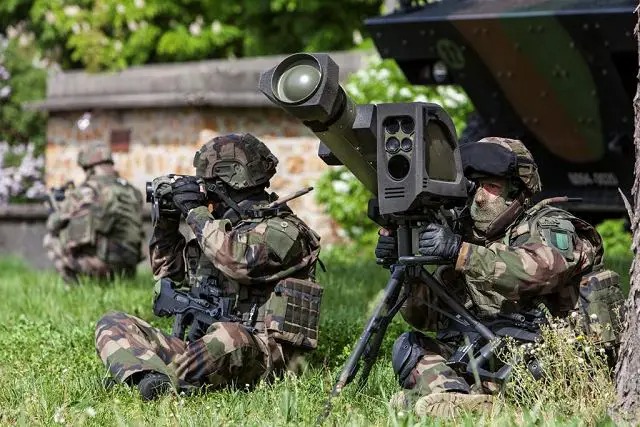
The MMP represents one of the most advanced approaches to infantry anti-armor warfare. Designed as a true fifth-generation system, it was created to address not only tanks, but a wide range of battlefield targets, including fortified positions, hardened structures, and hostile forces operating from cover.
This missile combines a long engagement range with exceptional flexibility. It is capable of engaging targets both within and beyond direct line of sight, allowing operators to strike enemies concealed behind terrain or obstacles. Its tandem shaped-charge warhead is engineered to defeat heavy armor protected by reactive defenses, making it effective against the most modern armored vehicles.
One of the defining features of the MMP is its dual guidance philosophy. While it offers full fire-and-forget capability, the operator can also manually intervene during flight, updating the missile’s path if the tactical situation changes. This balance between automation and human control increases adaptability in complex combat environments.
The system is optimized for infantry use, including launches from enclosed spaces, which is crucial in urban combat. Its modular setup includes a sealed launch tube, a compact fire-control unit with day and night optics, and a lightweight support structure that allows rapid deployment and relocation.
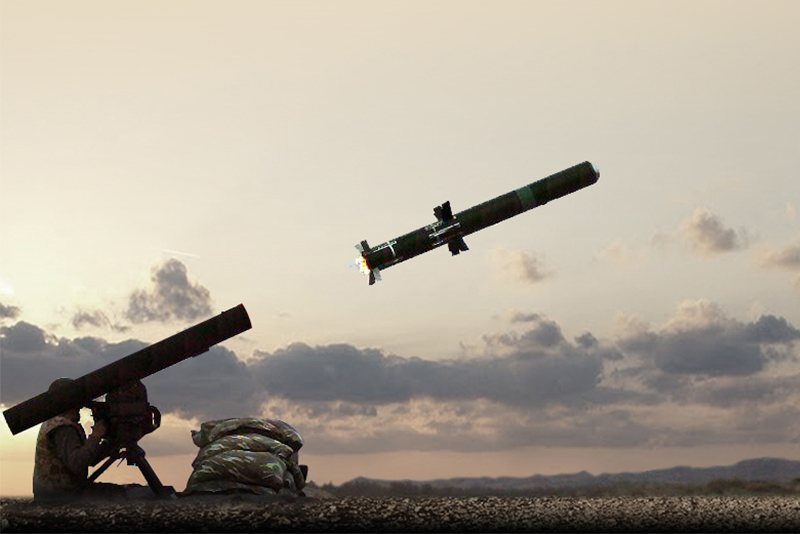
Nr.2 OMTAS (Turkey) – Versatile Medium-Range Armor Killer
The OMTAS is a modern medium-range anti-tank missile designed to give infantry units a powerful yet flexible weapon against armored threats. Developed with an emphasis on precision and adaptability, it bridges the gap between traditional wire-guided missiles and advanced fire-and-forget systems.
This missile is built to defeat main battle tanks protected by explosive reactive armor. Its penetration capability places it firmly among the most dangerous infantry-launched anti-armor weapons currently available. The engagement range allows operators to strike from safe distances while maintaining tactical flexibility.
OMTAS employs infrared guidance, enabling both autonomous fire-and-forget launches and fire-and-update operation. This allows the operator to adjust targeting information mid-flight if needed. The missile also supports both direct-attack and top-attack profiles, making it suitable for engaging a wide variety of targets beyond armored vehicles.
The overall design reflects a focus on modern battlefield realities, where adaptability, precision, and cost-effectiveness are increasingly important alongside raw destructive power.
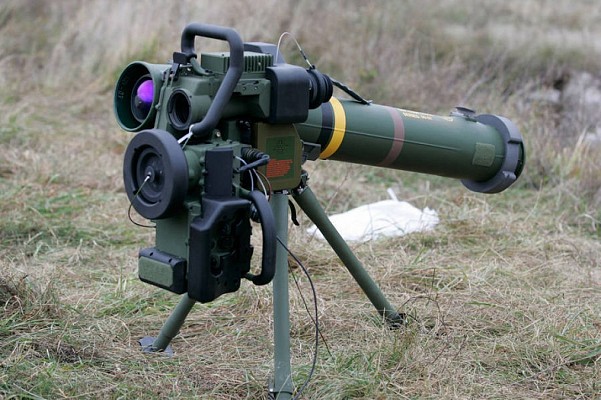
Nr.3 Spike LR2 (Israel) – Long-Range Smart Anti-Armor System
The Spike LR2 is a refined evolution of a widely respected missile family and represents one of the most capable man-portable anti-tank systems available today. Designed for infantry use but adaptable to multiple platforms, it combines extended range with advanced guidance and warhead options.
This missile stands out for its ability to engage targets at distances beyond most infantry-launched systems. When integrated with aerial platforms or external targeting sources, its reach extends even further, enabling coordinated strikes against armored units operating deep within contested areas.
The Spike LR2 uses imaging infrared guidance supported by intelligent tracking algorithms. It can operate in fire-and-forget mode, fire-observe-and-update mode, or receive third-party target data via secure datalink. These options allow it to defeat active protection systems and adapt mid-flight to changes in target movement.
Its tandem shaped-charge warhead is optimized for defeating modern armor, while an alternative multi-purpose warhead configuration allows effective engagement of buildings, bunkers, and light vehicles. Compatibility with earlier launcher systems further enhances its appeal by reducing logistical complexity.

Nr.4 Javelin (United States) – Autonomous Top-Attack Infantry Weapon
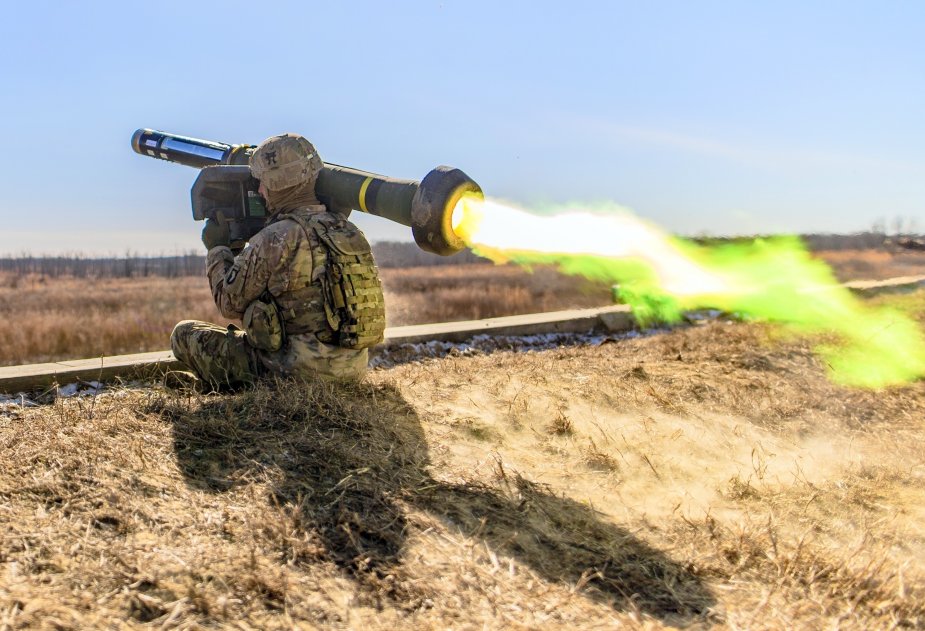
The Javelin is one of the most recognizable man-portable anti-tank missile systems and set a benchmark for modern fire-and-forget capability. Designed to give infantry units the ability to defeat heavily armored targets without prolonged exposure, it emphasizes operator survivability and precision.
This system uses imaging infrared guidance, allowing the missile to lock onto a target before launch and then guide itself autonomously. Once fired, the operator is free to relocate immediately, reducing vulnerability to counterfire. This feature alone significantly changed infantry anti-armor tactics.
The missile supports two engagement profiles. In top-attack mode, it climbs after launch and dives onto the target from above, striking the weakest armor on a tank. In direct-attack mode, it flies straight toward the target, making it effective against bunkers, buildings, weapon crews, and even low-flying helicopters.
Its tandem shaped-charge warhead is specifically engineered to defeat explosive reactive armor before penetrating the base armor underneath. The system is typically operated by a two-person team, though it can be fired by a single operator if necessary. Tripod and vehicle mounting options add further flexibility in static defensive roles.

Nr.5 HJ-12 (China) – Compact Fire-and-Forget Tank Hunter
The HJ-12 is a shoulder-launched anti-tank missile designed to provide infantry with an affordable fire-and-forget capability comparable to Western systems. Its compact form and simplified operation make it particularly suitable for light infantry and rapid-deployment units.
Using imaging infrared guidance, the missile locks onto its target prior to launch and then guides itself during flight. It employs a top-attack trajectory, allowing it to strike armored vehicles where protection is weakest. This approach ensures effectiveness against modern tanks equipped with layered armor systems.
Penetration performance places it firmly among capable anti-armor weapons, while its portability makes it easier to deploy in confined or urban environments. The system emphasizes simplicity, minimizing training requirements and reducing logistical burden.
Beyond the HJ-12 itself, several related systems with similar design philosophy exist, offering variations in seeker sensitivity and warhead configuration. Together, they reflect a broader trend toward compact, autonomous infantry anti-tank weapons.
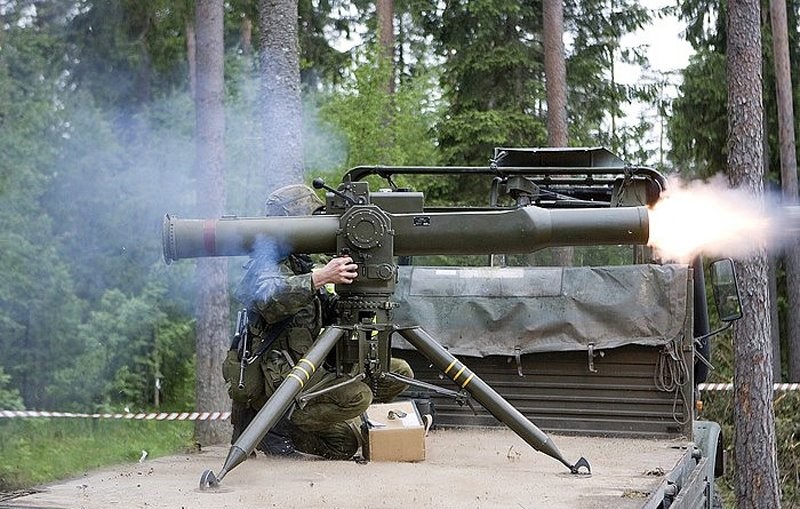
Nr.6 MAPATS (Israel) – Laser-Guided Precision System
The MAPATS is a man-portable anti-tank guided missile designed for flexibility across infantry, vehicle, and aerial platforms. While often visually compared to earlier wire-guided systems, its guidance method sets it apart.
Instead of wire guidance, MAPATS relies on laser beam riding, allowing precise control without the limitations of physical tethers. This makes it less susceptible to wire breakage and enables cleaner engagement in complex terrain.
The missile’s warhead configuration evolved over time, with later versions featuring tandem shaped charges capable of defeating heavy armor protected by reactive defenses. Its effective range allows operators to engage armored targets from stand-off distances while maintaining accuracy.
MAPATS remains a relevant system due to its balance of penetration power, guidance reliability, and adaptability across multiple launch platforms.
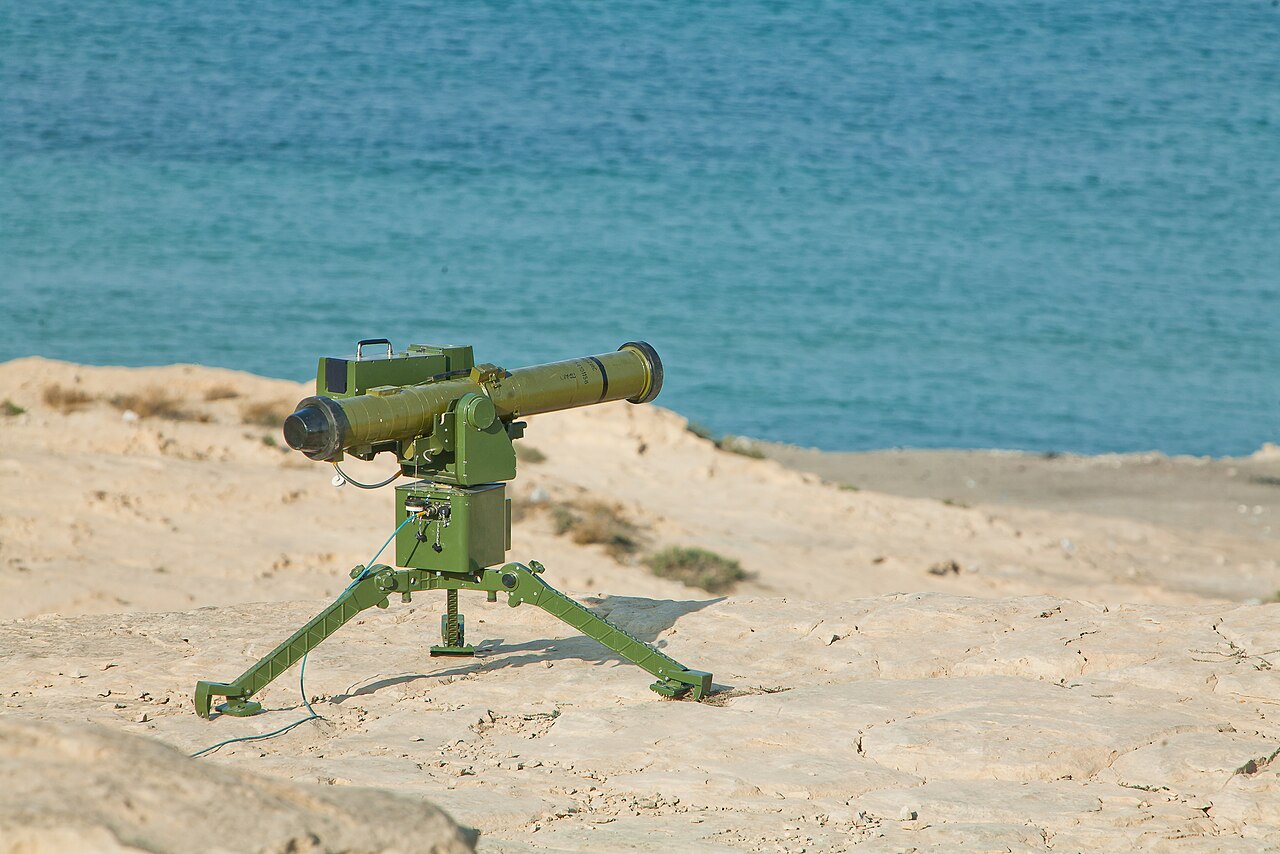
Nr.7 Shershen (Belarus) – Long-Range Laser-Guided Heavy Hitter
The Shershen is a laser-guided anti-tank missile system designed to engage heavily armored vehicles at extended ranges. Based on a proven design lineage, it emphasizes raw penetration and flexibility in missile selection.
The standard missile variant delivers sufficient penetration to defeat modern main battle tanks equipped with reactive armor. Its effective range already surpasses many infantry-launched systems, giving operators the ability to strike from positions beyond typical retaliatory fire.
An alternative, larger-caliber missile further extends engagement distance and penetration capability, making the system particularly dangerous against hardened targets. While night-time effectiveness is reduced compared to daytime operations, the overall system remains formidable in open terrain.
The Shershen reflects a design philosophy that prioritizes long reach and heavy warhead performance, making it especially effective in defensive or ambush roles.
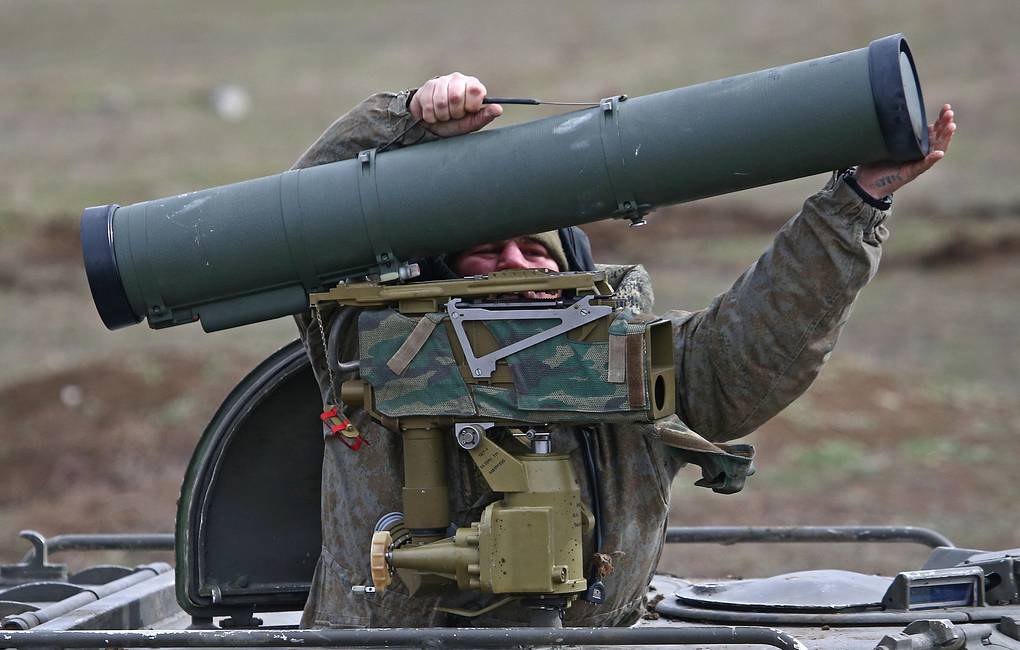
Nr.8 Kornet-M (Russia) – Long-Range Precision With Heavy Warhead
The Kornet-M represents a different design philosophy compared to fire-and-forget systems. Instead of prioritizing autonomous guidance, it focuses on extreme range, raw penetration power, and cost-effectiveness, making it a highly dangerous weapon in the hands of trained operators.
This missile uses laser beam-riding guidance, which requires the operator to keep the target illuminated throughout the flight. While this exposes the firing position longer than autonomous systems, it also makes the missile more resistant to certain countermeasures and electronic interference. The guidance method allows for very accurate long-range engagements when used properly.
One of the Kornet-M’s most defining features is its large-diameter tandem shaped-charge warhead. It was specifically designed to defeat modern tanks equipped with explosive reactive armor, striking with enough force to penetrate deep into the base armor beneath. Few man-portable systems deliver comparable penetration at such distances.
In addition to its anti-armor role, alternative missile variants equipped with thermobaric warheads significantly expand its battlefield utility. These versions are highly effective against fortifications, bunkers, buildings, and entrenched personnel, turning the system into a multi-role precision weapon rather than a tank killer alone.
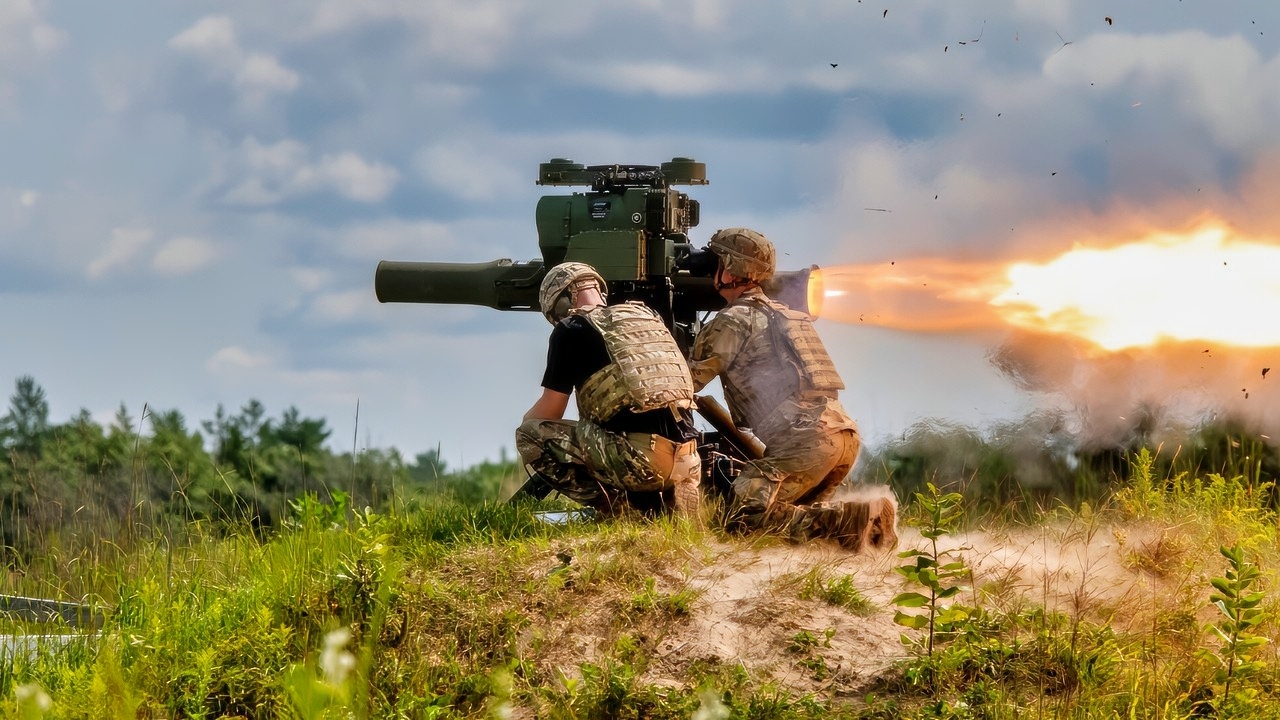
Nr.9 TOW-2 (United States) – Proven Heavy Infantry Anti-Armor System
The TOW-2 is one of the longest-serving and most widely deployed anti-tank missile systems in the world. Despite its age, continuous upgrades have kept it relevant against modern armored threats.
Unlike shoulder-launched systems, the TOW-2 is typically operated from a tripod or vehicle mount, making it heavier and less mobile but significantly more stable and powerful. The system is crew-served, emphasizing coordinated operation and sustained fire rather than rapid relocation.
Multiple missile variants exist within the TOW-2 family, each tailored to specific battlefield roles. Tandem-warhead versions are optimized for defeating tanks protected by reactive armor, while top-attack variants strike from above to exploit thinner turret armor. Specialized bunker-buster missiles further extend the system’s versatility.
Later versions replaced traditional wire guidance with wireless control, improving reliability and engagement flexibility. Thermal imaging sights allow effective use in low-visibility conditions, ensuring the system remains viable in both day and night combat environments.
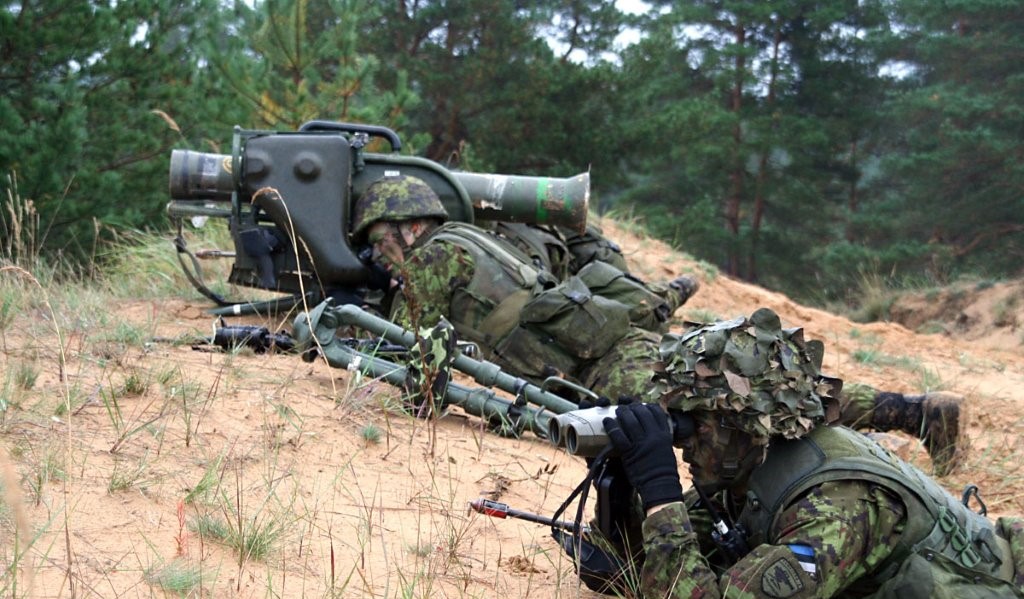
Nr.10 MILAN ER (Multinational) – Modernized Legacy System
The MILAN ER is an evolved version of a long-established anti-tank missile family that has seen widespread global service. Rather than replacing the system entirely, this variant enhances range, penetration, and targeting capability while maintaining compatibility with earlier launch equipment.
This missile remains wire-guided, a method now considered dated compared to autonomous seekers. However, its upgraded launcher incorporates modern thermal imaging, allowing accurate target acquisition under poor visibility and nighttime conditions.
The tandem shaped-charge warhead provides sufficient penetration to defeat heavily armored vehicles equipped with reactive armor, while also offering strong performance against reinforced concrete structures. This makes the system suitable for both anti-armor and anti-fortification roles.
MILAN ER demonstrates how incremental modernization can extend the operational life of legacy systems, offering capable performance without the complexity or cost of newer generation missiles.