
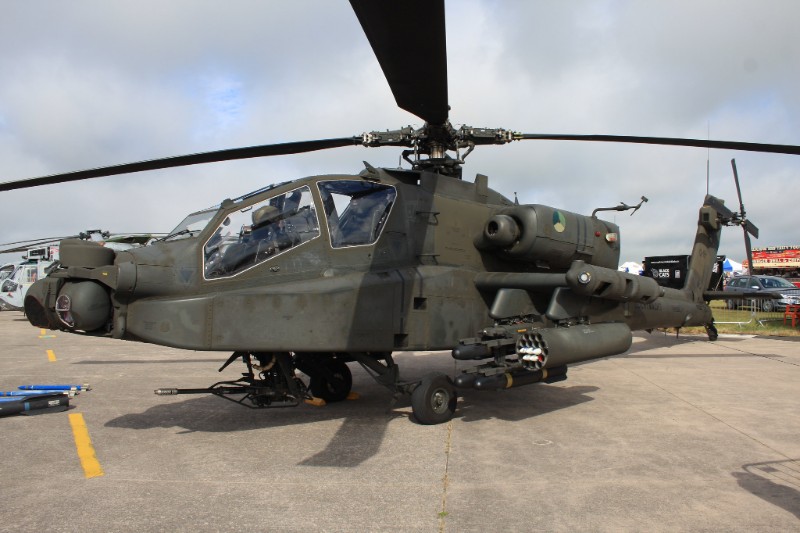
Modern military operations rely heavily on helicopters, not simply as support aircraft but as vital tools that shape how missions unfold on the ground, at sea, and across remote regions where fixed-wing aircraft struggle to operate. These machines bring extraordinary flexibility to armed forces, able to rise vertically from tight clearings, hover with precision over cities or rugged terrain, and maneuver into places that would be inaccessible to most other aircraft. Whether flying into combat zones, rescuing stranded personnel, or carrying troops deep into contested territory, today’s advanced military helicopters fill roles that demand speed, resilience, and cutting-edge technology.
What makes this world fascinating is the sheer diversity of helicopter designs. Some are engineered to strike targets with surgical accuracy, weaving between obstacles while carrying sophisticated weapons and radar systems. Others focus on saving lives, combining long-range performance with sensors that can detect a single person in a storm at night. Heavy transport helicopters move entire units, vehicles, or relief supplies in a single lift, while compact observation aircraft gather intelligence quietly from above, feeding critical information to commanders. Then there are the multipurpose utility helicopters, the dependable “do-everything” platforms that armies rely on when missions shift rapidly and versatility becomes more valuable than specialization.
Behind every model lies a blend of aerodynamics, engineering, and tactical philosophy. Militaries don’t simply build helicopters to fly—they build them to respond to specific threats, environments, and strategic needs. From stealthy reconnaissance to high-speed assaults to long-distance extraction under fire, each helicopter type represents decades of technological refinement and lessons learned in real conflicts.
This article explores these major categories in detail, showing how modern rotorcraft contribute to the complex and often dangerous operations of today’s armed forces and why they continue to evolve as warfare becomes more advanced and unpredictable.
Attack helicopters
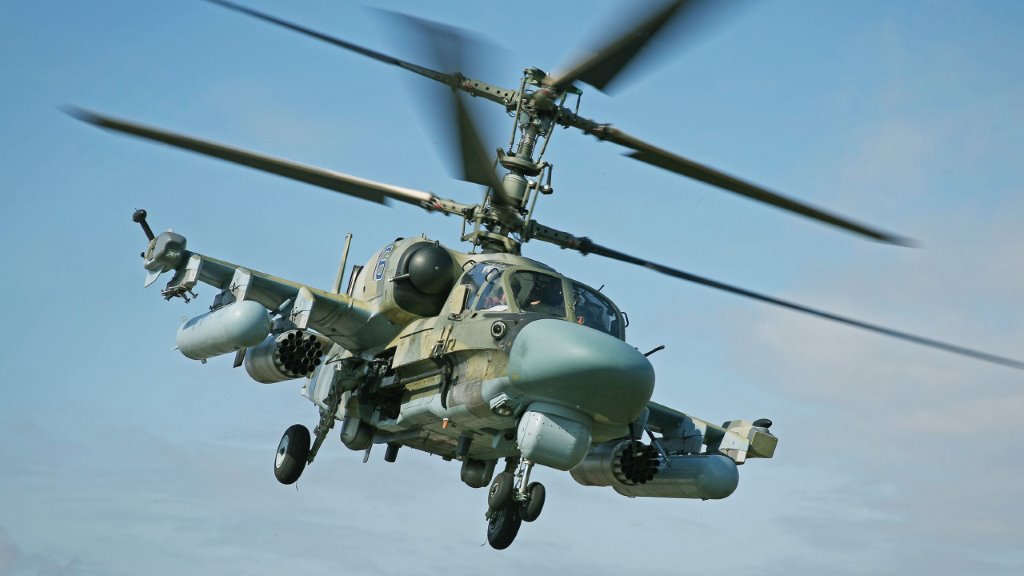
Attack helicopters—often referred to as helicopter gunships—are designed around a single idea: delivering powerful, accurate firepower while maneuvering close to the battlefield. Their job is to strike enemy armored vehicles, fortifications, troop formations, and even other aircraft when necessary. Because they frequently operate at low altitude and under hostile conditions, these helicopters require a blend of speed, sharp handling, heavy armor, and advanced targeting technology.
A modern attack helicopter typically carries a mix of weapons mounted along its sides and under the fuselage. Autocannons and chain guns supply rapid, sustained fire; guided missiles handle tanks and fortified targets; and rockets provide flexible engagement against moving forces or entrenched positions. These aircraft often fly alongside ground troops, offering immediate close air support when soldiers come under fire. They also escort transport helicopters, sweep ahead of advancing units to clear routes, and hunt armored vehicles hidden across challenging terrain.
The Boeing AH-64 Apache stands as the benchmark in this class. It mounts the M230 chain gun with a 1,200-round capacity, giving it a powerful and precise close-range option. Four hardpoints allow it to carry Hydra 70 rockets, CRV7 rockets, or the more accurate APKWS guided variants. Its main anti-armor weapon, the AGM-114 Hellfire missile, can destroy tanks from significant standoff distance. For air-to-air threats, the Apache may carry AIM-92 Stinger missiles, and in some configurations, Spike anti-tank missiles are also integrated.
Beyond weapons, advanced radars and targeting systems define an attack helicopter’s effectiveness. The Apache’s D and E variants use the AN/APG-78 Longbow fire control radar, which enables rapid target acquisition, tracking, and engagement even in poor visibility. This system allows the helicopter to detect threats, guide missiles, and coordinate with other aircraft while staying hidden behind terrain whenever possible.
By combining raw firepower with sophisticated detection equipment, attack helicopters give military commanders a tool that can respond instantly to battlefield changes, neutralizing threats before they reach friendly positions.
Search and rescue helicopters

Search and rescue helicopters (SAR) must excel at missions where conditions are unpredictable and lives depend on rapid response. These aircraft are expected to operate in harsh weather, fly into mountainous regions, skim over oceans, and locate personnel who may be injured, isolated, or under threat. Durability, reliability, and advanced situational awareness systems are essential traits.
SAR helicopters rely heavily on radar systems, infrared sensors, night-vision equipment, and onboard computers that help crews interpret terrain and weather while searching vast areas. They often carry specialized navigation tools that remain effective when GPS signals weaken or visual markers disappear. Their airframes are reinforced to handle strong winds and irregular landing zones, including cliffsides, forests, or narrow maritime platforms.
A key example is the AgustaWestland AW101, widely recognized for its long-range capability and sophisticated electronics. Variants of the AW101 incorporate self-defense equipment such as infrared jammers and laser detection systems, offering protection when missions bring them near hostile environments. Some configurations even feature armaments like Sting Ray torpedoes or Mk11 Mod 3 depth charges, allowing the AW101 to function as a multi-role maritime asset.
Its search and detection capabilities are anchored by the Blue Kestrel radar, capable of providing full 360-degree scanning and identifying small targets up to 25 nautical miles away. This technology is crucial when searching open water or complicated land terrain, where missing soldiers, downed pilots, or stranded civilians may be difficult to spot. Known as the Merlin in most European forces and designated CH-149 Cormorant in Canada, the AW101 often doubles as an anti-submarine warfare platform, supporting naval fleets by tracking underwater threats and deploying torpedoes when required.
With flexible armament options, strong defensive systems, and powerful detection equipment, SAR helicopters like the AW101 are built to reach people in situations where timing and precision decide the outcome.
Transport helicopters
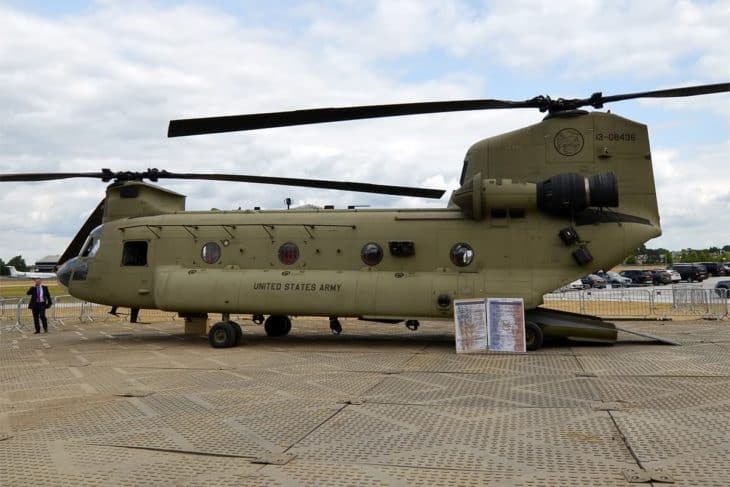
Transport helicopters form the backbone of battlefield logistics. Their mission is straightforward in concept but demanding in execution: move troops, vehicles, equipment, and supplies rapidly across contested or inaccessible terrain. Unlike fixed-wing aircraft, which require runways, transport helicopters can land almost anywhere there is enough space for their rotor disc, making them indispensable for delivering personnel close to active fronts or evacuating wounded soldiers under fire.
To accomplish these tasks, transport helicopters must combine substantial lifting power with acceptable speed. Many are built to carry cargo internally, while others can transport heavy loads externally using sling systems. Their designs emphasize structural strength, long-range capability, and stable handling even when heavily loaded.
One of the most iconic examples is the Boeing CH-47 Chinook, long associated with the US Army and several allied forces. With a maximum speed of approximately 315 km/h, it outruns many attack helicopters despite its size. Its tandem-rotor design provides exceptional lift efficiency, enabling it to maneuver with large payloads in challenging environments, including mountains and deserts.
But for sheer weight capacity, the Russian-developed Rostvertol Mil Mi-26 surpasses all other operational helicopters. Stretching over 40 meters, it can carry up to 25,000 kilograms—more than double the Chinook’s already impressive payload of 10,886 kilograms. While the Chinook can seat up to 55 troops, the Mi-26 can accommodate as many as 90 soldiers or sizeable vehicles.
Whether deployed for rapid troop insertion, battlefield resupply, humanitarian missions, or disaster relief, transport helicopters provide a level of mobility and logistical reach that few other aircraft can match.
Observation helicopters
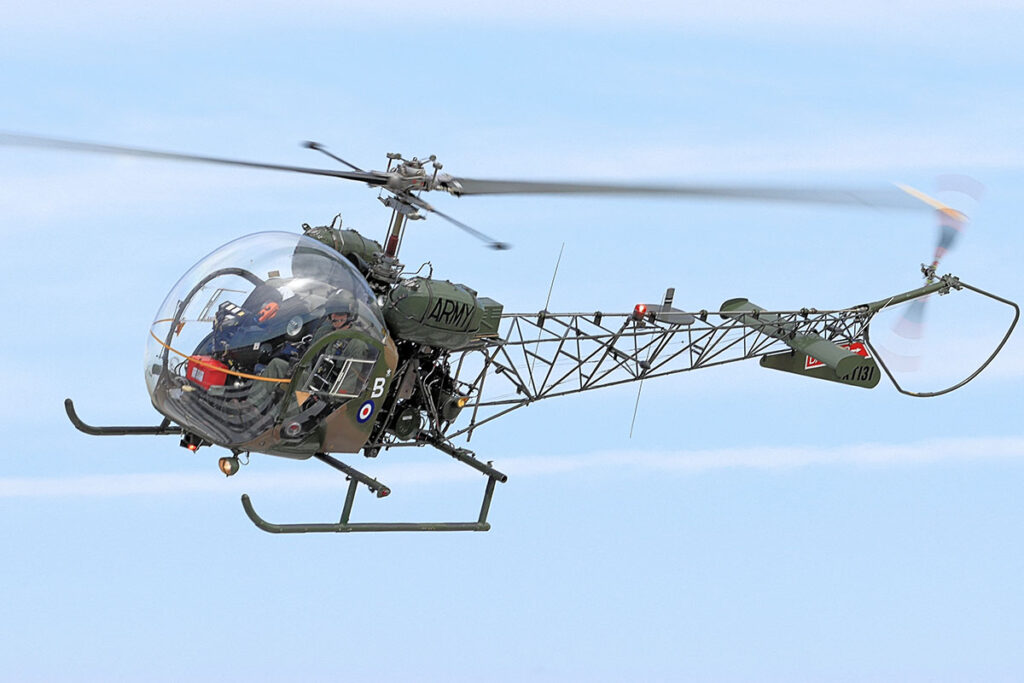
Observation helicopters play a critical role in intelligence gathering, reconnaissance, and battlefield coordination. These aircraft are essentially flying sensor platforms, built not for heavy weapon loadouts but for identifying threats, guiding weapons, and providing real-time information to ground commanders and other aircraft.
They often operate at low altitude or hover at a safe distance, using their onboard systems to monitor activities over long periods. Observation crews rely on forward-looking infrared cameras, low-light television systems, and laser-based tools for range-finding or target designation. Their communications equipment enables them to pass enemy positions, coordinates, or movement patterns to strike aircraft and ground units instantly.
Some observation helicopters carry limited weaponry, allowing them to defend themselves or disable enemy reconnaissance assets without revealing their presence too early. The Bell OH-58 Kiowa, used by numerous armed forces, is an example. It typically carries smaller quantities of Hydra 70 rockets or AGM-114 Hellfire missiles—not for full-scale assault but for precision engagement of specific targets or protection of its own operations. Its light weight, around 2,500 kilograms when fully loaded, makes it agile and ideal for stealthy reconnaissance. An upgraded attack/recon version, the OH-58D Kiowa Warrior, incorporates enhanced sensors and improved mission capability.
These helicopters act as the eyes of the battlefield, providing context and clarity in environments where information can shift rapidly and where timely intelligence often determines success.
Utility helicopters
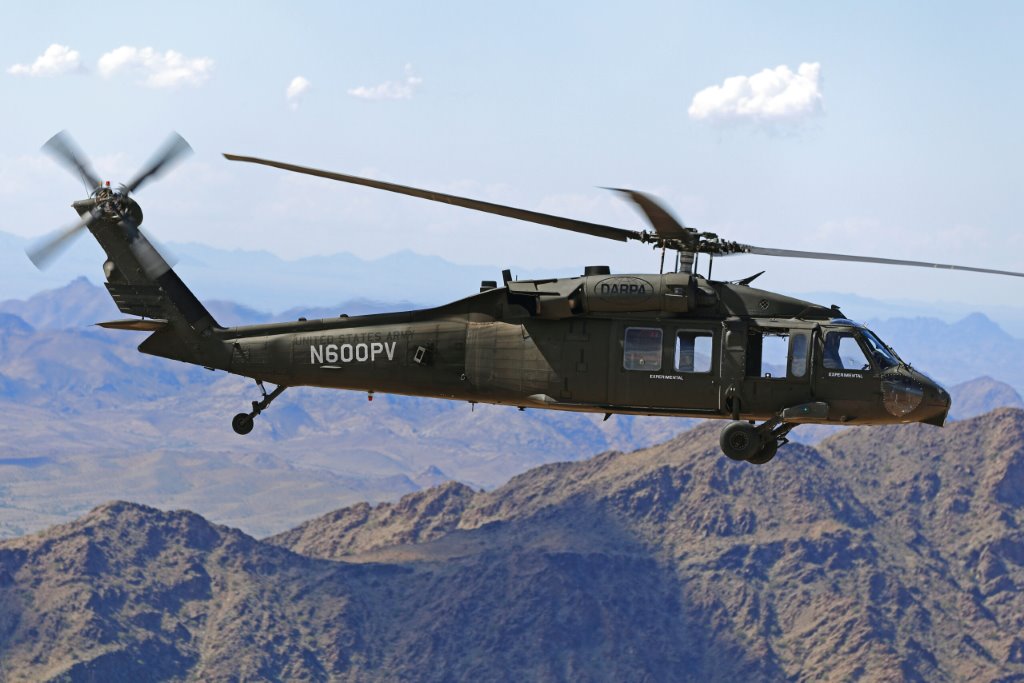
Utility helicopters represent the most flexible category in military rotorcraft, designed to perform multiple missions rather than specializing in just one. They may support ground attacks, execute air assaults, transport troops and equipment, carry out reconnaissance, or conduct medical evacuations—all with minimal reconfiguration. This adaptability makes them among the most widely deployed helicopter types across global armed forces.
Well-known examples include the Bell CH-146 Griffon and the Sikorsky UH-60 Black Hawk. The Griffon, currently undergoing upgrades within the Royal Canadian Air Force, features enhanced thermal imaging systems and improved night-vision capabilities that strengthen its reconnaissance and support roles. Its compact frame and modern avionics make it suitable for a variety of mission types, from transport to patrol.
The UH-60 Black Hawk, one of the most recognizable military helicopters in the world, gained international attention during the Battle of Mogadishu in 1993. It remains a central asset for militaries because it offers a blend of speed, lift capability, and modular design. With a top speed of around 295 km/h and the ability to carry a 4,100-kilogram external load, the Black Hawk can be outfitted with guns, rockets, missiles, and even specialized systems like the Volcano minefield delivery unit. Its rugged design and broad mission compatibility ensure that it continues to serve in combat transport, humanitarian relief, medical evacuation, and special operations.
By combining versatility with steady performance, utility helicopters help militaries respond effectively to diverse and rapidly changing mission needs—making them essential assets from peacekeeping deployments to high-intensity conflict zones.