


The Biggest Explosions Ever Recorded on Earth

Explosions have always fascinated and terrified humanity in equal measure. From the earliest days of gunpowder to the moment nuclear physics cracked open the atom, humans have steadily learned how to release more and more energy in shorter and more violent bursts. Some explosions were accidental — the result of poor storage, human error, or industrial negligence. Others were deliberate, designed as tests, weapons, or demonstrations of technological dominance. Either way, the largest explosions in history didn’t just destroy structures; they reshaped landscapes, altered political decisions, and forced humanity to confront the consequences of its own power.

What separates the biggest explosions from ordinary disasters is scale. These are events so powerful that they flattened cities, erased islands, shattered windows hundreds of kilometers away, and sent shockwaves through the ground and atmosphere. In the nuclear age, explosions stopped being measured only by damage and started being measured in kilotons and megatons — units that describe energy on an almost abstract level. Atomic and hydrogen bomb detonations introduced forces previously seen only in nature, compressing the power of stars into moments that lasted seconds but left effects that lingered for decades.

This article looks exclusively at explosions that actually happened on Earth. There are no meteors, no cosmic collisions, and no distant stellar events here. Every explosion covered took place on land, at sea, or in the atmosphere of our planet, directly affecting human lives, cities, or environments. Special attention is given to nuclear detonations, because no other human-made explosions come close to their raw energy output or historical impact. At the same time, some non-nuclear industrial blasts were so immense that they rivaled early atomic bombs in destructive force.

Together, these explosions form a grim timeline of human ambition, technological progress, and unintended consequences. Each one tells a story — of scientific breakthroughs, wartime urgency, bureaucratic failure, or sheer miscalculation. Understanding how and why these massive explosions occurred isn’t just about curiosity or shock value; it’s about recognizing the limits of control when enormous amounts of energy are unleashed in an instant.
16 Biggest Explosions throughout History

1. Tsar Bomba – Soviet Union (1961)

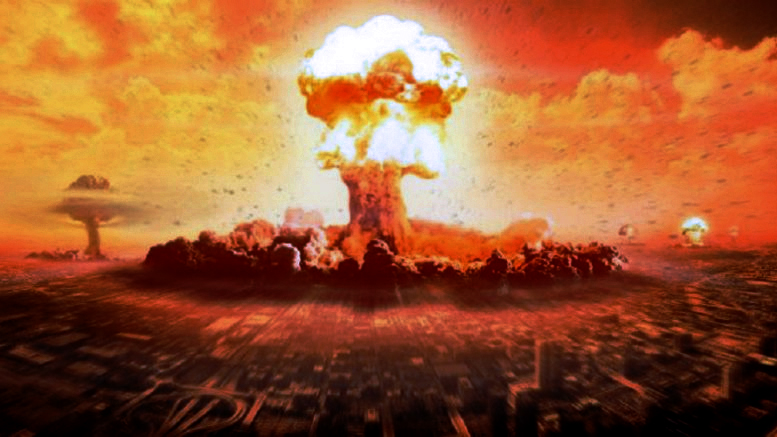
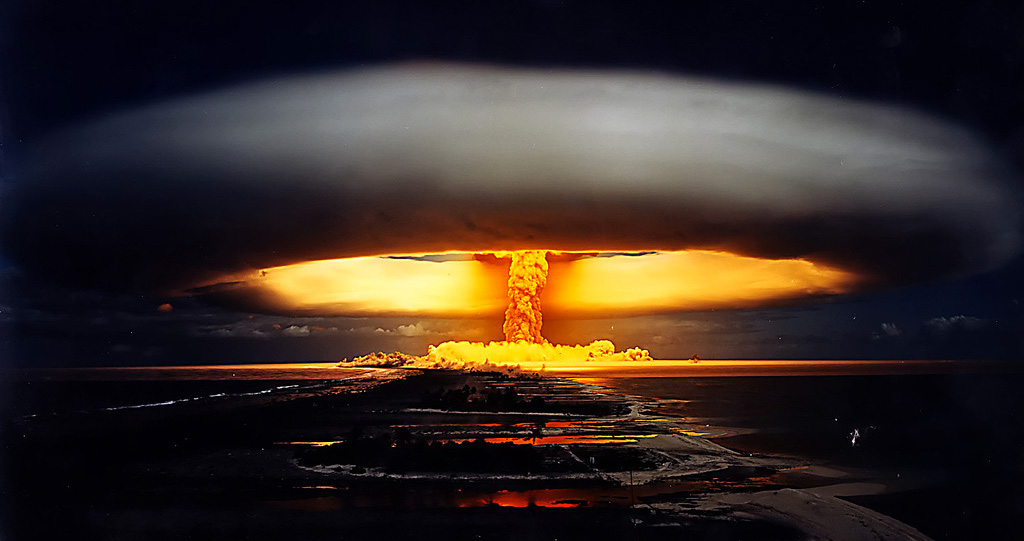
The largest explosion ever caused by humans occurred over Novaya Zemlya in the Arctic. The Tsar Bomba was a hydrogen bomb with an estimated yield of 50 megatons of TNT, though it was deliberately reduced from its original 100-megaton design to limit fallout. The fireball was visible from hundreds of kilometers away, and the shockwave circled the Earth multiple times. Entire test structures were obliterated, and windows shattered over vast distances. To this day, no explosion on Earth has ever come close.


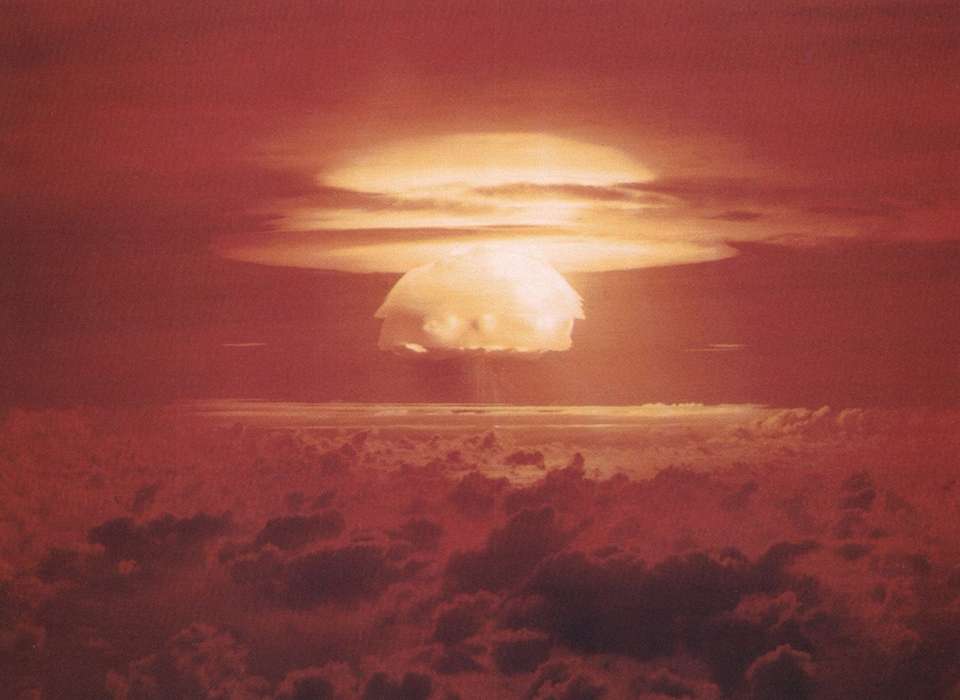
2. Castle Bravo – United States (1954)

Castle Bravo was the most powerful nuclear test conducted by the United States. Detonated at Bikini Atoll, it yielded around 15 megatons, more than twice what scientists expected due to a miscalculation in fusion fuel reactions. The explosion vaporized islands, contaminated massive areas with radioactive fallout, and exposed nearby populations and test crews to dangerous radiation levels. It remains one of the worst nuclear test accidents ever recorded.


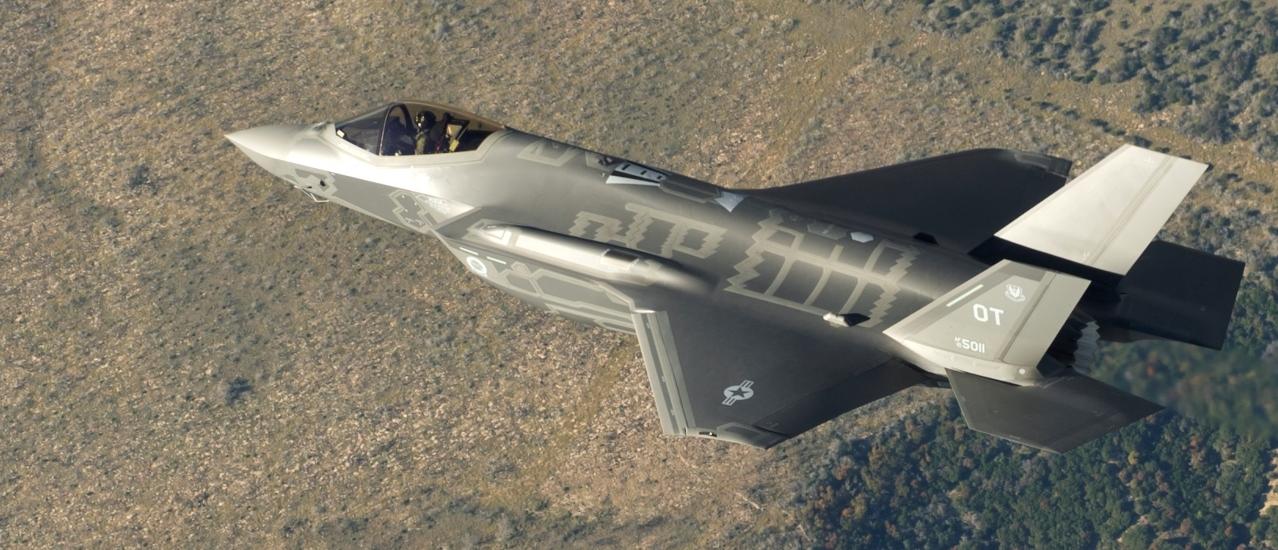
3. B83 Nuclear Warhead Test Equivalent (Cold War Era)

While the B83 was never detonated in combat, its tested design represents one of the most powerful thermonuclear weapons ever fielded. With a maximum yield of around 1.2 megatons, it was designed for deep-penetration strikes against hardened targets. Its theoretical detonation would devastate an entire metropolitan area and cause long-term environmental damage.


4. Trinity Test – United States (1945)

The first atomic explosion in human history occurred in the New Mexico desert. The Trinity test unleashed about 20 kilotons of energy, instantly melting desert sand into green radioactive glass known as trinitite. Witnesses described the blast as brighter than the sun, accompanied by a shockwave that knocked observers off their feet miles away. This explosion marked the beginning of the nuclear age.


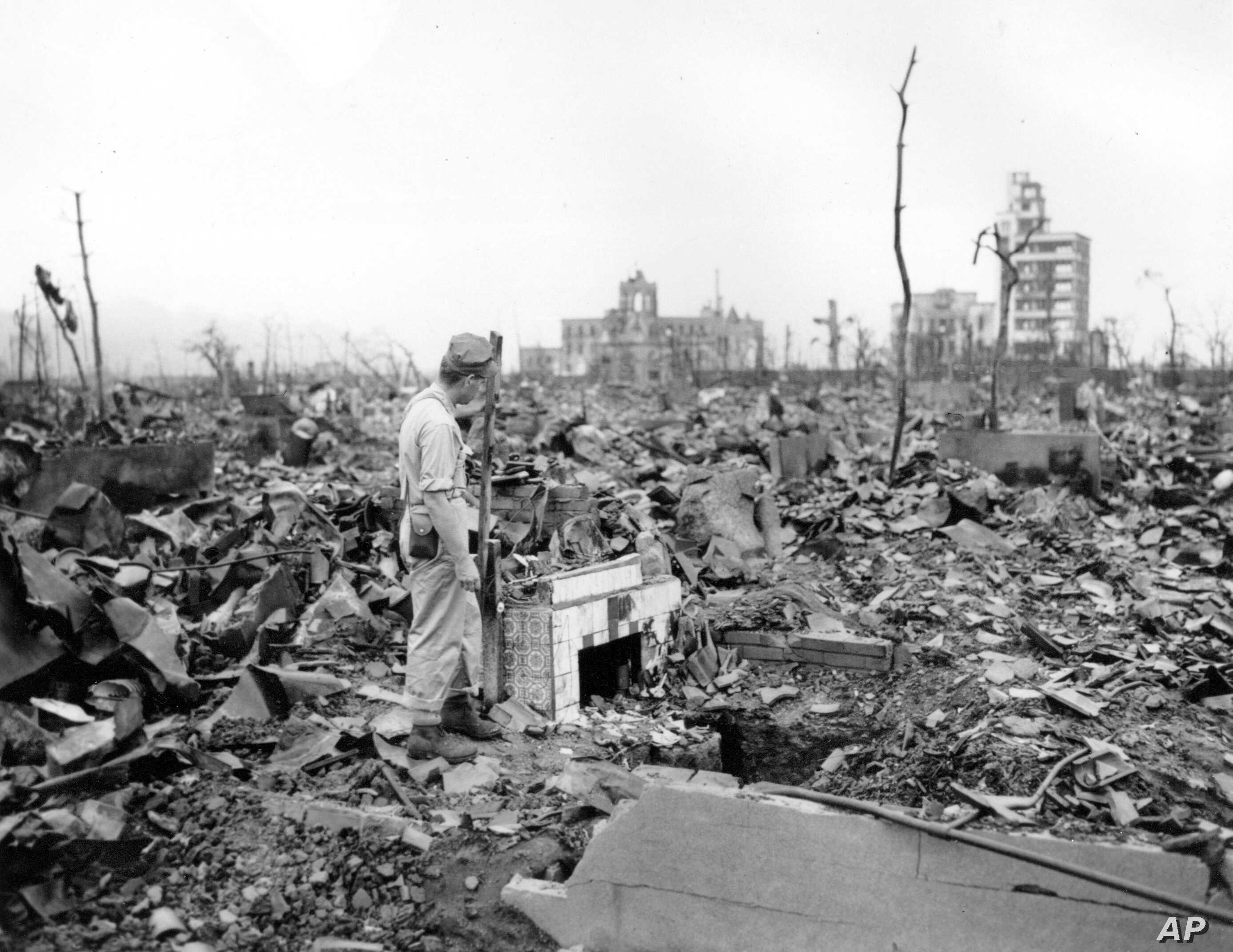
5. Hiroshima Atomic Bomb – Japan (1945)

The atomic bomb dropped on Hiroshima released approximately 15 kilotons of energy. The explosion flattened nearly the entire city, instantly killing tens of thousands and injuring countless others. The intense heat ignited fires across wide areas, while radiation effects continued to claim lives for years afterward. It remains one of the most devastating explosions ever used in warfare.


6. Nagasaki Atomic Bomb – Japan (1945)

Three days after Hiroshima, a second atomic bomb was detonated over Nagasaki. Slightly more powerful than the Hiroshima bomb, it released around 20 kilotons. The city’s terrain limited some damage, but destruction was still immense. Together, these two explosions demonstrated the unprecedented destructive power of nuclear weapons.


7. Operation Ivy Mike – United States (1952)

Ivy Mike was the world’s first full-scale hydrogen bomb test. The explosion produced around 10.4 megatons and completely erased the island of Elugelab from the map. Unlike later bombs, this device was not weaponized and required massive cryogenic equipment, but it proved that thermonuclear fusion could be controlled — and weaponized.


8. Operation Redwing Cherokee – United States (1956)

This hydrogen bomb test produced roughly 3.8 megatons of explosive yield. It was part of the United States’ effort to develop more compact and efficient thermonuclear weapons. The explosion caused widespread radioactive fallout across the Pacific and further highlighted the environmental consequences of large-scale nuclear testing.


9. Operation Grapple Y – United Kingdom (1958)

Britain’s most powerful nuclear test occurred near Christmas Island, producing about 3 megatons. The explosion confirmed the UK’s ability to deploy thermonuclear weapons and cemented its position as a nuclear power. Fallout affected both military personnel and local populations, an issue that would surface decades later.


10. Soviet RDS-37 Test – USSR (1955)

This was the Soviet Union’s first true hydrogen bomb test. With a yield of roughly 1.6 megatons, it caused shockwaves strong enough to damage buildings hundreds of kilometers away. The explosion was so powerful that it injured civilians and caused unintended destruction far beyond the test zone.


11. Beirut Port Explosion – Lebanon (2020)

Though non-nuclear, the Beirut explosion remains one of the largest conventional blasts in history. Roughly 2,700 tons of ammonium nitrate detonated after years of improper storage. The explosion created a massive pressure wave, killed over 200 people, injured thousands, and devastated large portions of the city in seconds.


12. Halifax Explosion – Canada (1917)

A collision between two ships, one carrying wartime explosives, triggered a blast equivalent to roughly 3 kilotons of TNT. The explosion leveled much of Halifax, generated a tsunami, and killed nearly 2,000 people. For decades, it was considered the largest man-made explosion in history.


13. Texas City Disaster – United States (1947)

A ship carrying ammonium nitrate caught fire and detonated in Texas City’s port, releasing energy comparable to a small nuclear device. The blast destroyed industrial facilities, killed hundreds, and caused fires that burned for days. It remains the deadliest industrial accident in U.S. history.


14. RAF Fauld Explosion – United Kingdom (1944)

Stored munitions at an underground military depot exploded during World War II, releasing thousands of tons of explosive energy. The blast carved a massive crater, destroyed nearby villages, and remains the largest accidental explosion in British history.


15. Oppau Explosion – Germany (1921)

A fertilizer plant storing ammonium sulfate and nitrate exploded, releasing enormous energy and destroying much of the town of Oppau. The blast killed over 500 people and demonstrated the extreme dangers of industrial chemical storage.


16. Wanggongchang Explosion – China (1626)

One of the deadliest explosions before the modern era occurred when a Ming-dynasty gunpowder workshop detonated in Beijing. Contemporary records describe massive destruction, bodies thrown across the city, and tens of thousands of deaths. Even centuries later, it remains one of the most mysterious and catastrophic explosions in history.


These explosions, whether intentional or accidental, reveal a sobering truth: the greatest destructive forces on Earth have increasingly come from human hands. Atomic and hydrogen bomb tests in particular changed how we understand power, warfare, and responsibility — and they remain unmatched in their ability to reshape the planet in mere seconds.
The Biggest Explosions Ever Recorded on Earth

The Biggest Explosions Ever Recorded on Earth

Explosions have always fascinated and terrified humanity in equal measure. From the earliest days of gunpowder to the moment nuclear physics cracked open the atom, humans have steadily learned how to release more and more energy in shorter and more violent bursts. Some explosions were accidental — the result of poor storage, human error, or industrial negligence. Others were deliberate, designed as tests, weapons, or demonstrations of technological dominance. Either way, the largest explosions in history didn’t just destroy structures; they reshaped landscapes, altered political decisions, and forced humanity to confront the consequences of its own power.

What separates the biggest explosions from ordinary disasters is scale. These are events so powerful that they flattened cities, erased islands, shattered windows hundreds of kilometers away, and sent shockwaves through the ground and atmosphere. In the nuclear age, explosions stopped being measured only by damage and started being measured in kilotons and megatons — units that describe energy on an almost abstract level. Atomic and hydrogen bomb detonations introduced forces previously seen only in nature, compressing the power of stars into moments that lasted seconds but left effects that lingered for decades.

This article looks exclusively at explosions that actually happened on Earth. There are no meteors, no cosmic collisions, and no distant stellar events here. Every explosion covered took place on land, at sea, or in the atmosphere of our planet, directly affecting human lives, cities, or environments. Special attention is given to nuclear detonations, because no other human-made explosions come close to their raw energy output or historical impact. At the same time, some non-nuclear industrial blasts were so immense that they rivaled early atomic bombs in destructive force.

Together, these explosions form a grim timeline of human ambition, technological progress, and unintended consequences. Each one tells a story — of scientific breakthroughs, wartime urgency, bureaucratic failure, or sheer miscalculation. Understanding how and why these massive explosions occurred isn’t just about curiosity or shock value; it’s about recognizing the limits of control when enormous amounts of energy are unleashed in an instant.

16 Biggest Explosions throughout History

1. Tsar Bomba – Soviet Union (1961)

The largest explosion ever caused by humans occurred over Novaya Zemlya in the Arctic. The Tsar Bomba was a hydrogen bomb with an estimated yield of 50 megatons of TNT, though it was deliberately reduced from its original 100-megaton design to limit fallout. The fireball was visible from hundreds of kilometers away, and the shockwave circled the Earth multiple times. Entire test structures were obliterated, and windows shattered over vast distances. To this day, no explosion on Earth has ever come close.


2. Castle Bravo – United States (1954)

Castle Bravo was the most powerful nuclear test conducted by the United States. Detonated at Bikini Atoll, it yielded around 15 megatons, more than twice what scientists expected due to a miscalculation in fusion fuel reactions. The explosion vaporized islands, contaminated massive areas with radioactive fallout, and exposed nearby populations and test crews to dangerous radiation levels. It remains one of the worst nuclear test accidents ever recorded.


3. B83 Nuclear Warhead Test Equivalent (Cold War Era)

While the B83 was never detonated in combat, its tested design represents one of the most powerful thermonuclear weapons ever fielded. With a maximum yield of around 1.2 megatons, it was designed for deep-penetration strikes against hardened targets. Its theoretical detonation would devastate an entire metropolitan area and cause long-term environmental damage.


4. Trinity Test – United States (1945)

The first atomic explosion in human history occurred in the New Mexico desert. The Trinity test unleashed about 20 kilotons of energy, instantly melting desert sand into green radioactive glass known as trinitite. Witnesses described the blast as brighter than the sun, accompanied by a shockwave that knocked observers off their feet miles away. This explosion marked the beginning of the nuclear age.


5. Hiroshima Atomic Bomb – Japan (1945)

The atomic bomb dropped on Hiroshima released approximately 15 kilotons of energy. The explosion flattened nearly the entire city, instantly killing tens of thousands and injuring countless others. The intense heat ignited fires across wide areas, while radiation effects continued to claim lives for years afterward. It remains one of the most devastating explosions ever used in warfare.


6. Nagasaki Atomic Bomb – Japan (1945)

Three days after Hiroshima, a second atomic bomb was detonated over Nagasaki. Slightly more powerful than the Hiroshima bomb, it released around 20 kilotons. The city’s terrain limited some damage, but destruction was still immense. Together, these two explosions demonstrated the unprecedented destructive power of nuclear weapons.


7. Operation Ivy Mike – United States (1952)

Ivy Mike was the world’s first full-scale hydrogen bomb test. The explosion produced around 10.4 megatons and completely erased the island of Elugelab from the map. Unlike later bombs, this device was not weaponized and required massive cryogenic equipment, but it proved that thermonuclear fusion could be controlled — and weaponized.


8. Operation Redwing Cherokee – United States (1956)

This hydrogen bomb test produced roughly 3.8 megatons of explosive yield. It was part of the United States’ effort to develop more compact and efficient thermonuclear weapons. The explosion caused widespread radioactive fallout across the Pacific and further highlighted the environmental consequences of large-scale nuclear testing.


9. Operation Grapple Y – United Kingdom (1958)

Britain’s most powerful nuclear test occurred near Christmas Island, producing about 3 megatons. The explosion confirmed the UK’s ability to deploy thermonuclear weapons and cemented its position as a nuclear power. Fallout affected both military personnel and local populations, an issue that would surface decades later.


10. Soviet RDS-37 Test – USSR (1955)

This was the Soviet Union’s first true hydrogen bomb test. With a yield of roughly 1.6 megatons, it caused shockwaves strong enough to damage buildings hundreds of kilometers away. The explosion was so powerful that it injured civilians and caused unintended destruction far beyond the test zone.


11. Beirut Port Explosion – Lebanon (2020)

Though non-nuclear, the Beirut explosion remains one of the largest conventional blasts in history. Roughly 2,700 tons of ammonium nitrate detonated after years of improper storage. The explosion created a massive pressure wave, killed over 200 people, injured thousands, and devastated large portions of the city in seconds.


12. Halifax Explosion – Canada (1917)

A collision between two ships, one carrying wartime explosives, triggered a blast equivalent to roughly 3 kilotons of TNT. The explosion leveled much of Halifax, generated a tsunami, and killed nearly 2,000 people. For decades, it was considered the largest man-made explosion in history.


13. Texas City Disaster – United States (1947)

A ship carrying ammonium nitrate caught fire and detonated in Texas City’s port, releasing energy comparable to a small nuclear device. The blast destroyed industrial facilities, killed hundreds, and caused fires that burned for days. It remains the deadliest industrial accident in U.S. history.


14. RAF Fauld Explosion – United Kingdom (1944)

Stored munitions at an underground military depot exploded during World War II, releasing thousands of tons of explosive energy. The blast carved a massive crater, destroyed nearby villages, and remains the largest accidental explosion in British history.


15. Oppau Explosion – Germany (1921)

A fertilizer plant storing ammonium sulfate and nitrate exploded, releasing enormous energy and destroying much of the town of Oppau. The blast killed over 500 people and demonstrated the extreme dangers of industrial chemical storage.


16. Wanggongchang Explosion – China (1626)

One of the deadliest explosions before the modern era occurred when a Ming-dynasty gunpowder workshop detonated in Beijing. Contemporary records describe massive destruction, bodies thrown across the city, and tens of thousands of deaths. Even centuries later, it remains one of the most mysterious and catastrophic explosions in history.


These explosions, whether intentional or accidental, reveal a sobering truth: the greatest destructive forces on Earth have increasingly come from human hands. Atomic and hydrogen bomb tests in particular changed how we understand power, warfare, and responsibility — and they remain unmatched in their ability to reshape the planet in mere seconds.