

Military technology has always evolved quietly, often years ahead of what the public ever gets to see. While movies and video games give us flashy guesses about future warfare, the real developments usually happen behind locked doors, under code names, and buried inside classified budgets. If you compare the weapons of World War II to modern systems, the difference feels almost unreal. Today’s battlefield isn’t just about tanks and fighter jets anymore — it’s about automation, energy weapons, artificial intelligence, and platforms that blur the line between science fiction and reality.
What makes secret weapons especially unsettling isn’t just their destructive power, but how quietly they change the rules of war. Some are designed to strike without warning. Others aim to neutralize entire systems rather than individual targets. And a few exist mainly as deterrents, built not necessarily to be used, but to make adversaries think twice. Below are ten of the most insane secret or semi-secret weapons currently known to exist or actively under development, based on publicly available information, leaked details, and confirmed military programs.
1. Russia’s Nuclear Tsunami Apocalypse Torpedo (Poseidon)
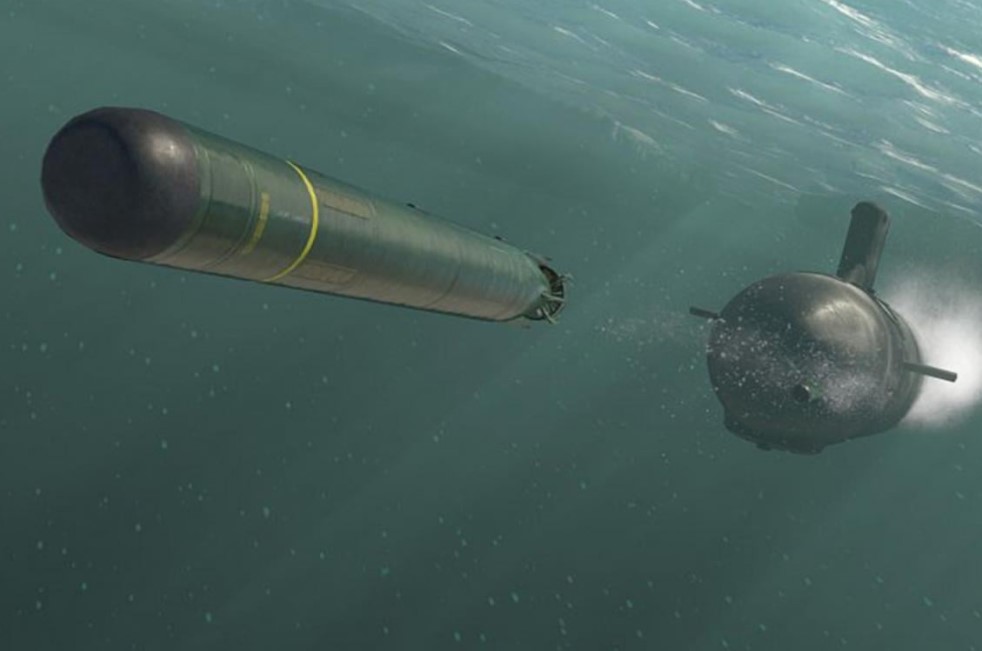
Originally rumored under names like Status-6 or KANYON, Poseidon was once dismissed as propaganda or outright fiction. That changed when intelligence agencies and independent analysts confirmed its development timeline, which reportedly began around 2008. Poseidon is a nuclear-powered, nuclear-armed underwater drone designed to travel autonomously across oceans.
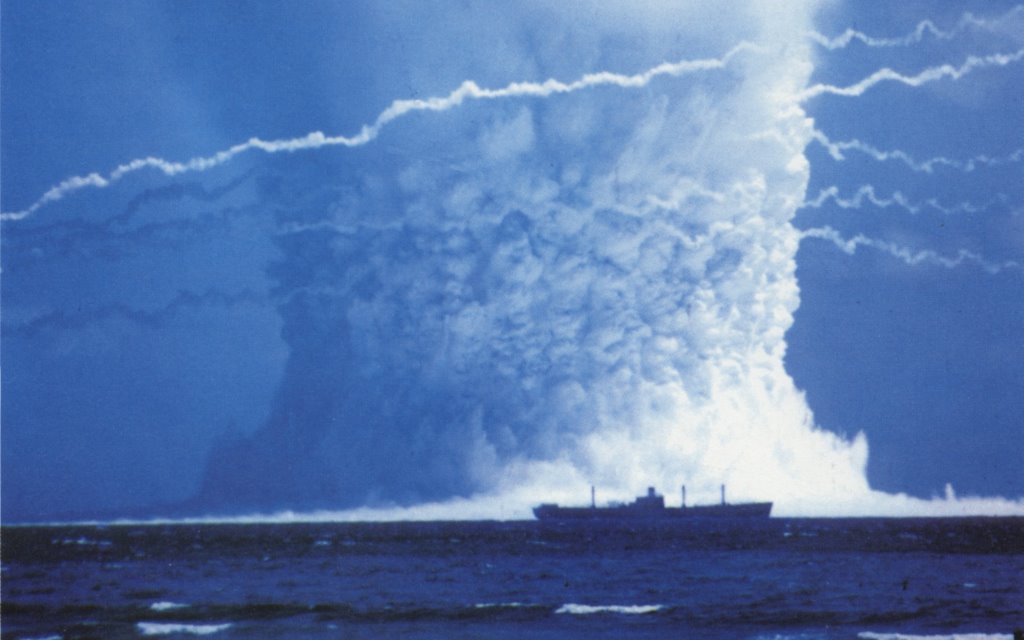
Its purpose isn’t subtle. The weapon is believed to carry a massive nuclear warhead intended to detonate near coastal cities or naval bases, triggering radioactive tsunamis and long-term contamination. Unlike traditional submarines, Poseidon doesn’t require a crew, can operate at extreme depths, and is extremely difficult to track or intercept. Even by nuclear weapon standards, this system is designed for psychological impact as much as physical destruction.
2. Laser-Recharged Drones That Can Stay Airborne Indefinitely
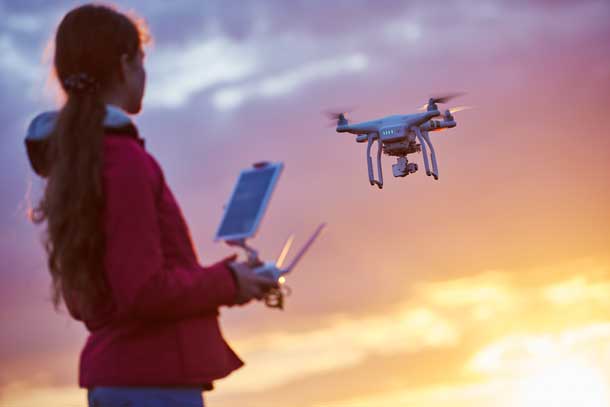
The idea of a drone that never needs to land sounds impossible, yet research programs have brought this concept surprisingly close to reality. Defense researchers developed drones equipped with solar panels integrated into their wings and energy storage systems inside the fuselage. The real breakthrough comes from ground-based or airborne laser systems.
As the drone’s batteries drain, operators aim a focused laser beam at the solar panels, recharging the aircraft mid-flight. In theory, this allows drones to remain airborne for days, weeks, or even longer under controlled conditions. The implications for surveillance, reconnaissance, and persistent battlefield presence are enormous — and deeply unsettling for anyone on the ground.
3. China’s Giant Ionosphere-Zapping Radar
China has invested heavily in high-powered radar systems that operate far beyond traditional tracking roles. One such system is described as an incoherent scatter radar capable of interacting with the ionosphere, the electrically charged layer of Earth’s upper atmosphere.
While officially framed as a scientific research tool, experts believe the system could be used for long-range detection, electronic warfare, and potentially even interference with communications and satellite signals. By bouncing radio waves off the ionosphere, this technology could detect stealth aircraft or disrupt enemy systems over massive distances, making it a strategic asset with global reach.
4. Project Thor (Rods From God)
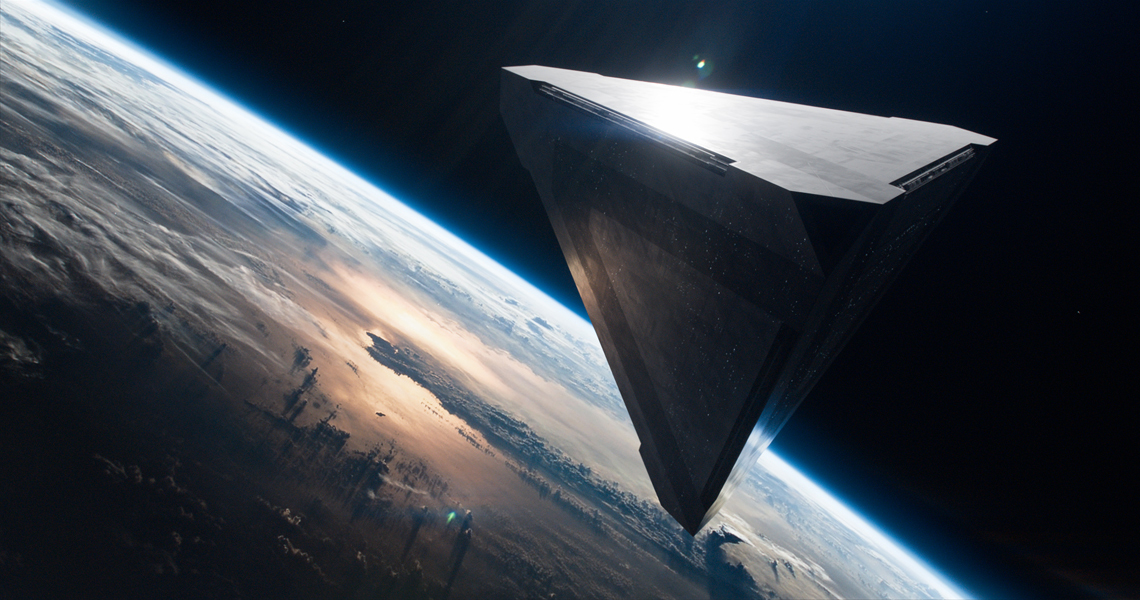
Project Thor sounds like mythology, but its core idea is brutally simple. Instead of explosives, imagine dropping massive tungsten rods from orbit at hypersonic speeds. Tungsten is extremely dense, and when a rod strikes the Earth at orbital velocity, it releases energy comparable to a small nuclear weapon — without radiation.
The concept dates back to Cold War research, with Boeing scientist Jerry Pournelle helping formalize the idea. While technological limitations still exist, particularly around cost and launch logistics, the weapon remains theoretically viable. A strike would arrive with little warning and immense kinetic force, capable of destroying hardened bunkers or underground facilities.
5. Juliet Marine Systems GHOST Vessel
The GHOST is not a typical naval ship. It uses super-cavitation technology to drastically reduce friction between the hull and the water. By riding inside a bubble of vapor, the vessel experiences only a fraction of the drag faced by conventional boats.
Its dual-pontoon design and gyro-stabilized structure allow it to maintain high speeds even in rough seas, including waves over ten feet high. This makes it ideal for rapid insertion, interception, or hit-and-run operations. The ship’s speed and stability give it a tactical edge that traditional naval craft struggle to match.
6. The Sea Dragon Weapon
Very little is publicly known about the Sea Dragon, and that’s precisely the point. The U.S. Navy has acknowledged working with an unnamed defense contractor on a new missile system intended to give submarines a disruptive offensive capability.
Speculation ranges from advanced anti-ship missiles to hypersonic or multi-role payload systems. What makes Sea Dragon particularly intriguing is its submarine integration, which allows stealth platforms to deliver highly advanced strikes without exposing their position. Even the lack of information itself functions as a strategic deterrent.
7. Autonomous Drone Tanks
Unmanned ground vehicles are no longer experimental toys. Modern drone tanks can operate remotely or semi-autonomously, equipped with advanced targeting systems, sensors, and heavy weapons. Some designs mirror traditional tanks, while others prioritize speed, modular weapons, and reduced profiles.
Removing human crews from armored vehicles dramatically changes battlefield dynamics. These machines can be sent into high-risk zones, absorb enemy fire, and operate continuously without fatigue. As artificial intelligence improves, the line between remote-controlled and fully autonomous combat vehicles continues to blur.
8. Tank-Killing Quadcopter Drones
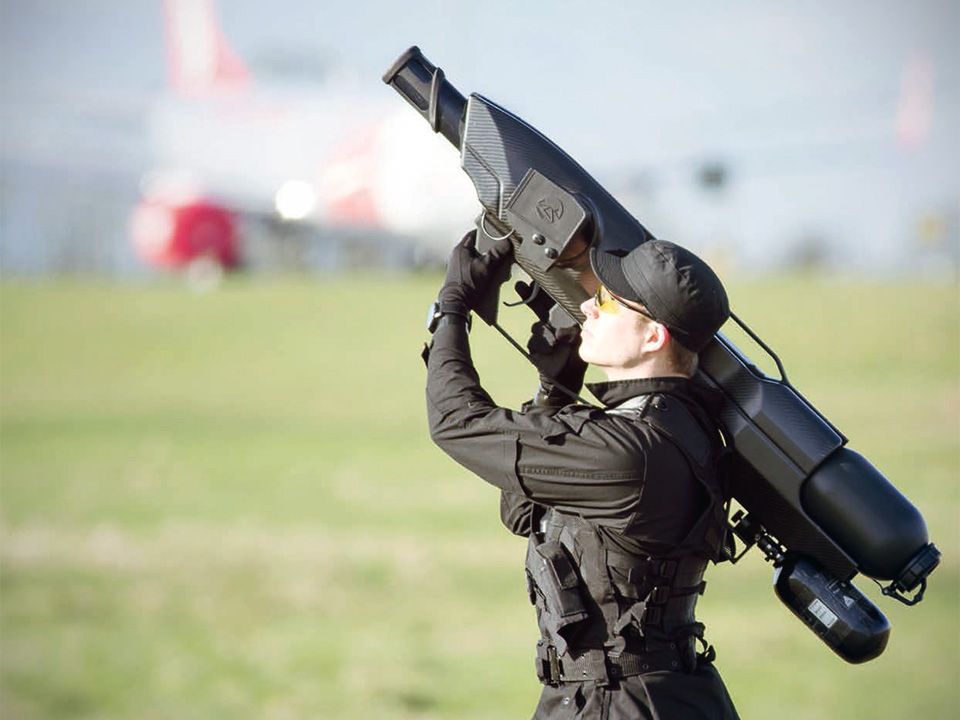
One of the most disturbing trends in modern warfare is how inexpensive drones can neutralize extremely expensive armored vehicles. Armed quadcopters capable of carrying RPG-style anti-tank weapons have already been demonstrated in real-world scenarios.
A quadcopter equipped with a single-shot rocket launcher can approach from above — the weakest armor point on most tanks — and strike with deadly precision. These systems are small, quiet, difficult to detect, and devastatingly effective, fundamentally changing how armored warfare works.
9. Iron Curtain Active Protection System
Despite its name, Iron Curtain isn’t a Cold War relic or a Russian weapon. It’s a U.S. Army defensive system designed to protect vehicles from incoming rockets and anti-tank weapons. Unlike traditional armor, Iron Curtain detects incoming threats and destroys them milliseconds before impact.
The system uses a network of sensors and countermeasures mounted around the vehicle, creating an invisible shield against RPGs and similar weapons. As battlefield threats evolve, active protection systems like this are becoming just as important as offensive firepower.
10. Gremlins Airborne Aircraft Carriers
The idea of an aircraft carrier in the sky sounds like pure fiction, yet real programs have moved this concept closer to reality. The Gremlins program focuses on deploying small unmanned aircraft from larger airborne platforms, then recovering them mid-air after missions.
These drones can be launched from transport planes, carry out reconnaissance or electronic warfare tasks, and return without landing. This allows aircraft to act as mobile drone hubs, extending operational reach without relying on ground bases. It’s a quiet but profound shift in how air power can be projected.
Secret weapons don’t just represent technological progress — they represent shifts in how wars are fought, deterred, or even prevented. Many of these systems may never see combat, existing instead as silent warnings. Others are already reshaping modern conflicts in ways that most people barely notice. What’s certain is that the future of warfare will be defined less by visible firepower and more by systems that operate quietly, autonomously, and with terrifying efficiency.