
The First World War officially began in the summer of 1914, triggered by the assassination of Archduke Franz Ferdinand of Austria-Hungary on June 28 in Sarajevo. That single act is often presented as the moment Europe tipped into war, yet the assassination was only the spark. Beneath it lay decades of political tension, military planning, nationalism, imperial rivalry, and fragile diplomacy.
More than 17 million people would ultimately lose their lives, and tens of millions more were wounded or permanently scarred. Entire empires collapsed, borders were redrawn, and political systems were overturned. The conflict reshaped global power structures and left consequences that continue to influence international relations today.
More than a century after the guns fell silent, countries that were once divided by trenches and no-man’s land gather each year to remember the immense human cost of what was once called “the war to end all wars.” Yet remembrance has not produced consensus. Historians still debate why the war began, who bears responsibility, and whether it could have been avoided.
Such was the scale of destruction that Australian historian Paul Ham later wrote that even the victors emerged diminished, arguing that the war “destroyed our civilisation.” It was the first large-scale conflict between fully industrialised nations, resulting in roughly ten million soldiers killed and at least twice that number maimed.
The war did not only transform the societies that fought it. Its political aftermath reshaped regions far beyond Europe. As later commentators observed, postwar settlements carved the Middle East into borders that still define the region, often with violent consequences. A century later, the legacy of those decisions remains visible.
The Great War altered the present and shaped the future, yet the question of how it began remains unsettled. Competing interpretations continue to challenge the idea of a single cause or a single guilty party.
So what events set the conflict in motion, and why do historians still disagree?
How Did the First World War Break Out?
The most direct answer is straightforward. The immediate cause of the war was the assassination of Archduke Franz Ferdinand, heir to the Austro-Hungarian throne, and his wife Sophie by Gavrilo Princip, a Serbian nationalist connected to the clandestine group known as the Black Hand.
The killings shocked Europe and gave Austria-Hungary justification to confront Serbia, whom it blamed for fostering nationalist violence. What followed, however, was not an inevitable chain reaction but a series of political decisions made by governments convinced that war could secure their interests.
In the years leading up to 1914, Europe had become divided into two major alliance systems. Britain, France, and Russia formed what became known as the Triple Entente. Opposing them were Germany, Austria-Hungary, and Italy, united in the Triple Alliance. These alliances were meant to deter aggression, yet in practice they encouraged rapid escalation once hostilities began.
After Franz Ferdinand’s assassination, diplomatic pressure gave way to military timetables. Austria-Hungary declared war on Serbia. Russia mobilised to support Serbia. Germany backed Austria-Hungary and declared war on Russia and France. When German forces invaded neutral Belgium, Britain entered the war.
What followed was a cascade of declarations and invasions that transformed a regional crisis into a global conflict within weeks.
As the war expanded, more nations were drawn in. The Ottoman Empire aligned with Germany, while colonies and dominions across Africa, Asia, and the Pacific were pulled into the fighting through imperial obligations.
Many historians now argue that alliances alone do not explain the outbreak. Military historian Gary Sheffield contends that war resulted from deliberate choices by political leaders, particularly in Berlin and Vienna, who believed conflict could deliver strategic gains. Once those decisions were made, rival powers chose to respond rather than retreat.
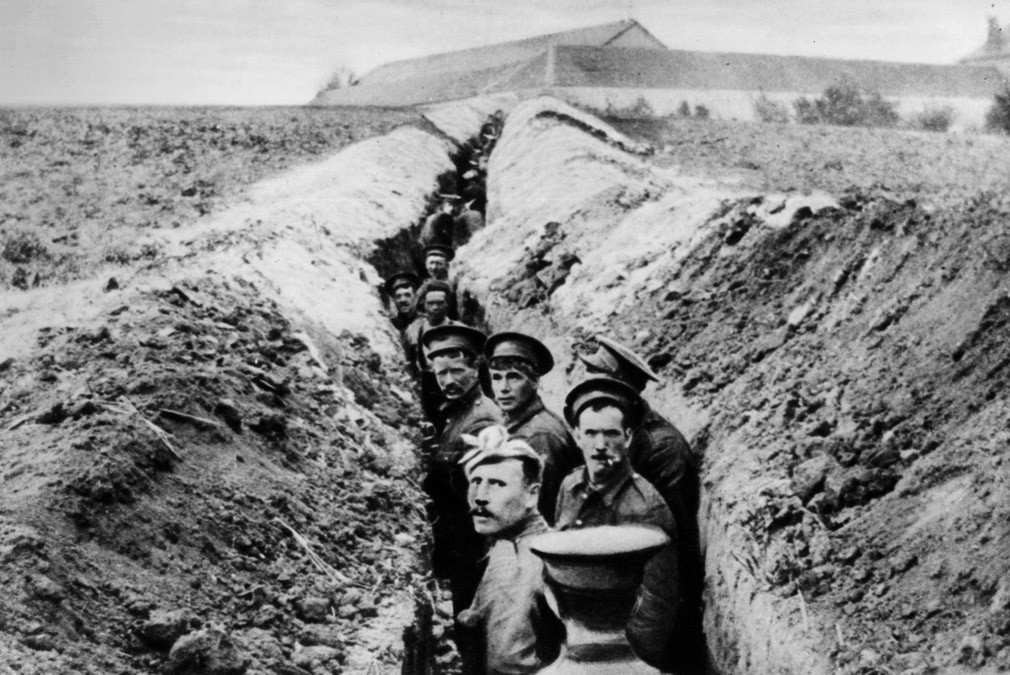
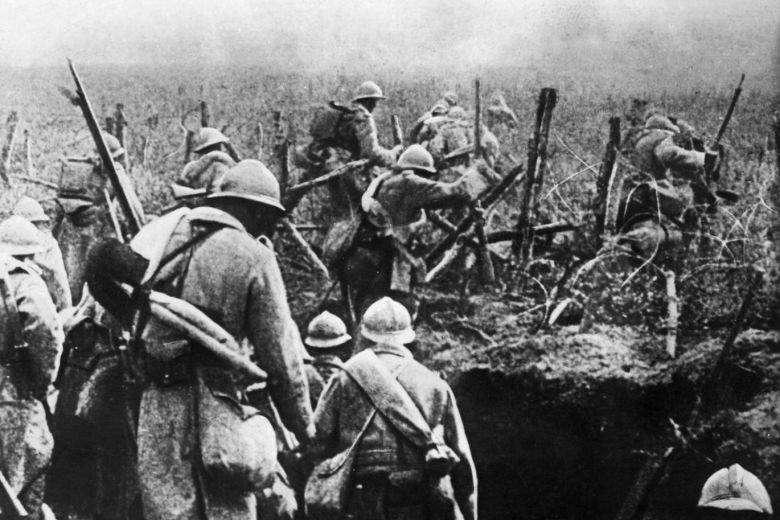
British soldiers line up inside a narrow trench in October 1914, as industrialised warfare began to dominate the conflict.
Was the War Triggered by a Royal Family Rivalry?
The outbreak of war is sometimes framed as a tragic family dispute played out on a continental scale. Europe’s leading monarchs were closely related: Britain’s King George V, Germany’s Kaiser Wilhelm II, and Russia’s Tsar Nicholas II were first cousins who had known one another since childhood.
These personal relationships did not prevent rivalry. Wilhelm II, in particular, harboured deep resentment toward Britain and struggled with his own sense of inadequacy within the extended royal family. Some historians argue that his personality and grievances influenced German foreign policy.
A documentary released in the late 2010s explored how these family tensions may have shaped political decisions. The monarchs, it suggested, drifted toward disaster without fully grasping the consequences, driven by pride, insecurity, and mutual suspicion.
While royal relationships alone did not cause the war, they mattered. Personal diplomacy failed where institutional diplomacy might have succeeded. As relations between the cousins deteriorated, so too did relations between their nations.
By the end of the war, all three dynasties had paid a heavy price. The German Kaiser was deposed and fled into exile. The Russian Tsar and his family were executed during the revolution. Britain emerged victorious but financially weakened, presiding over an empire burdened by debt and unrest.
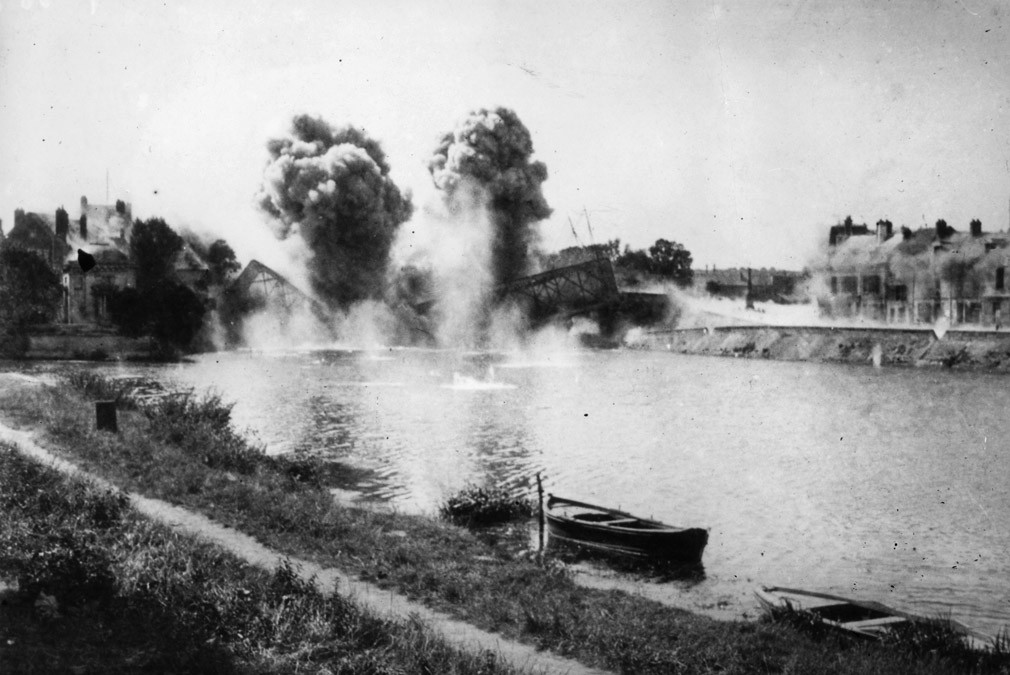
A bridge over the River Aisne in France lies in ruins after being destroyed during the fighting.
Which Nation Bears the Greatest Responsibility?
Determining responsibility for the war has long divided historians. Some argue that Germany played the central role, particularly by issuing Austria-Hungary a so-called “blank cheque,” promising unconditional support against Serbia. Critics maintain that without this assurance, Vienna might have pursued a more cautious course.
Others place greater emphasis on Serbian nationalism, pointing to the tolerance shown toward extremist groups operating within its borders. From this perspective, the assassination in Sarajevo was not an isolated act but the product of unchecked political violence.
Still others argue that responsibility was shared across Europe. Diplomatic failures, rigid military planning, and political miscalculations combined to make escalation more likely than compromise.
Rather than asking who caused the war, some historians ask who might have prevented it. In that framing, blame becomes less about guilt and more about missed opportunities.
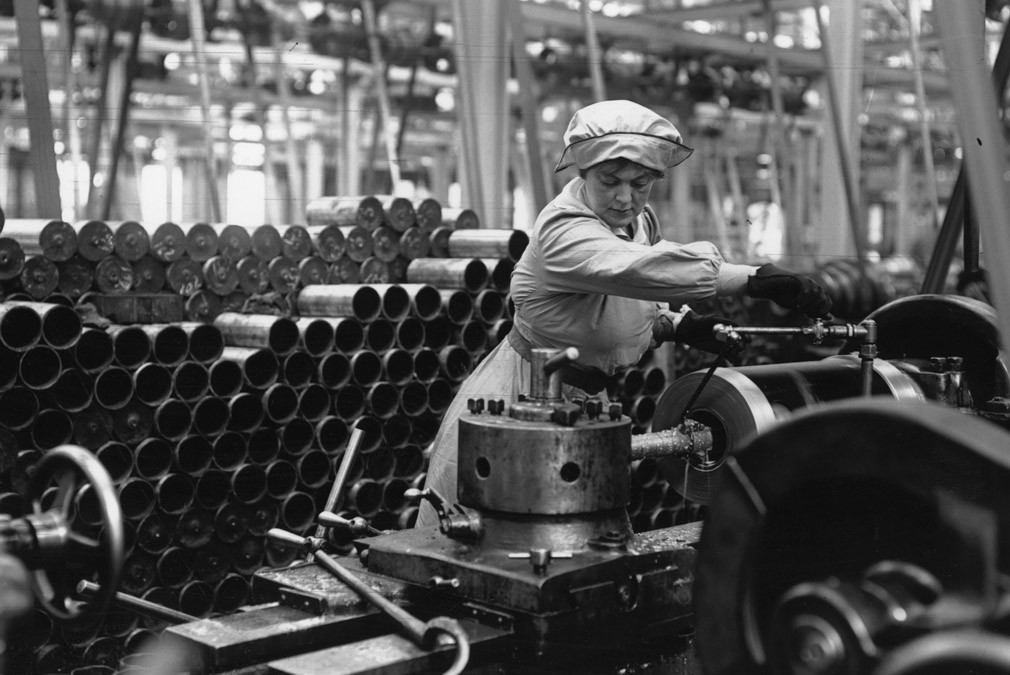
A female munitions worker operates machinery in an armaments factory, reflecting how total war reshaped civilian life.
Why Did the United States Enter the War?
For nearly three years, the United States remained officially neutral. President Woodrow Wilson resisted calls for intervention, believing that America should avoid entanglement in a European conflict.
Public opinion began to shift in 1915 when a German submarine sank the British passenger liner Lusitania, killing nearly 1,200 people, including 128 Americans. The incident provoked outrage and raised questions about the safety of neutral shipping.
Although Germany temporarily curtailed unrestricted submarine warfare, tensions persisted. In early 1917, Germany announced it would resume attacks on shipping. Around the same time, a secret diplomatic message known as the Zimmermann Telegram surfaced, proposing a German-Mexican alliance if the United States entered the war.
These developments proved decisive. In April 1917, Congress declared war on Germany, marking a turning point in the conflict.
The Anglo-German Naval Arms Race
One of the long-term sources of tension between Britain and Germany was competition at sea. Britain depended heavily on maritime trade, and its navy was both an economic lifeline and a symbol of national security.
In the late 19th century, Germany embarked on an ambitious naval expansion, seeking to challenge British dominance. This triggered an arms race that intensified mutual suspicion.
Britain responded with technological innovation, launching the HMS Dreadnought in 1906. Its design rendered existing battleships obsolete and forced rivals to start over. Although Britain maintained naval superiority, Germany’s challenge damaged relations beyond repair.
Unable to match Britain’s naval spending, Germany shifted focus back to its army, but the political damage had already been done.
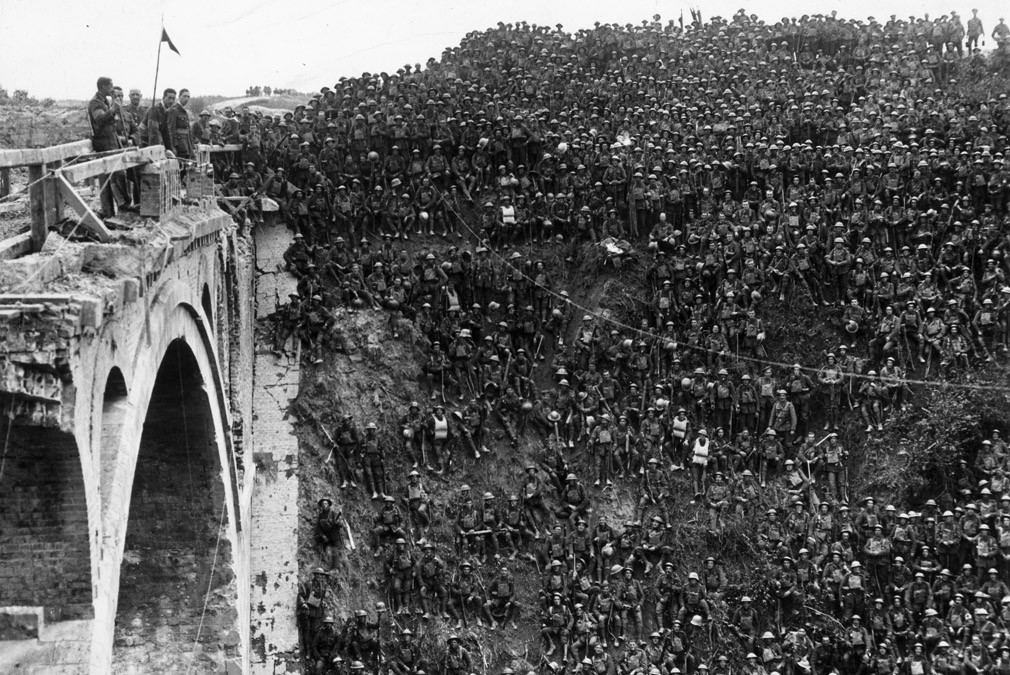
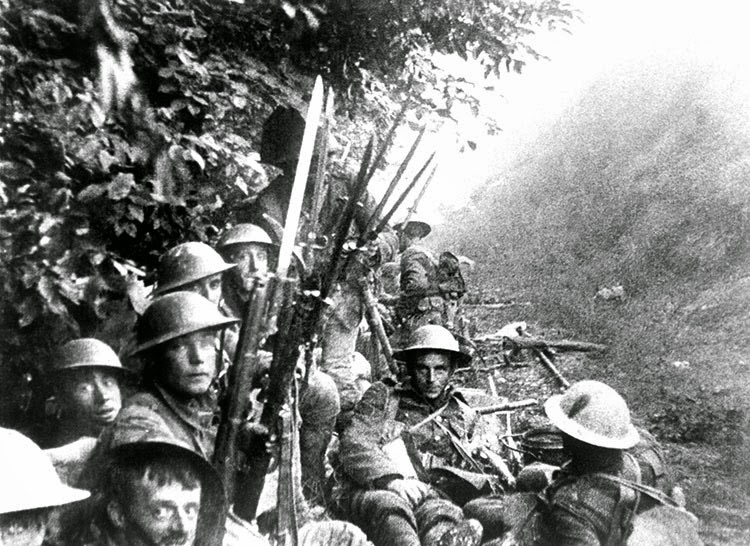
British troops rest along the banks of the St Quentin Canal in France during the final year of the war.
Is Assigning Blame the Wrong Question?
Some historians argue that searching for a single culprit oversimplifies a deeply complex event. Margaret MacMillan has suggested that the international system itself was fundamentally unstable, built on rigid alliances, secret treaties, and an overreliance on military solutions.
Diplomatic mechanisms existed, but leaders increasingly viewed war as an acceptable tool of policy rather than a last resort. Once that mindset took hold, restraint became politically difficult.
Can Any Individual Be Held Responsible?
Attempts to identify key individuals often highlight a small group of political and military leaders whose decisions carried enormous weight.
Figures frequently cited include Kaiser Wilhelm II, whose confrontational leadership style influenced German policy; David Lloyd George, who moved from caution to advocacy of war; Tsar Nicholas II, torn between alliance commitments and fear of conflict; Archduke Franz Ferdinand, whose assassination provided the immediate trigger; Prime Minister Herbert Asquith, who led Britain into war; and Foreign Secretary Edward Grey, whose warnings failed to prevent escalation.
Each acted within a complex web of pressures and constraints. Together, their choices helped steer Europe toward catastrophe.
The First World War did not begin because of a single bullet, treaty, or personality. It emerged from a system strained by ambition, fear, and miscalculation—one that collapsed under its own weight in the summer of 1914.