

Aviation is entering a period of transition that goes far beyond incremental improvements in engines or aerodynamics. For more than a century, aircraft design has followed a relatively stable pattern built around runways, fossil fuels, and human pilots onboard every flight. That foundation is still strong and will remain dominant for many years, but it is no longer the only direction aerospace engineers are exploring.
Rapid urbanization, growing congestion on roads, environmental pressure to reduce emissions, and advances in electric propulsion, automation, and lightweight materials have opened the door to entirely new categories of aircraft. Instead of focusing only on long-haul jets or conventional helicopters, manufacturers are now experimenting with short-range electric aircraft, vertical takeoff platforms, autonomous rotorcraft, and hybrid designs that blur the line between airplanes, helicopters, and ground vehicles.
Major aerospace companies such as Airbus and Boeing are investing alongside startups that move faster and take greater risks. Some of these concepts are aimed at urban air mobility, offering alternatives to ground transport in crowded cities. Others focus on cargo logistics, surveillance, or specialized missions where autonomy and efficiency matter more than passenger comfort. A few attempt to revive ideas once considered science fiction, such as roadable aircraft and personal flying vehicles, using modern technology to solve problems that were once insurmountable.
While not every concept presented will reach mass production, each reflects a serious response to real-world challenges facing aviation today. Together, they provide insight into how aircraft might operate in the coming decades—shorter routes, quieter propulsion, greater automation, and closer integration with everyday transportation systems.
The following aircraft concepts represent different approaches to this evolving landscape, highlighting how designers and manufacturers are rethinking flight itself rather than simply refining what already exists.
Alice Commuter
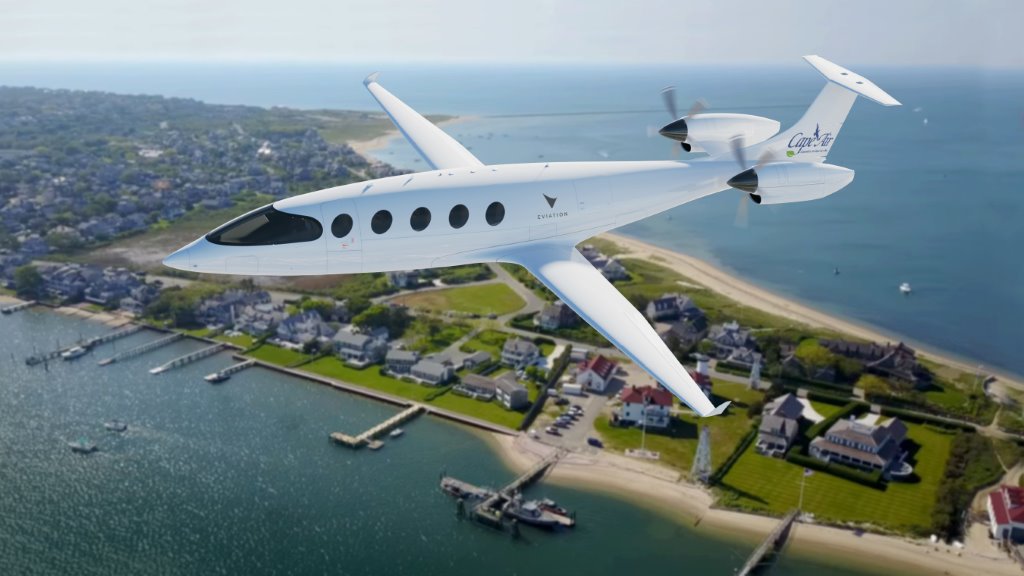
Eviation, an Israel-based aerospace startup, introduced the Alice Commuter as a fully electric light aircraft aimed at short-haul regional travel. Rather than relying on traditional jet or turboprop propulsion, the Alice uses a distributed electric propulsion layout designed to improve efficiency and reduce operating costs.
The aircraft features a single pusher propeller mounted at the rear of the fuselage and two additional pusher propellers positioned at the wingtips. Power is supplied by a large lithium-ion battery system weighing roughly 6,000 pounds. In its proposed configuration, the Alice is designed to carry up to nine passengers with a projected range of around 600 miles, targeting routes that are currently underserved by conventional regional aircraft.
The Alice Commuter has attracted attention beyond the aviation industry, particularly from companies interested in urban and regional mobility. Its developers see it as a catalyst for advancing battery density, charging infrastructure, and electric aircraft certification. Eviation has worked closely with aviation authorities and industry groups as it moves toward certification, positioning the aircraft as a potential early entrant into commercial electric flight.
AirQuadOne
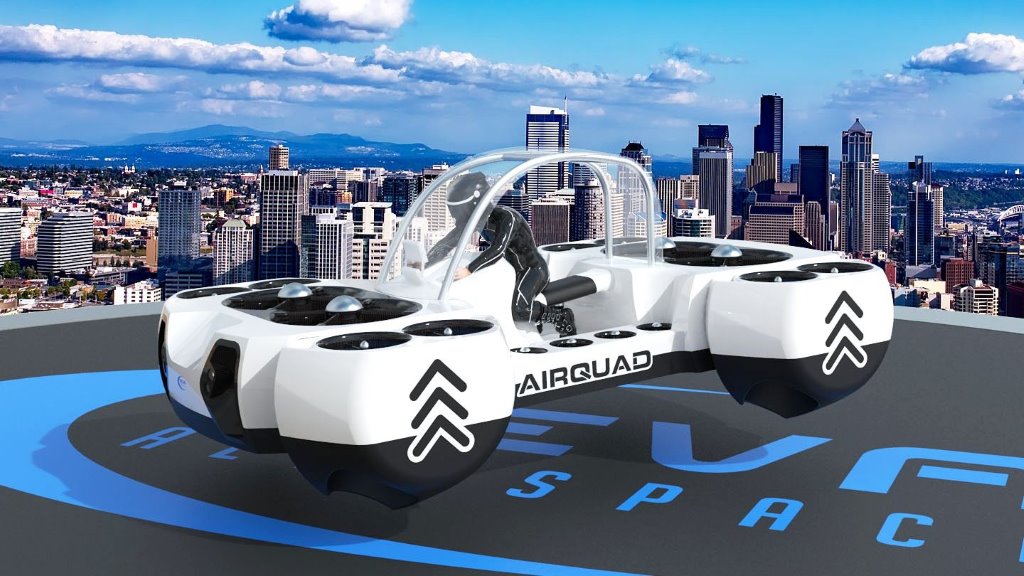
AirQuadOne is a personal aerial vehicle concept developed by Neva Aerospace, a United Kingdom-based aviation consortium. Conceived as a manned vertical takeoff and landing aircraft, AirQuadOne is designed to operate without traditional runways, making it suitable for dense urban environments and constrained landing areas.
The aircraft is powered by Neva’s electric turbofan technology and is intended to rely on rechargeable battery packs compatible with existing electric vehicle charging infrastructure. Charging options include direct cable connections, induction charging, and modular battery replacement, giving operators flexibility depending on infrastructure availability.
AirQuadOne has been under development for several years, with a strong focus on redundancy and safety. The design includes multiple independent flight control systems, backup energy sources, and satellite communication links intended for emergency use. In addition to personal transport, Neva Aerospace has outlined potential applications for unmanned variants, including search and rescue operations, patrol missions, and specialized utility roles.
Airbus VSR700 OPV
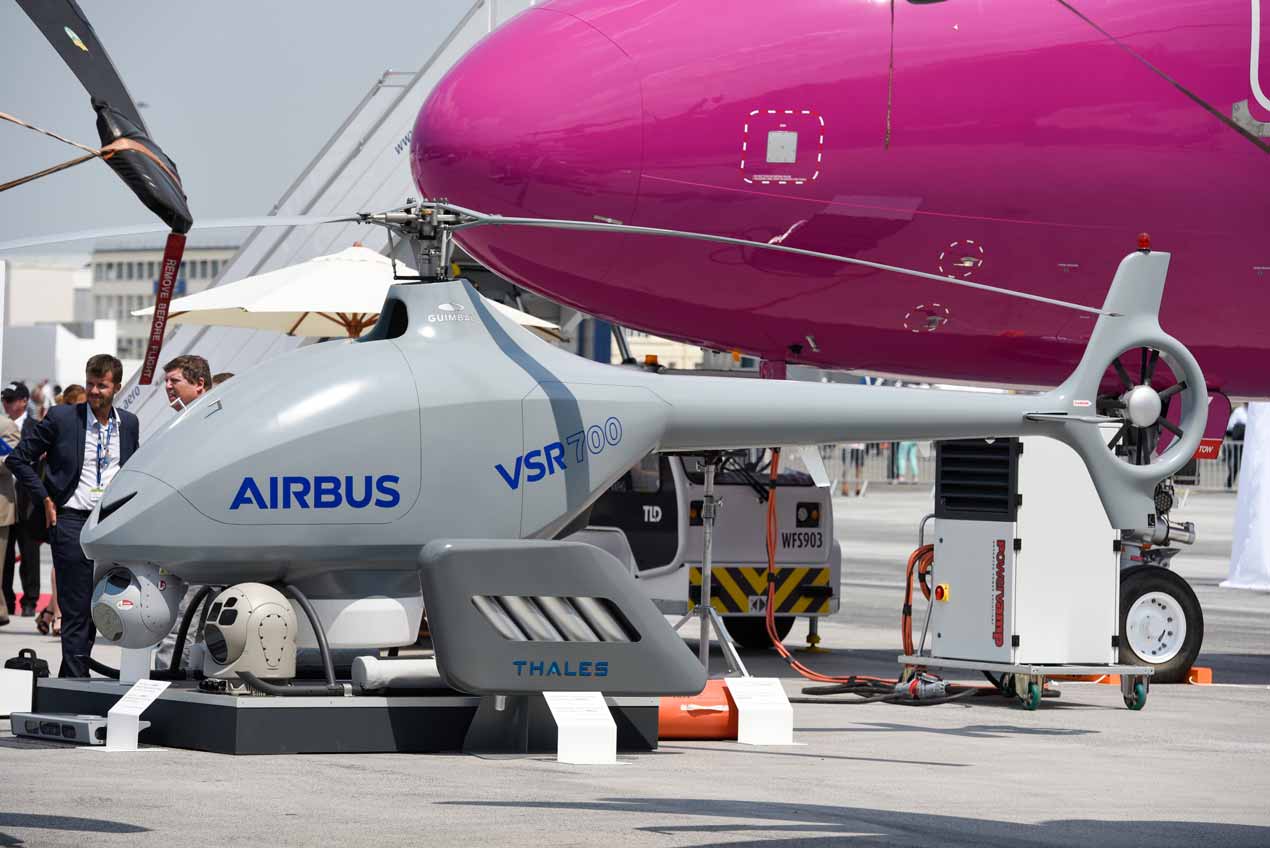
Among the concepts on this list, the VSR700 Optionally Piloted Vehicle stands out as one of the closest to operational service. Developed by Airbus Helicopters in collaboration with Hélicoptères Guimbal, the VSR700 is derived from the civil-certified Cabri G2 helicopter platform.
The VSR700 is designed to operate either with a pilot onboard or in fully autonomous mode. It features a fully digital, multi-channel flight control system capable of managing autonomous flight operations. The aircraft is equipped with electro-optical sensors and radar systems optimized for both maritime and land-based missions.
Airbus envisions the VSR700 as a versatile platform for naval operations, including shipborne surveillance, reconnaissance, and target acquisition. Its ability to operate autonomously while retaining the option for piloted flight makes it particularly attractive for missions requiring flexibility and reduced risk to human crews.
Boeing Electric Freighter
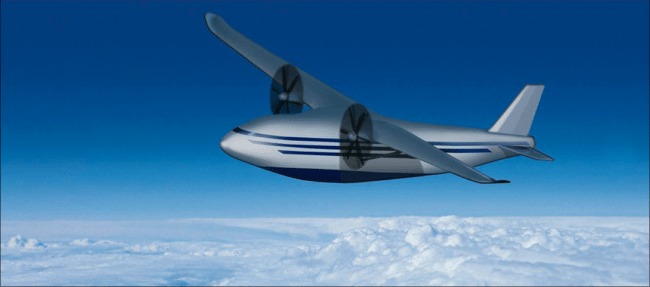
Boeing has explored the concept of electric and hybrid-electric cargo aircraft as part of its long-term research into future aviation systems. The idea centers on smaller, dedicated freighter aircraft optimized for short-range logistics rather than traditional long-haul cargo operations.
These future cargo aircraft are envisioned to use electric or hybrid propulsion systems and operate with a high degree of autonomy. Rather than serving major airports, they could connect regional hubs, distribution centers, and remote locations while minimizing noise and emissions.
Autonomous operation would allow such aircraft to fly routes that avoid densely populated areas, reducing regulatory and safety concerns. While still conceptual, Boeing’s electric freighter vision reflects a broader industry trend toward automated logistics and cleaner propulsion technologies.
AeroMobil Flying Car
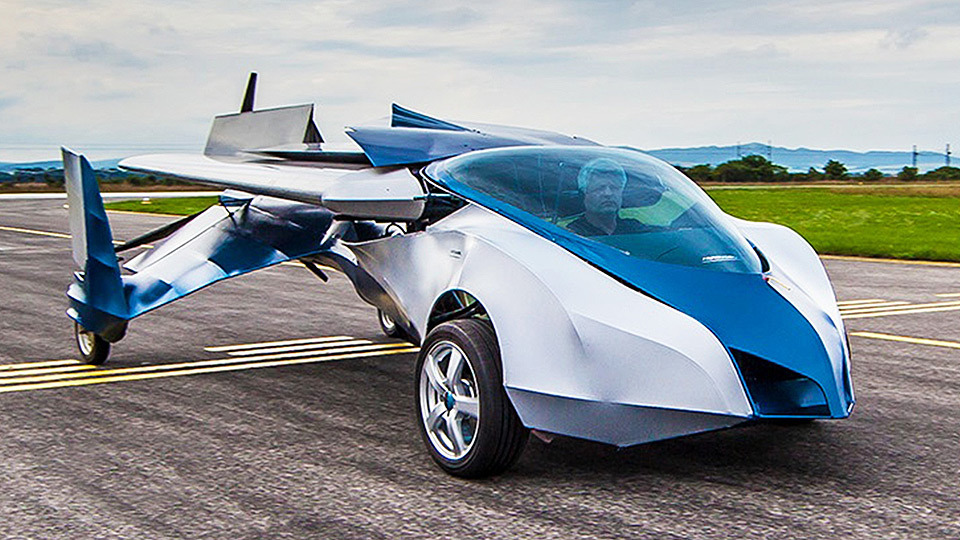
AeroMobil has taken one of aviation’s oldest ideas—the flying car—and turned it into a tangible, road-legal aircraft. Developed by a Slovakian manufacturer, the AeroMobil is designed to function both as a conventional automobile and as a light aircraft capable of taking to the air after a brief transformation process.
The vehicle can convert from driving mode to flight mode in just a few minutes, unfolding its wings and preparing its propulsion system for takeoff. On the road, it offers performance comparable to high-end automobiles, while in the air it achieves cruise speeds and ranges similar to small general aviation aircraft.
The AeroMobil is aimed at a niche market, with early models positioned as premium products. Its specifications highlight a balance between automotive practicality and flight performance, demonstrating that dual-mode vehicles are no longer limited to concept art or experimental prototypes.
CityAirbus
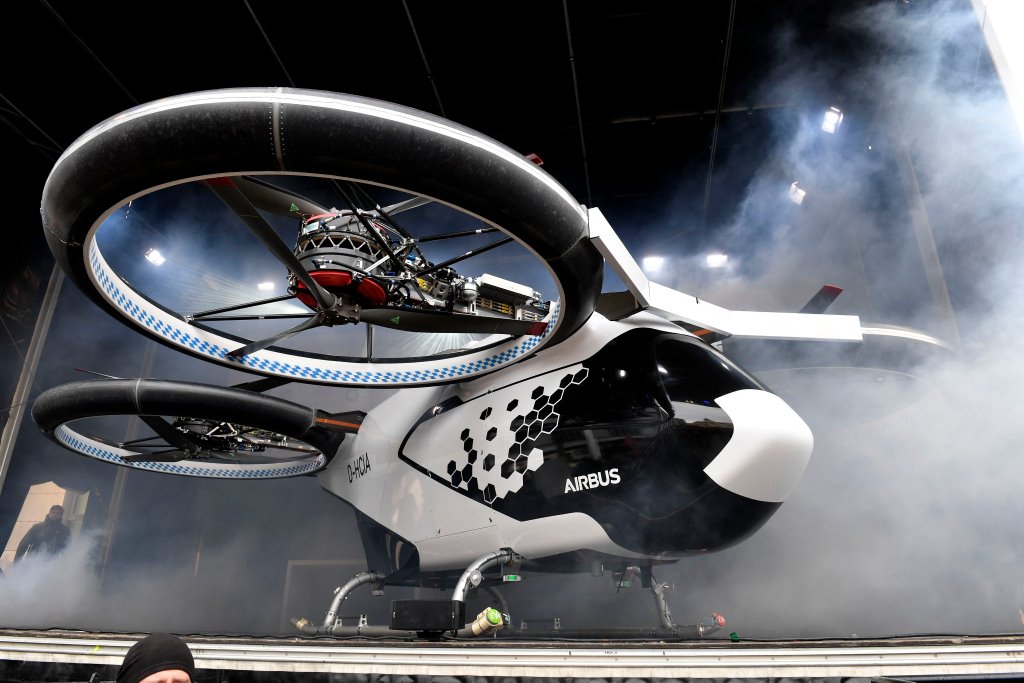
CityAirbus represents Airbus’s vision for large-scale urban air mobility. Developed under Airbus’s innovation division, the aircraft is designed as an electric, autonomous vertical takeoff and landing platform intended to transport passengers across congested urban areas.
Unlike single-seat or experimental personal aircraft, CityAirbus is conceived as a multi-passenger vehicle integrated into future city transport networks. The design emphasizes redundancy, low noise, and automated flight control, all critical factors for routine urban operations.
CityAirbus is part of a broader strategy that includes infrastructure planning, air traffic integration, and regulatory cooperation. Rather than focusing solely on the aircraft itself, the concept addresses how aerial vehicles might coexist safely with ground transportation and existing aviation systems.
Workhorse SureFly VTOL
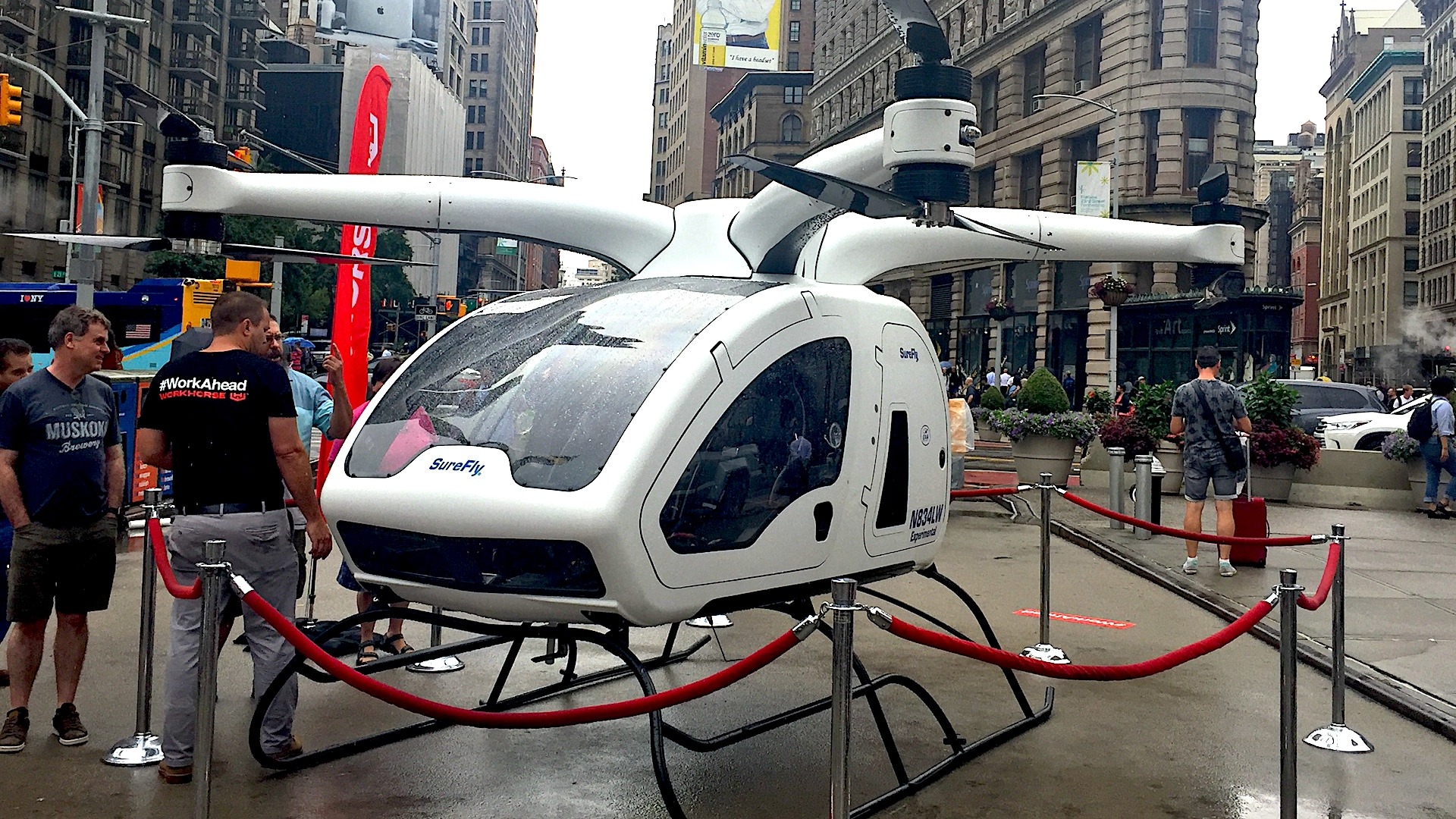
The SureFly VTOL, developed by Workhorse Group, blends elements of helicopters and multi-rotor aircraft into a compact, two-seat platform. The aircraft uses eight independent electric motors driving a single carbon fiber propeller system, backed by a gasoline engine that serves as a range extender.
Safety and redundancy are central to the SureFly’s design. The aircraft includes multiple independent propulsion units, backup battery power, and a ballistic parachute intended to deploy in the event of a critical failure. These features aim to address common concerns surrounding new vertical flight platforms.
With a projected range of approximately 70 miles and a flight ceiling of around 4,000 feet, the SureFly is positioned for short-range personal transport, inspection missions, and specialized utility roles. Its hybrid approach reflects an incremental path toward fully electric vertical flight.
Together, these concepts illustrate how aerospace innovation is moving beyond traditional aircraft categories. Electric propulsion, autonomy, vertical flight, and new operational models are reshaping how designers think about aircraft roles. While each concept addresses different challenges, they all point toward a future where aviation is more flexible, more localized, and more integrated into everyday transportation systems.