

Empires have always been more than just large states with powerful armies. At their peak, they shaped how people lived, traded, worshiped, spoke, and understood the world around them. Some empires ruled through fear, others through law, infrastructure, or culture, but all of them left marks that still show up in modern borders, political systems, languages, and everyday habits. Looking back at these empires isn’t just about dates and battles; it’s about understanding how human civilization took the paths it did.
What follows is a deep look at the most influential empires in history, not simply based on size or military strength, but on how deeply and how long their influence echoed after their power faded.

The Akkadian Empire – The First Known Empire
Often overlooked because it existed so early, the Akkadian Empire holds a special place in history as the world’s first true empire. Emerging in Mesopotamia around the 24th century BCE, it united previously independent city-states under a single ruler for the first time.
Sargon of Akkad didn’t just conquer territory; he created a model of centralized authority that future empires would follow for thousands of years. Governors were appointed, standardized administration was introduced, and military power was used not just for defense but for sustained expansion. This was a radical shift from earlier city-based civilizations.
The Akkadians also helped spread a shared language across a vast region. Akkadian became the diplomatic and administrative language of the Near East long after the empire itself collapsed. Even empires that replaced it borrowed its systems, myths, and political ideas. In many ways, Akkad invented the concept of empire as the world would come to understand it.

The Egyptian Empire – Stability, Belief, and Monumental Power
Ancient Egypt wasn’t an empire in the aggressive expansionist sense for much of its history, but when it did expand, especially during the New Kingdom, its influence was profound and long-lasting.
What made Egypt unique was its extraordinary continuity. For over three thousand years, Egyptian civilization maintained a recognizable identity. Its centralized bureaucracy, religious worldview, and architectural achievements created a powerful sense of order and permanence. Pharaohs weren’t just kings; they were divine figures, linking political authority directly to cosmic balance.
Egypt’s influence spread through trade, diplomacy, and culture as much as through conquest. Writing systems, religious concepts about the afterlife, artistic styles, and engineering knowledge traveled far beyond the Nile. Even later empires, including the Greeks and Romans, looked to Egypt as an ancient source of wisdom.
The idea that a state could survive for millennia by carefully balancing tradition, religion, and administration became one of Egypt’s greatest legacies.

The Persian Empire – Tolerance and Administration on a Global Scale
The Achaemenid Persian Empire was the first empire to truly rule across continents, stretching from the Balkans to the Indus Valley. What made it exceptional wasn’t just its size, but how it governed such diversity.
Rather than forcing uniformity, Persian rulers allowed conquered peoples to keep their religions, languages, and customs. Local elites were often left in place, supervised by imperial officials. This policy of tolerance wasn’t just moral; it was practical. It reduced rebellion and allowed the empire to function smoothly across vast distances.
The Persians built sophisticated road systems, standardized taxation, and established one of the earliest known postal networks. Their administrative efficiency impressed even their enemies. Greek historians, despite often portraying Persia as an adversary, acknowledged its organizational brilliance.
Modern concepts of multicultural governance, federal-style administration, and state tolerance owe a surprising amount to Persian imperial practices.

The Maurya Empire – Power Guided by Philosophy
In ancient India, the Maurya Empire marked a turning point where sheer power met moral reflection. Founded by Chandragupta Maurya, the empire reached its height under Ashoka, one of the most fascinating rulers in history.
After witnessing the devastating human cost of his military campaigns, Ashoka underwent a profound transformation. He embraced Buddhism and attempted something rare in imperial history: ruling through ethical principles rather than fear alone. Violence was discouraged, religious tolerance was promoted, and public welfare became a state concern.
Ashoka’s inscriptions, carved on pillars and rocks across the empire, spread messages about compassion, justice, and responsibility. These weren’t empty slogans; they represented an early attempt to define what a moral state should look like.
The Maurya Empire’s influence extended far beyond its borders by spreading Buddhist philosophy across Asia. Even long after the empire fell, Ashoka’s model of ethical leadership continued to inspire rulers and thinkers.

The Roman Empire – Law, Infrastructure, and the Idea of the State
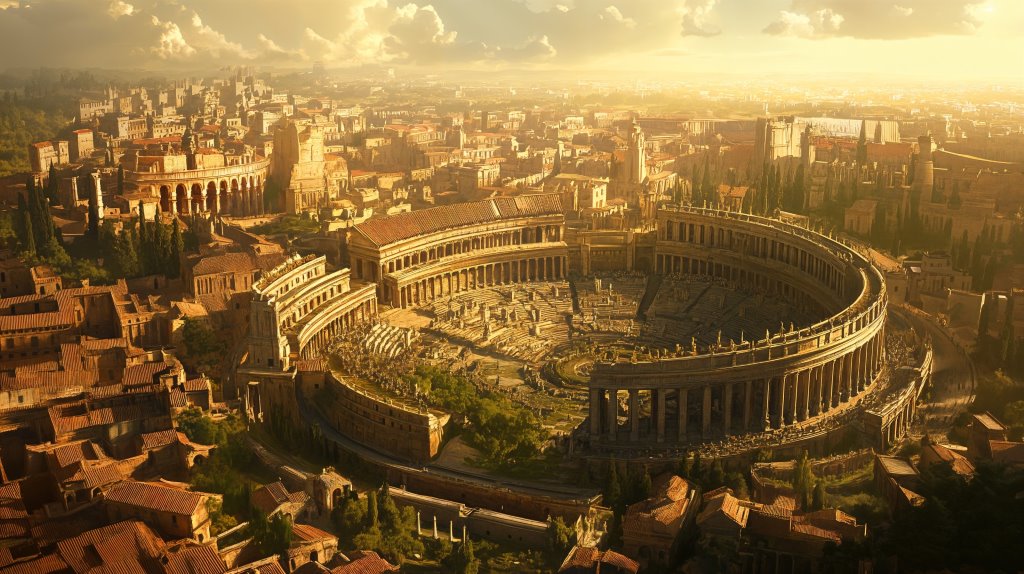
No discussion of influential empires is complete without Rome. The Roman Empire didn’t just conquer territory; it reshaped how societies thought about governance, citizenship, and law.
Roman influence came from systems rather than individuals. Roads, aqueducts, urban planning, legal codes, and administrative divisions created a framework that could outlast emperors. Roman law, in particular, became one of the most enduring legacies, forming the foundation of many modern legal systems.
Citizenship was gradually expanded, turning subjects into stakeholders in the empire. This created loyalty not just through force but through identity. Being Roman meant something, regardless of where you were born.
Even after the Western Roman Empire collapsed, its institutions lived on. The Eastern Roman Empire continued for centuries, while medieval Europe and later modern states borrowed heavily from Roman political and legal ideas. Rome taught the world how an empire could become a civilization.

The Han Dynasty – Bureaucracy and Cultural Identity
In China, the Han Dynasty shaped the country’s identity so deeply that even today, the majority ethnic group calls itself Han. This wasn’t an accident of history; it was the result of deliberate cultural and administrative consolidation.
The Han developed a sophisticated bureaucracy based on merit and education rather than pure heredity. Confucian philosophy became the backbone of governance, emphasizing hierarchy, responsibility, and moral behavior. This system created stability and continuity across generations.
Technological and cultural advances flourished. Paper-making, improved agriculture, and historical record-keeping all expanded during this period. Trade routes like the Silk Road connected China to the wider world, spreading ideas, goods, and influence.
What made the Han Empire truly influential was its ability to define what it meant to be Chinese. Later dynasties rose and fell, but the Han model remained the reference point for legitimacy and governance.

The Islamic Caliphates – Knowledge, Trade, and Cultural Exchange
The early Islamic empires, particularly the Umayyad and Abbasid Caliphates, created one of the most intellectually vibrant periods in human history. Expanding rapidly across the Middle East, North Africa, and parts of Europe and Asia, these empires connected diverse civilizations under a shared cultural framework.
What set them apart was their commitment to knowledge. Scholars translated and preserved Greek, Persian, Indian, and Roman texts, many of which would have been lost otherwise. Mathematics, astronomy, medicine, and philosophy all advanced significantly.
Trade networks flourished, linking continents and enabling cultural exchange on an unprecedented scale. Cities like Baghdad became centers of learning where religion, science, and philosophy interacted rather than clashed.
The Islamic empires demonstrated that influence doesn’t have to come solely from military domination. Ideas, learning, and cultural openness can shape the world just as powerfully.

The Mongol Empire – Speed, Shock, and Global Connection
At first glance, the Mongol Empire looks like history’s ultimate story of destruction. It expanded faster than any empire before or since, leaving cities in ruins and enemies terrified. But stopping the story there misses why the Mongols were so influential.
Under leaders like Genghis Khan and his successors, the Mongols created the largest contiguous land empire in human history. Their military tactics emphasized mobility, intelligence, and psychological warfare. Entire armies were defeated before battle through fear alone. Yet once regions were conquered, the Mongols often ruled with surprising pragmatism.
They promoted trade, protected merchants, and enforced safety along major routes like the Silk Road. This created an era sometimes called the Pax Mongolica, where goods, technologies, and ideas flowed between East and West with relative security. Paper money, gunpowder knowledge, navigation techniques, and even the Black Death traveled along these routes.
The Mongols also practiced religious tolerance and recruited administrators, engineers, and scholars from conquered peoples. Their empire unintentionally accelerated globalization centuries before the modern world existed.

The Byzantine Empire – Preserving Civilization in a Time of Chaos
While often treated as a footnote to Rome, the Byzantine Empire was a powerful civilization in its own right. It preserved Roman law, Greek philosophy, and Christian theology during a period when much of Western Europe was fragmented and unstable.
Constantinople stood as one of the richest and most advanced cities in the world for centuries. Its strategic location made it a hub of trade between Europe and Asia. Byzantine diplomacy was legendary; wars were often avoided through strategic marriages, bribery, and political maneuvering rather than brute force.
One of Byzantium’s greatest achievements was the preservation of classical knowledge. Ancient texts survived because Byzantine scholars copied and studied them. When the empire eventually fell, many of these scholars fled west, helping spark the European Renaissance.
Byzantium showed that influence isn’t always loud or aggressive. Sometimes it comes from endurance, learning, and the ability to adapt over time.

The Ottoman Empire – Bridging Worlds for Centuries
The Ottoman Empire ruled for over six hundred years, controlling territory across Southeast Europe, the Middle East, and North Africa. Few empires managed to balance longevity, diversity, and military strength so effectively.
The Ottomans perfected gunpowder warfare early, using artillery to break medieval fortifications, including the famously impregnable walls of Constantinople. But military success was only part of their story. The empire developed a complex administrative system that allowed different religious communities to govern themselves under imperial oversight.
Trade thrived under Ottoman rule, and major cities became cultural melting pots. Art, architecture, and legal traditions blended influences from Islamic, Byzantine, and local customs. Ottoman law combined religious principles with pragmatic governance.
For centuries, the Ottomans acted as a bridge between East and West, shaping global trade routes and political dynamics. Their decline reshaped modern borders and power structures that still influence global politics today.

The Spanish Empire – A Global Empire Powered by Exploration
The Spanish Empire was the first truly global empire, stretching across Europe, the Americas, Africa, and Asia. Its rise was fueled by maritime exploration, military conquest, and immense flows of wealth from the New World.
Spain’s impact on the Americas was transformative and devastating. Indigenous civilizations were overthrown, populations collapsed due to disease and exploitation, and entirely new societies emerged. At the same time, languages, religion, and cultural traditions spread across continents.
Silver from the Americas reshaped the global economy, linking Europe, Asia, and Africa into a single trading system. The Spanish Empire helped create the foundations of modern globalization, though often at an enormous human cost.
Its influence is still visible today in language, religion, legal systems, and cultural identity across much of the world.

The British Empire – Industry, Institutions, and Global Reach
At its height, the British Empire ruled over nearly a quarter of the world’s population. What made it uniquely influential wasn’t just its size, but how deeply it embedded its institutions across the globe.
Britain exported legal systems, parliamentary governance, economic models, and educational structures to its colonies. Railways, ports, and communication networks were built to serve imperial interests, but many became the backbone of modern nations.
The empire was driven by industrial power and naval dominance. Control of sea routes allowed Britain to shape global trade and politics for generations. Yet its legacy is deeply complex. Alongside infrastructure and institutions came exploitation, cultural disruption, and long-lasting inequalities.
Modern international trade, finance, and diplomacy still operate within frameworks shaped during the British imperial era.

The Soviet Union – Ideology as Empire
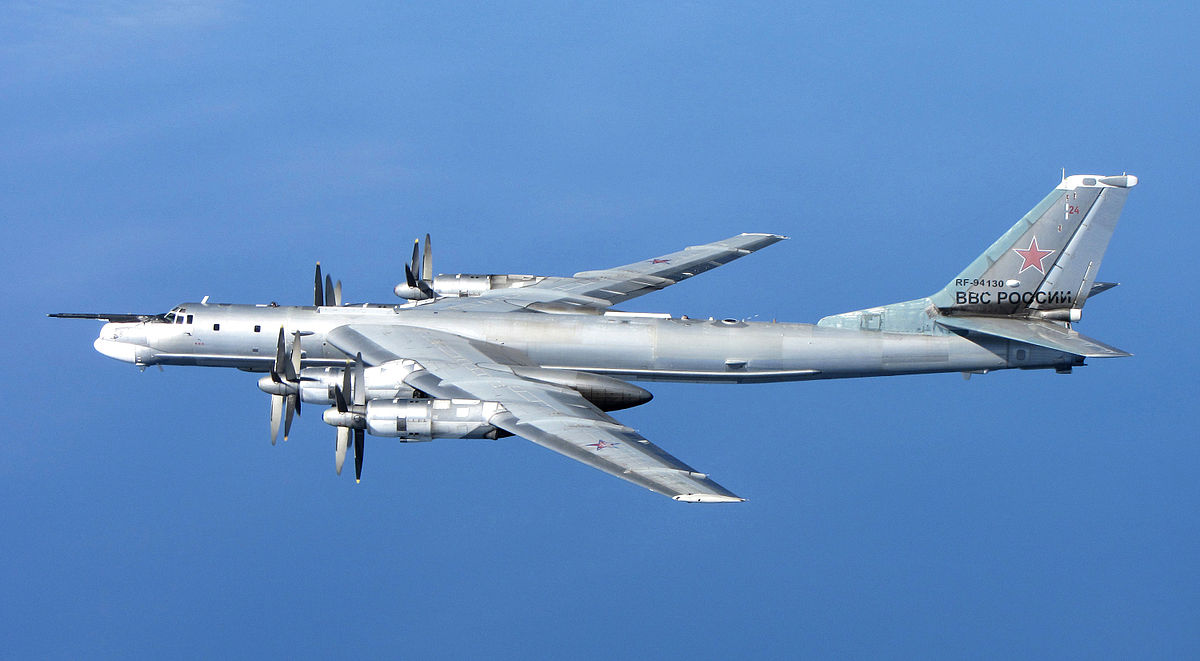
Although short-lived compared to ancient empires, the Soviet Union exerted immense global influence. Unlike traditional empires built on dynasties or conquest alone, the USSR was driven by ideology.
It reshaped Eastern Europe, Central Asia, and parts of Asia through centralized planning, political control, and military power. Its influence extended far beyond its borders through revolutionary movements, proxy wars, and ideological competition with the West.
The Soviet model inspired political systems, economic structures, and resistance movements worldwide. Even after its collapse, its impact remains visible in global politics, security alliances, and national identities.
The Soviet Union showed that empires don’t always need emperors. Ideas themselves can build and sustain imperial power.
Why Empires Still Matter Today
Empires may rise and fall, but their influence rarely disappears. Borders, languages, legal systems, religions, and global trade patterns are all shaped by imperial legacies. Understanding these empires helps explain why the world looks the way it does today.
History isn’t just a record of dominance and collapse; it’s a story of continuity. Every modern society carries fragments of empires long gone, woven into laws, culture, and collective memory. Studying them isn’t about glorifying power, but about recognizing how deeply interconnected human history truly is.