


Aircraft carriers are often described as floating air bases, but that phrase barely captures their true significance. These massive warships are mobile centers of power projection, capable of launching air operations anywhere on the planet without relying on foreign bases. Since World War II, aircraft carriers have become the backbone of blue-water navies, allowing nations to project military, political, and humanitarian influence far beyond their coastlines. Their presence alone can deter conflict, reassure allies, or signal that a nation is prepared to act.
What makes modern aircraft carriers so formidable is not just their size, but how much capability they pack into a single hull. A full-length flight deck supports fighters, strike aircraft, surveillance planes, and helicopters. Below deck, complex systems manage aircraft launch and recovery, weapons storage, command and control, power generation, and crew life for thousands of sailors. Only a handful of countries possess the industrial capacity, financial resources, and operational experience required to build and operate these giants, which is why aircraft carriers remain one of the clearest symbols of major naval power.
Below is a look at the ten largest and most powerful aircraft carriers in the world today, ranked by overall size, capability, technology, and real-world operational impact.
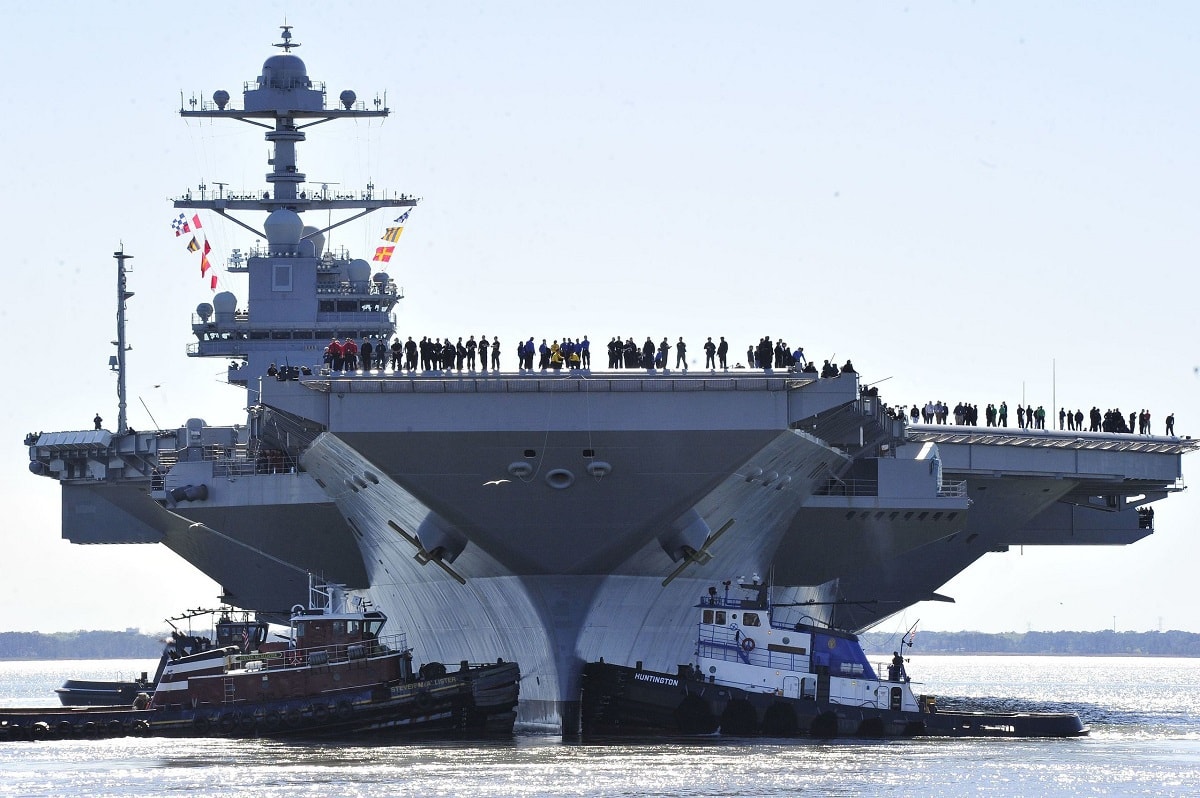
1. Gerald R. Ford Class (United States)
The Gerald R. Ford class represents the most advanced aircraft carrier design ever put to sea. Built as the replacement for the legendary Nimitz class, these carriers were designed from the ground up to increase combat effectiveness while reducing long-term operating costs. The lead ship, USS Gerald R. Ford, introduced sweeping changes in how carriers generate power, launch aircraft, and manage onboard systems.
One of the most important innovations is the shift to an all-electric ship design, eliminating steam systems and allowing far greater electrical output. This power supports the electromagnetic aircraft launch system, advanced arresting gear, and future technologies such as directed-energy weapons. The Ford class is designed to generate significantly more sorties per day than previous carriers while operating with a smaller crew, making it the most powerful carrier ever constructed.
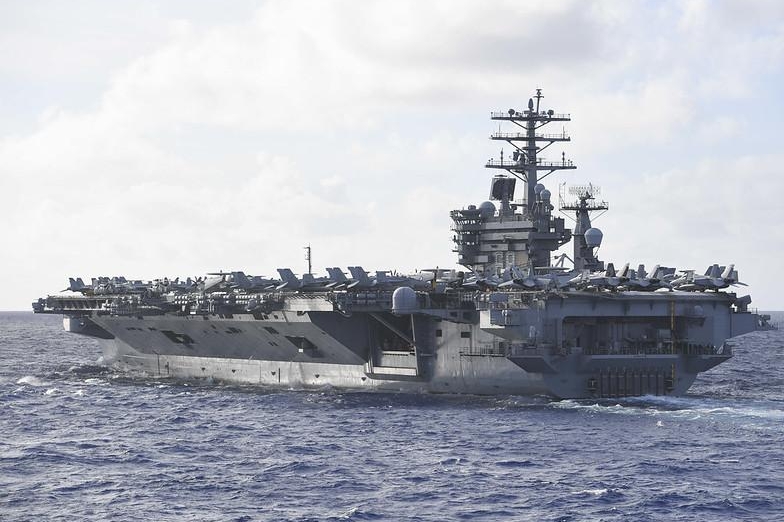
2. Nimitz Class (United States)
For decades, the Nimitz class has been the global benchmark for aircraft carrier power. These nuclear-powered giants form the core of U.S. naval strength and have operated in virtually every major conflict and crisis since the late Cold War. Their sheer size, endurance, and versatility allow them to remain at sea for extended periods without refueling.
Each Nimitz-class carrier supports a large and flexible air wing capable of striking targets on land and at sea, conducting surveillance, enforcing air superiority, and supporting humanitarian missions. With ten ships built and decades of operational experience behind them, the Nimitz class remains one of the most capable carrier designs ever fielded.
3. Queen Elizabeth Class (United Kingdom)
The Queen Elizabeth class marked Britain’s return to operating large fleet carriers. These ships are roughly three times the size of the older Invincible class and were designed with efficiency, survivability, and modern air operations in mind. Their distinctive twin-island design separates navigation and flight operations, improving visibility and command efficiency.
Advanced weapons handling systems dramatically reduce the manpower needed to move armed aircraft to the flight deck, while electric propulsion improves fuel efficiency and lowers operating costs. Designed primarily around short takeoff and vertical landing aircraft, these carriers serve as the centerpiece of the UK’s modern naval force and are capable of both combat and humanitarian missions.
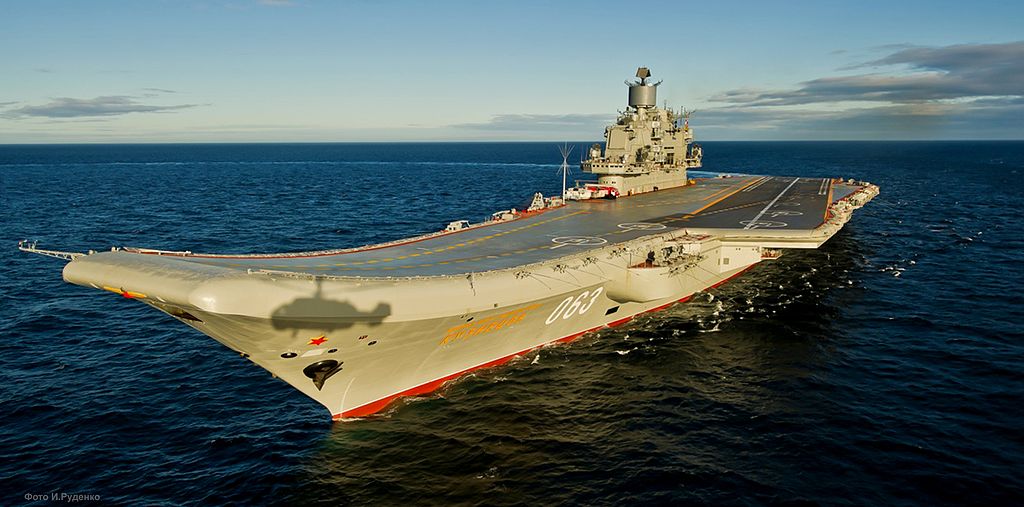
4. Admiral Kuznetsov Class (Russia)
The Admiral Kuznetsov occupies a unique place among aircraft carriers. Officially classified as a heavy aircraft-carrying cruiser, it combines carrier aviation with significant onboard missile armament. Unlike Western carriers, it uses a ski-jump ramp rather than catapults to launch aircraft, which influences the type and payload of planes it can operate.
Despite its well-known technical challenges, the Kuznetsov remains Russia’s only aircraft carrier and plays an important role in supporting naval aviation and fleet operations. Its onboard anti-ship missile systems and layered defenses reflect a different design philosophy focused on self-protection and fleet support.
5. Liaoning (China)
Liaoning was China’s first aircraft carrier and a major milestone in the country’s naval development. Originally built for the Soviet Navy, the ship was acquired unfinished and underwent extensive modernization before entering service with the People’s Liberation Army Navy. While initially intended as a training platform, Liaoning has since become combat-capable.
The carrier has been used to develop China’s carrier aviation doctrine, pilot training programs, and operational experience. Its commissioning marked the beginning of China’s transition toward a true blue-water navy and laid the foundation for more advanced indigenous carriers.
6. INS Vikramaditya (India)
INS Vikramaditya is India’s largest aircraft carrier and a key component of its maritime strategy. Converted from a former Russian vessel, it underwent extensive refurbishment, including new propulsion systems, redesigned flight decks, and modernized sensors. The carrier operates a sizable air wing of multirole fighters and helicopters.
Designed around a ski-jump launch system, Vikramaditya emphasizes flexibility and regional power projection. Its role extends beyond combat, supporting maritime security, disaster relief, and strategic presence across the Indian Ocean.
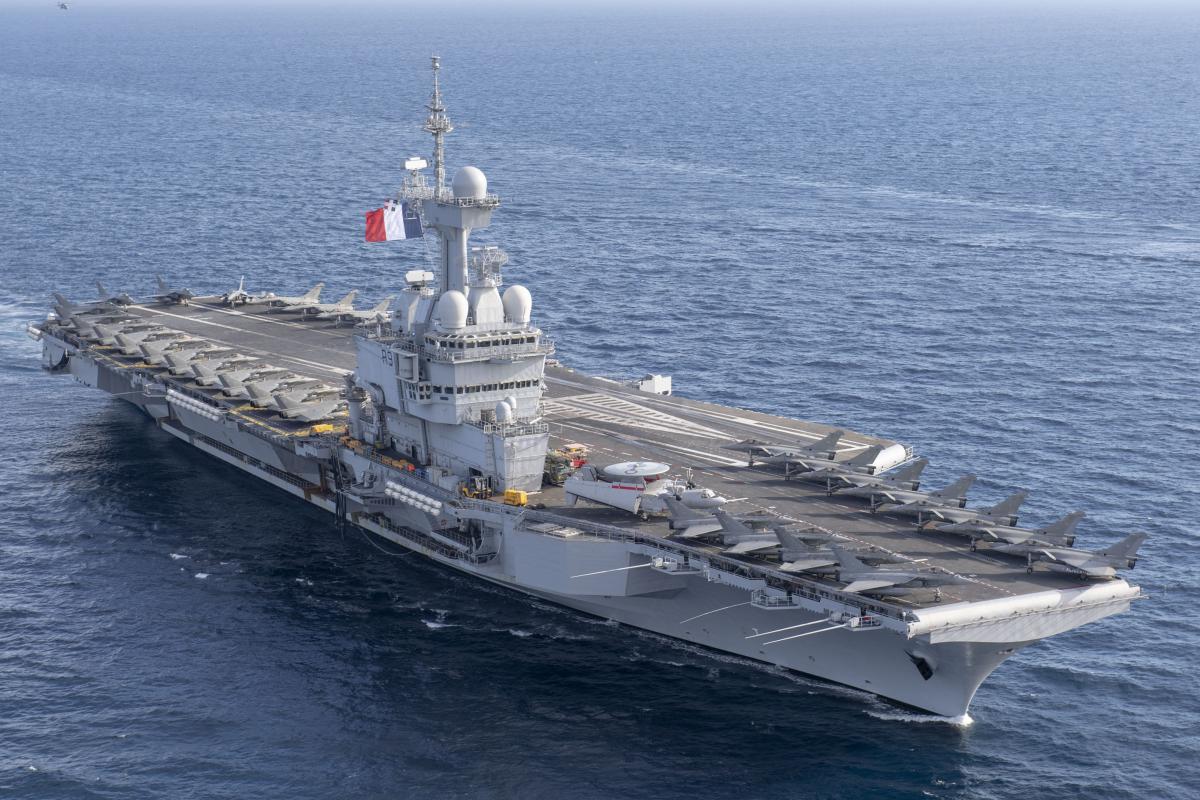
7. Charles de Gaulle (France)
The Charles de Gaulle is the only nuclear-powered aircraft carrier operated outside the United States. Though smaller than American supercarriers, it is an exceptionally capable vessel tailored to French strategic needs. Nuclear propulsion grants it extended endurance and operational independence.
The carrier operates advanced multirole fighters and airborne early warning aircraft, allowing it to conduct complex air operations far from home waters. As the flagship of the French Navy, Charles de Gaulle plays a central role in both national defense and international coalition operations.
8. Shandong (China)
Shandong is China’s first domestically built aircraft carrier and an evolution of the Liaoning design. Improvements include refined island structures, upgraded electronics, and increased aircraft capacity. While still using a ski-jump launch system, Shandong reflects China’s growing confidence and capability in carrier construction.
The ship enhances China’s ability to operate multiple carrier groups simultaneously and signals the country’s intent to expand its naval reach beyond regional waters.
9. INS Vikrant (India)
INS Vikrant represents a major step forward for India’s shipbuilding industry. As the country’s first indigenously built aircraft carrier, it showcases domestic design, construction, and systems integration capabilities. Vikrant is designed to operate modern multirole fighters and a variety of helicopters.
The carrier strengthens India’s ability to maintain a continuous carrier presence and supports its role as a leading naval power in the Indian Ocean region.
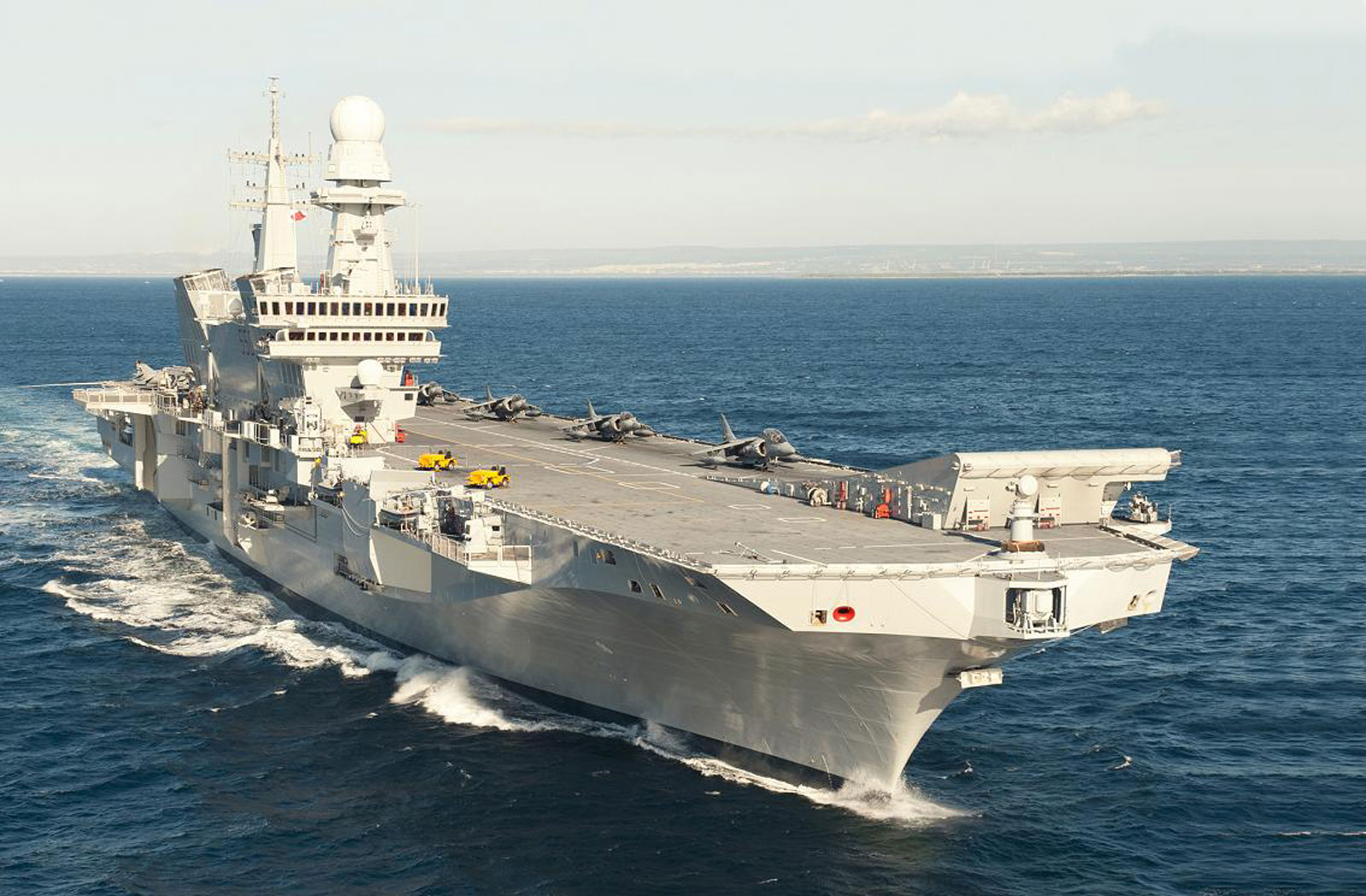
10. Cavour (Italy)
While smaller than traditional supercarriers, Italy’s Cavour earns its place through versatility and modern design. It supports short takeoff and vertical landing aircraft and can be rapidly reconfigured for humanitarian assistance, disaster relief, or amphibious operations.
Cavour demonstrates how modern carriers do not need extreme size to be effective. Its flexibility allows it to contribute meaningfully to NATO operations and international missions.
Aircraft carriers remain unmatched in their ability to project power, influence events, and respond rapidly to crises anywhere in the world. Whether through overwhelming combat capability or lifesaving humanitarian support, these massive ships continue to shape global security. As technology advances and new carrier designs emerge, their role may evolve, but their importance is unlikely to fade anytime soon.