
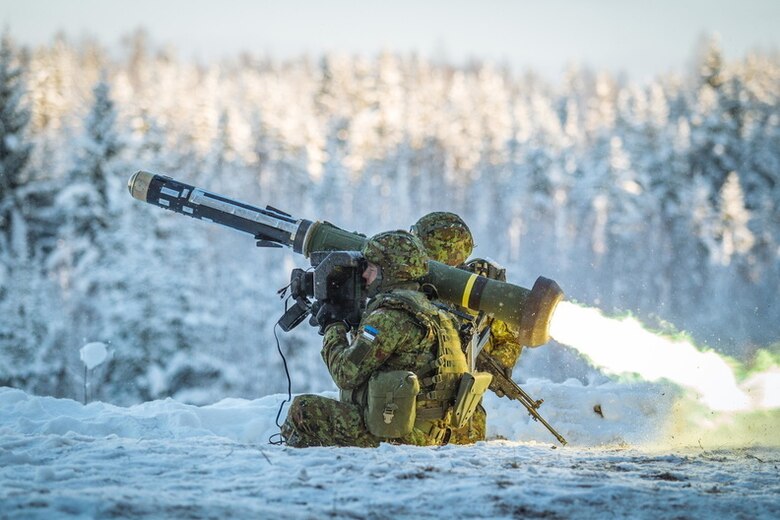

Modern warfare has produced countless weapons designed to stop armored vehicles, but very few have earned the kind of reputation the Javelin anti-tank missile has. Mention its name in military circles and it immediately brings up images of disabled tanks, smoking turrets, and crews abandoning vehicles that were supposed to be nearly invulnerable. The Javelin isn’t just another missile in a long list of anti-armor systems; it represents a shift in how infantry can challenge heavy armor on the battlefield.
At its core, the Javelin was designed to give a single soldier the ability to destroy a main battle tank without needing air support, artillery, or complex coordination. That alone hints at its power, but the real story lies in how it achieves that result.
What the Javelin Missile Is Designed to Do
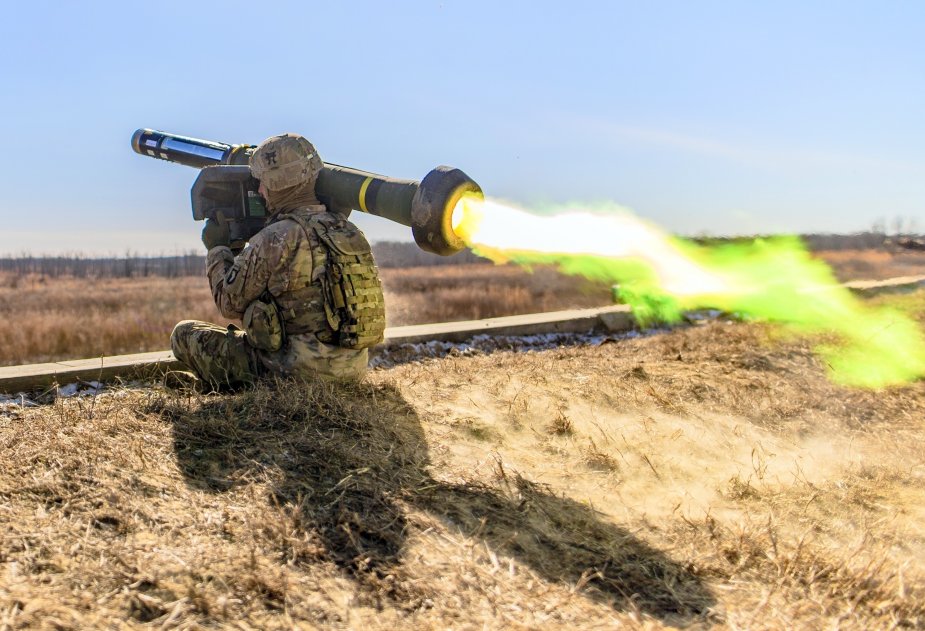
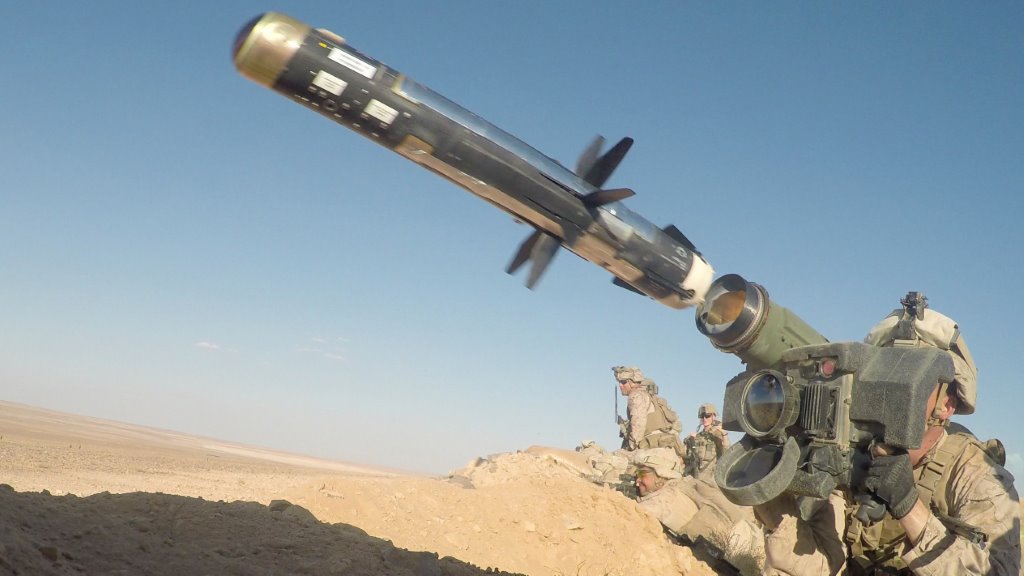
The Javelin is a man-portable, fire-and-forget anti-tank guided missile system. It was developed to replace older wire-guided systems that forced operators to remain exposed while guiding the missile to its target. With the Javelin, once the trigger is pulled, the operator can immediately relocate, take cover, or retreat.
This design philosophy matters. It means the missile doesn’t just hit hard; it changes the risk equation for infantry. A weapon that allows you to strike and disappear is far more powerful than one that requires you to stand still under enemy fire.
How the Javelin Actually Attacks a Tank
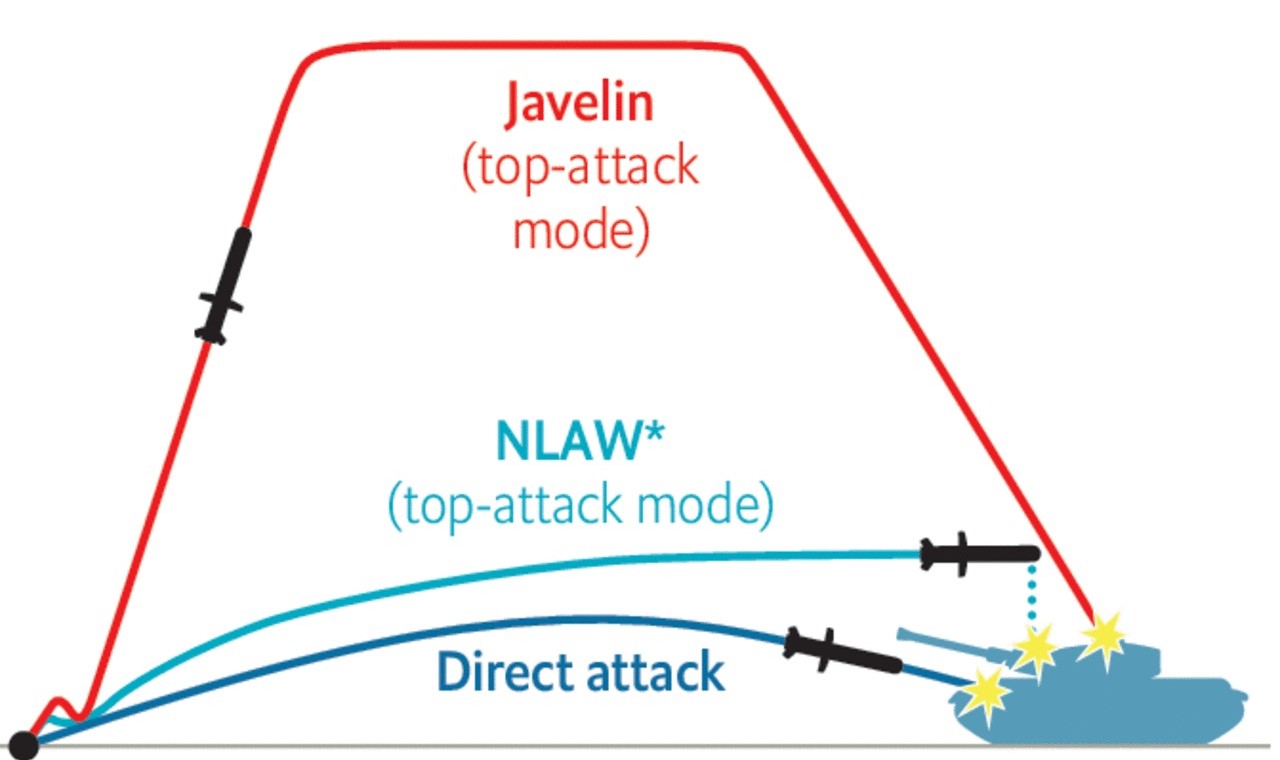
The most famous feature of the Javelin is its top-attack mode. Instead of slamming directly into the thick frontal armor of a tank, the missile climbs after launch and dives onto the target from above. This is critical because the top of a tank turret is almost always the weakest armored section.
In practical terms, this means the Javelin avoids the strongest defenses entirely. Even tanks equipped with heavy frontal composite armor or reactive armor packages are far more vulnerable from above. When the missile strikes, it hits where protection is minimal and where critical components—crew, ammunition storage, and fire-control systems—are concentrated.
The Javelin can also be fired in a direct-attack mode, which is useful against helicopters, bunkers, or lightly armored vehicles. That flexibility increases its usefulness beyond just tank-killing.
Penetration Power and Warhead Design
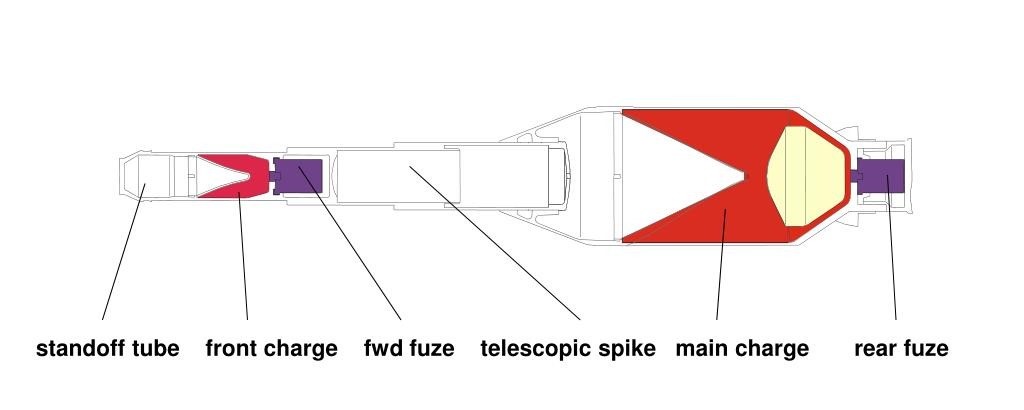
The Javelin uses a tandem HEAT (High-Explosive Anti-Tank) warhead. This means it has two explosive charges. The first charge detonates reactive armor or other protective layers, while the second main charge punches through the underlying armor.
Penetration figures are often classified or debated, but it is widely accepted that the Javelin can defeat the armor of modern main battle tanks. In real-world terms, this means that if the missile hits as intended, survival of the vehicle is unlikely. Even when a tank is not completely destroyed, it is usually rendered combat-ineffective—burned out electronics, killed or wounded crew, or catastrophic internal damage.
This is where the idea of “power” becomes more than just explosive force. The missile doesn’t need to vaporize a tank to succeed. If it removes that vehicle from the fight, it has done its job.
Range, Accuracy, and Fire-and-Forget Capability
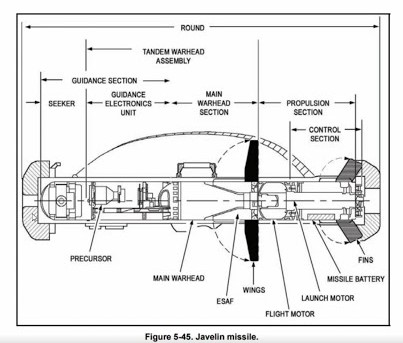
The Javelin has an effective range of several kilometers, which allows infantry to engage tanks before those tanks can accurately return fire with machine guns or cannons. Combined with its infrared imaging seeker, the missile locks onto the heat signature of a target before launch.
Once fired, the missile guides itself. There is no wire, no radio control, and no need for continuous tracking by the operator. This dramatically increases hit probability, especially in chaotic combat conditions where smoke, explosions, and movement can disrupt older guidance systems.
Accuracy isn’t just about hitting the target; it’s about hitting the right part of the target. The Javelin’s guidance system is optimized to strike the turret roof, maximizing damage with every successful hit.
Battlefield Impact and Psychological Power
One of the less discussed but extremely important aspects of the Javelin’s power is its psychological effect. Tank crews know that modern battlefields are saturated with anti-tank weapons, but the Javelin stands out because of how little warning it provides.
There is no visible laser designation. There is no long guidance wire trailing back to an operator. Often, the first sign of an attack is the impact itself. This uncertainty changes how armored units move, where they position themselves, and how aggressively they operate.
In conflicts where Javelins have been used, armored forces often slow down, spread out, or avoid certain terrain altogether. When a single infantry team can deny an area to tanks, that is a form of power that goes beyond raw explosive yield.
Limitations That Keep the Power in Perspective
Despite its reputation, the Javelin is not a magical weapon. It is expensive, heavy compared to simpler rocket systems, and requires training to use effectively. Each missile costs far more than a basic unguided rocket, which limits how many can be deployed at once.
It also relies on infrared guidance, which can be affected by environmental conditions such as extreme heat, heavy smoke, or countermeasures. While it is highly effective, it is not invincible, and modern armored forces continue to develop active protection systems designed to intercept incoming missiles.
Understanding these limitations is important. The Javelin’s power lies in precision and lethality, not in infinite availability or flawless performance.
So, How Powerful Is It Really?
The true power of the Javelin anti-tank missile is not just measured in armor penetration or explosive force. It lies in what it allows infantry to do. A single soldier can destroy or disable a multi-million-dollar armored vehicle from a concealed position and then survive to fight again.
That kind of capability reshapes the battlefield. Tanks are no longer untouchable giants; they are vulnerable assets that must move carefully, supported by infantry and countermeasures. The Javelin doesn’t end armored warfare, but it ensures that armor can never dominate uncontested.
In that sense, the Javelin is powerful not only because it destroys tanks, but because it forces entire armies to rethink how tanks are used in modern combat.