The previous month, the National Nuclear Security Administration, the modern successor to what was once known as the Atomic Energy Commission, confirmed that the first unit of a new class of strategic nuclear weapons had completed production at the Pantex nuclear weapons facility in the Texas Panhandle. The warhead in question, designated the W76-2, was built specifically for deployment aboard submarine-launched Trident missiles, platforms capable of traveling more than 7,500 miles from their launch point. Within a matter of months, a number of these warheads—how many remains undisclosed—were scheduled for transfer to the U.S. Navy, where they would be integrated into active operational systems.
At first glance, what distinguishes this warhead from its predecessors is not an increase in raw destructive power, but the opposite. For decades, Trident missiles have carried thermonuclear warheads with yields measured in the range of roughly 100 kilotons of TNT. The W76-2, by contrast, has a yield of approximately five kilotons. According to Stephen Young of the Union of Concerned Scientists, this places its explosive force at roughly one-third of the power of the bomb dropped on Hiroshima in August of 1945. Yet this apparent reduction in devastation is precisely what has alarmed many nuclear experts. Rather than serving primarily as a deterrent, this weapon has been designed with battlefield “usability” in mind. In seeking what policymakers have described as nuclear flexibility, it crosses a psychological threshold by reframing nuclear weapons not as last-resort symbols of mutual annihilation, but as tools that might actually be employed.
For much of the nuclear age, weapons described as “low-yield” already existed within the arsenals of nuclear powers. These included nuclear artillery shells, air-dropped bombs, and cruise-missile warheads, typically categorized as tactical weapons intended for use in limited regional conflicts. However, following the end of the Cold War, most of these systems were dismantled or retired through arms-reduction agreements between the United States and Russia. That drawdown was welcomed quietly, especially by military commanders who understood that the use of such weapons on any battlefield would almost certainly spiral beyond control. Their removal represented an implicit acknowledgment that nuclear escalation, once triggered, does not remain confined.
-
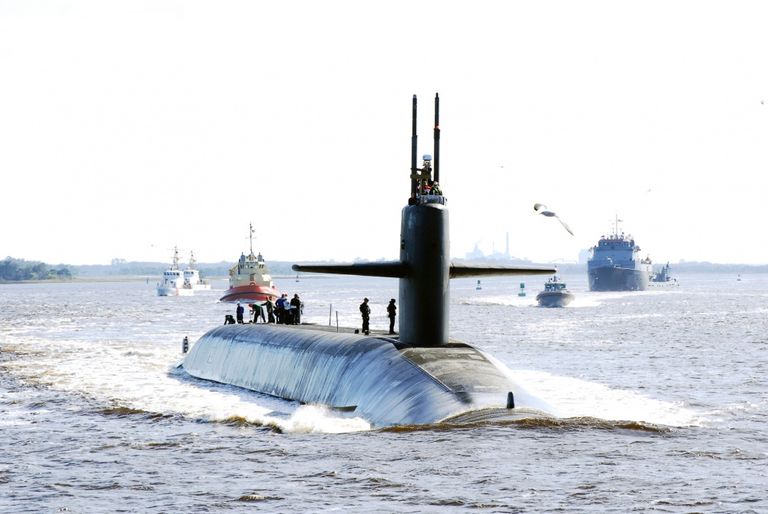
The W76-2 is a compact nuclear warhead categorized as tactical in scale but deployed on a strategic delivery system.
-
It is derived from the existing W76 design, a warhead historically powerful enough to destroy an entire city.
-
Arms-control advocates and nuclear analysts have repeatedly argued that this weapon fills no genuine strategic gap.
Labeling any nuclear weapon as “low-yield” has always rested on a fragile distinction. When radiation effects, fallout patterns, and long-term environmental damage are factored in, the difference between small and large nuclear detonations becomes far less meaningful. Equally important is the reality that a single nuclear detonation would almost never occur in isolation. Military planners long ago recognized the iron logic of escalation: a nuclear strike against a nuclear-armed opponent would demand retaliation, and retaliation would likely escalate in steps that rapidly outrun any initial intent. For decades, this understanding effectively buried the notion of a “limited nuclear war.” That idea was widely dismissed as fantasy, not strategy. The reintroduction of weapons like the W76-2 threatens to revive that illusion.
Strategic nuclear weapons were originally designed with a different purpose altogether. Their overwhelming destructive capacity made them instruments of deterrence rather than practical warfighting tools. The devastation they promised was so extreme that their use could not be squared with any realistic military or moral objective. That barrier—psychological as much as technical—helped prevent catastrophe for more than half a century. Recent policy shifts have sought to dismantle that barrier. The withdrawal from long-standing arms-control agreements, combined with the deployment of a warhead explicitly described as usable, signals a transition into what many analysts describe as a second nuclear age, one defined not by restraint but by normalization.
The danger lies not merely in the existence of such weapons, but in the erosion of a deeply ingrained inhibition that once kept them sidelined. Even a detonation with a yield significantly smaller than Hiroshima could kill tens of thousands in a single strike, before any further escalation took place. Former U.S. Secretary of State George Shultz, who played a key role in Cold War arms-reduction efforts, summarized the problem succinctly: a nuclear weapon does not remain small for long. Once one is used, the pressure to use a larger one becomes nearly unavoidable. The line, he argued, must be drawn at zero.
How Close We Are to Midnight
One of the enduring paradoxes of the nuclear era is that many of its most outspoken critics have been the scientists who helped bring nuclear weapons into existence. A powerful symbol of this is the Bulletin of Atomic Scientists, founded in the aftermath of Hiroshima and Nagasaki by veterans of the Manhattan Project. Beginning in 1947, the Bulletin introduced the Doomsday Clock, a visual metaphor meant to convey humanity’s proximity to nuclear catastrophe. Midnight represents global disaster, and the position of the clock’s hands has been adjusted over the decades to reflect changing levels of risk.
In its first appearance, the clock stood at seven minutes to midnight. Two years later, after the Soviet Union detonated its first atomic bomb, it moved to three minutes. Over time, arms-control breakthroughs pushed it backward, while new dangers advanced it forward again. Following the end of the Cold War, the clock reached a hopeful 17 minutes to midnight and briefly faded from public consciousness. That optimism did not last.
By the mid-2000s, the clock returned, ticking steadily forward as nuclear risks combined with accelerating climate threats. In recent years, it has been set at just two minutes to midnight, a position reached only once before, during the height of Cold War tension. Notably, this grim setting was reaffirmed shortly after the announcement that the first W76-2 warhead had been completed, reinforcing concerns that the world is edging closer to a threshold long thought unreachable.
To understand the gravity of this moment, the Bulletin implicitly encourages comparison with the last time the clock hovered at such a perilous distance from catastrophe. That earlier moment followed the birth of an entirely different kind of weapon: the hydrogen bomb. In the early 1950s, after the Soviet atomic breakthrough, the United States accelerated efforts to build a fusion weapon far more powerful than any fission bomb. The Pantex facility, previously dormant after World War II, was reactivated to support this effort and has remained central to American nuclear production ever since.
The hydrogen bomb represented a radical leap in destructive capability. Unlike atomic bombs, which rely on splitting atoms, thermonuclear weapons use the heat from fission to trigger fusion, releasing energy on a scale previously unimaginable. A single hydrogen bomb could unleash hundreds or even thousands of times the explosive force of Hiroshima. Many of the scientists who had helped create the original atomic bomb recoiled at this prospect, warning that such a weapon threatened the survival of humanity itself. Despite internal opposition and formal recommendations against its development, political decisions pushed the program forward.
As testing approached, scientists urged restraint, proposing limits on thermonuclear development that might prevent an uncontrolled arms race. They understood that such weapons could not be tested secretly and that each demonstration would provoke a response from the other side. Their warnings went unheeded. In November of 1952, the first hydrogen bomb test obliterated an island in the Pacific, marking the beginning of the thermonuclear era and accelerating the production line at Pantex. Within a decade, the United States possessed tens of thousands of nuclear weapons, and the Doomsday Clock returned to two minutes before midnight.
A World Shaped by the Madman Idea
At first glance, comparing the rollout of a so-called “mini-nuke” to the creation of the hydrogen bomb decades earlier can seem counterintuitive. After all, one is framed as smaller, restrained, even precise, while the other was openly acknowledged as a civilization-ending weapon. But that contrast is exactly what makes the comparison meaningful. In both moments, a decisive threshold was crossed at the same facility in the Texas Panhandle, a place that has quietly shaped the nuclear age more than almost any other. The hydrogen bomb eventually proved to be what its critics warned it was: a weapon so destructive that its actual use became politically and morally unthinkable, even during the most hostile years of the Cold War. That recognition, hard-won and slow to emerge, placed enormous pressure against ever using it.
The W76-2 may have the opposite effect. Its smaller yield and “limited” framing risk breaking the long-standing taboo that has existed since Hiroshima and Nagasaki. The danger is not only in the physical destruction it could cause, but in what it represents psychologically. Once nuclear weapons are treated as usable tools rather than absolute last resorts, the barrier that has restrained decision-makers for generations weakens. In that sense, the normalization of such weapons may succeed where brute force failed: making nuclear war imaginable again.
This shift aligns uncomfortably well with a modern revival of the so-called madman theory, originally articulated during the Nixon era. The idea rests on convincing adversaries that an American president might be unstable enough to actually use nuclear weapons, thereby forcing them into compliance through fear. What was once a calculated performance has increasingly been stripped of its theatrical distance. The theoretical edge has been replaced by practical capability, and the signal sent to the world is no longer hypothetical. When usable nuclear weapons are placed into active deployment, uncertainty ceases to be a bluff.
In response to this renewed danger, scientists and medical professionals who have spent decades grappling with the consequences of nuclear weapons have once again stepped forward. In 2017, the Union of Concerned Scientists joined with Physicians for Social Responsibility to launch Back from the Brink, a national grassroots initiative aimed at reversing the direction of U.S. nuclear policy. The campaign is built around a simple but urgent idea: the current path increases the likelihood of catastrophe, and changing course requires public pressure as much as political will.
Back from the Brink seeks to mobilize a broad coalition that includes civic organizations, city governments, religious communities, educators, health professionals, and scientific institutions. Its strategy is deliberately expansive, pushing nuclear policy out of closed-door security discussions and into public debate. The initiative presses lawmakers at every level, encourages local resolutions, and aims to make nuclear risk a visible issue rather than an abstract one discussed only in strategic circles.
The campaign outlines five core demands, each addressing a different pressure point in the modern nuclear posture. The first is a clear rejection of first use, insisting that nuclear weapons should never be launched unless another nuclear attack has already occurred. Related to this is a call to end the president’s unchecked authority to launch nuclear weapons, a power currently concentrated in a single office with minimal procedural restraint. Another demand focuses on removing weapons from hair-trigger alert status, reducing the risk of accidental or rushed launches based on false warnings.
Equally important is opposition to the perpetual modernization and expansion of nuclear arsenals. The United States is currently committed to spending vast sums over decades to rebuild and replace its nuclear forces, a process that risks locking future generations into an endless cycle of escalation. The final demand points toward the long-term goal of abolition, advocating for agreements among nuclear-armed states to dismantle these weapons entirely rather than simply manage them indefinitely.
Some of these goals are immediately achievable, others far more distant. Taken together, however, they reflect a form of realism grounded not in military dominance but in historical experience. The lesson repeated across the nuclear age is that every new capability invites a response, every response accelerates competition, and every competition inches closer to disaster.
As political seasons turn and new leaders seek public support, the nuclear question often fades into the background, overshadowed by more immediate concerns. Yet the deployment of weapons like the W76-2 suggests that the issue belongs at the center of public attention. Decisions made quietly, far from public scrutiny, can shape the fate of millions. If history offers any guidance, it is that the cost of ignoring these choices is paid not gradually, but all at once.