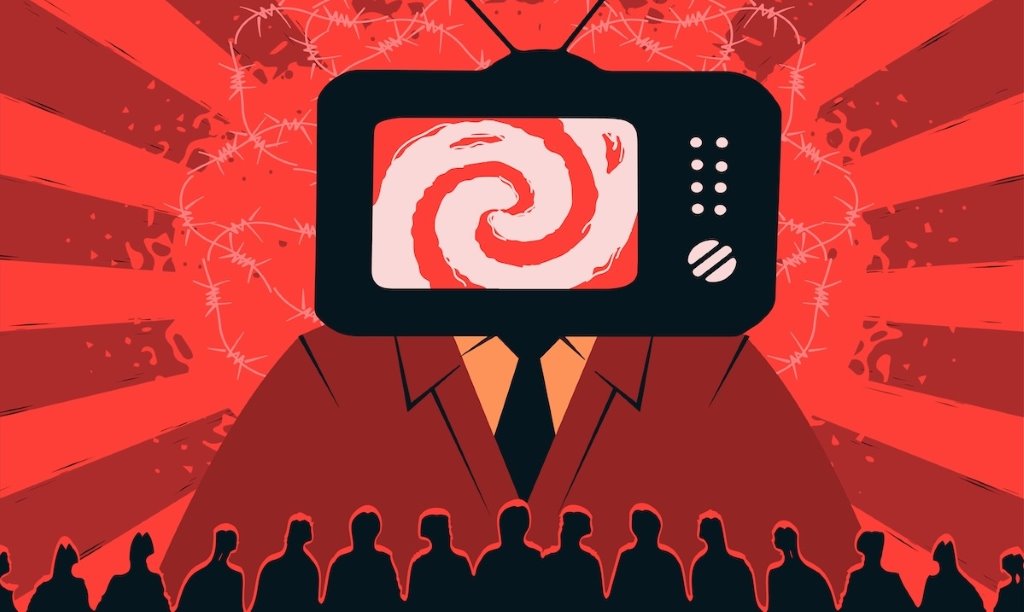
Politics used to be loud about its intentions. Speeches were delivered from podiums, slogans were printed on posters, and propaganda had a recognizable face. You could point to it and say, “That’s manipulation.” Today, it doesn’t look like that anymore. It scrolls past you while you drink your coffee. It arrives as a headline, a meme, a clip taken out of context, or a comment from someone who sounds just like you.
Modern propaganda rarely announces itself. It blends into news, entertainment, outrage, humor, and even “neutral” analysis. It doesn’t always lie outright; in fact, it often tells partial truths, repeated so often and framed so emotionally that they begin to feel like the whole story. Over time, these narratives don’t just influence opinions—they shape how people see reality, who they trust, and what they fear.
What makes propaganda especially powerful today is not the message itself, but the environment it lives in. Endless information, constant connectivity, and algorithm-driven platforms reward emotion over reflection and certainty over nuance. In that space, political influence becomes subtle, continuous, and difficult to escape. Understanding how propaganda works in modern politics isn’t about spotting villains or blaming one side. It’s about recognizing the invisible pressures shaping public thought in a world where persuasion has become part of everyday life.

What Propaganda Really Means Today
At its core, propaganda is not just about lies. That’s a common misunderstanding. Some of the most effective propaganda uses facts—real ones—but arranged selectively, emotionally, and repetitively to push a specific interpretation of reality. It frames issues rather than inventing them outright.
Modern political propaganda focuses less on convincing people of something entirely new and more on reinforcing what they already believe. It strengthens identities, deepens divisions, and simplifies complex issues into emotionally charged narratives. The goal is rarely to inform. The goal is to influence perception, behavior, and loyalty.
In today’s political environment, propaganda often hides behind neutral language. It calls itself “analysis,” “common sense,” “patriotism,” or “defending democracy.” The label doesn’t matter. The function does.
From State-Controlled Messaging to Networked Influence
In the past, propaganda was usually centralized. Governments controlled newspapers, radio stations, and television channels. Messages flowed in one direction: from the state to the public. That model still exists in some places, but it is no longer dominant.
Modern propaganda is decentralized. Governments, political parties, activist groups, corporations, and even foreign actors operate simultaneously in the same information space. Social media platforms allow messages to spread organically—or appear to. A narrative can look like a grassroots movement even when it’s carefully engineered.
This shift makes propaganda harder to identify and harder to regulate. When everyone is both a consumer and a distributor of information, responsibility becomes blurred. A single post shared millions of times can have more impact than an official government statement, especially if it triggers emotion.
Emotional Engineering Over Rational Debate
Modern political propaganda relies heavily on emotion. Fear, anger, pride, humiliation, and resentment are powerful motivators, far more effective than data or nuanced arguments. Once emotion takes control, critical thinking slows down.
This is why political messaging often focuses on threats—real or exaggerated. External enemies, internal traitors, cultural decline, stolen futures. Even positive propaganda uses emotion, framing leaders as protectors, saviors, or symbols of national revival.
The constant emotional pressure exhausts people. When citizens feel overwhelmed, they are more likely to accept simple explanations and strong authority. In this way, propaganda doesn’t just persuade—it reshapes how people think, what they expect from politics, and what they are willing to tolerate.
Media, Algorithms, and the Feedback Loop
One of the biggest differences between old and modern propaganda is technology. Algorithms don’t care about truth; they care about engagement. Content that provokes strong reactions spreads faster, stays visible longer, and reaches more people.
Political actors understand this well. Messages are designed to fit algorithmic incentives: short, emotional, polarizing, and easily shareable. Over time, users are fed more of what they already agree with, creating echo chambers that feel like reality itself.
This feedback loop reinforces propaganda without constant human control. Once a narrative gains traction, platforms amplify it automatically. The result is a fragmented public sphere where different groups live in entirely different political worlds, each convinced the other is blind or malicious.
Foreign Propaganda and the New Information Frontlines
In the modern world, propaganda is no longer confined within national borders. Information travels instantly, and political narratives cross languages, cultures, and time zones with ease. This has turned public opinion itself into a battlefield.
Foreign propaganda doesn’t always aim to make people support another country. Often, its goal is simpler and more destructive: to confuse, divide, and exhaust. When trust in institutions collapses and citizens stop agreeing on basic facts, societies become easier to manipulate from the outside.
These campaigns often exploit existing tensions rather than creating new ones. Economic inequality, racial divisions, cultural conflicts, and political polarization are amplified through targeted messaging. The most effective foreign propaganda blends seamlessly with domestic discourse, making it nearly impossible to trace its origins or intentions.

Propaganda and the Illusion of Choice
Modern politics often presents itself as a marketplace of ideas, but propaganda shapes which ideas are even visible. Certain topics dominate headlines while others quietly disappear. Some questions are framed as unthinkable, others as inevitable.
This creates an illusion of choice. Citizens feel free because they can argue passionately—but only within boundaries already set for them. Propaganda works best when people believe they reached conclusions independently.
In democratic systems, this is especially powerful. Voting still happens. Debate still exists. But the emotional and informational environment surrounding those processes is carefully influenced. Control doesn’t require force when perception does the work.
Propaganda During Crises and Emergencies
Crises are fertile ground for propaganda. Wars, pandemics, terrorist attacks, economic collapses, and natural disasters all create fear and uncertainty. In these moments, people crave clarity, reassurance, and direction—and that need can be exploited.
Governments may use propaganda to maintain order or justify extraordinary measures. Sometimes this serves a stabilizing purpose. Other times, it becomes a tool to suppress dissent, shift blame, or expand power beyond what is necessary.
Competing narratives also emerge during crises. Different political actors rush to define what happened, who is responsible, and what must be done next. The first version of the story often sticks, even if later evidence challenges it. Speed matters more than accuracy, and emotional impact outweighs careful analysis.
Psychological Warfare and Identity Politics
Modern propaganda operates deeply at the psychological level. It doesn’t just argue policies; it targets identity. Political messages increasingly define who belongs, who is threatening, and who must be defended against.
By framing politics as a struggle between “us” and “them,” propaganda turns disagreement into hostility. Compromise becomes betrayal. Opponents are not just wrong, but dangerous, immoral, or inhuman. This framing hardens attitudes and makes reconciliation difficult.
Psychological warfare also thrives on repetition. Even questionable claims gain credibility when repeated often enough, especially if they align with group identity. Over time, beliefs become emotional anchors rather than conclusions based on evidence.
The Normalization of Manipulation
One of the most unsettling aspects of modern propaganda is how normal it has become. Many people expect political messaging to be manipulative and cynical, and that expectation lowers resistance. When everything feels biased, people stop trying to distinguish truth from distortion.
This normalization benefits those who spread propaganda. If manipulation is assumed, accountability disappears. Outrage becomes constant, but action becomes rare. People argue endlessly while real decisions are made elsewhere.
At the same time, entertainment and politics increasingly overlap. Satire, commentary, and news blend together, making it harder to tell where information ends and performance begins. Propaganda thrives in this ambiguity.
Recognizing Propaganda Without Becoming Paranoid
Avoiding propaganda doesn’t mean rejecting all political messages or distrusting everything. That leads to paralysis rather than clarity. The goal is awareness, not cynicism.
Certain patterns are worth noticing. Messages that reduce complex issues to simple moral binaries. Content that triggers intense emotion while discouraging deeper examination. Narratives that frame disagreement as betrayal or weakness. Repetition that substitutes for evidence.
It also helps to step outside one’s own information bubble. Exposure to different perspectives doesn’t guarantee truth, but it reveals how framing works. When multiple sides use similar emotional tactics, manipulation becomes easier to spot.
Propaganda as a Mirror of Society
Propaganda is not imposed on a vacuum. It reflects fears, desires, and unresolved tensions already present in society. Political actors don’t invent anxieties from nothing; they reshape and weaponize them.
This is why propaganda evolves as societies change. It adapts to cultural values, technological habits, and collective moods. Understanding propaganda, then, is not just about exposing bad actors—it’s about understanding ourselves.
In modern politics, propaganda is less about controlling people directly and more about shaping the environment in which choices are made. It doesn’t eliminate free will, but it influences which paths feel obvious, acceptable, or unthinkable.
As long as politics remains tied to emotion, identity, and power, propaganda will remain part of the landscape. The challenge isn’t to imagine a world without it, but to learn how to live with it without losing the ability to think clearly, disagree honestly, and recognize when we are being guided rather than informed.