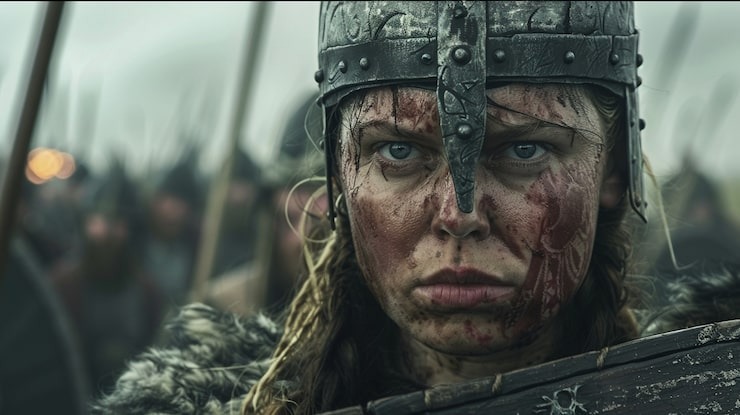
When people imagine the ancient world, the images are usually the same: kings on thrones, warriors on battlefields, philosophers debating in public squares. Women, if they appear at all, are often reduced to stereotypes—silent wives, mothers in the background, or symbolic goddesses detached from real life. This picture is not only incomplete, it’s misleading.
Women were everywhere in ancient societies. They worked the land, ran households that functioned like small economic units, preserved knowledge, influenced politics, shaped religion, and ensured cultural continuity. Their power was not always formal or visible, but it was real. In many cases, civilizations simply could not function without the labor, intelligence, and adaptability of women.
Understanding the role of women in ancient societies means stepping away from simplified narratives and looking at daily life, law, belief systems, and social structures as a whole. When we do that, a much richer and more complex history emerges.

Women as the Foundation of Everyday Survival
In most ancient societies, survival depended on the household, and women were at the center of it.
Women were responsible for food production far beyond basic cooking. In agricultural communities, they planted seeds, harvested crops, processed grains, dried fruits, fermented foods, and stored supplies for harsh seasons. In many regions, women developed deep knowledge of soil quality, weather patterns, and crop cycles. This knowledge was practical, empirical, and passed down orally over generations.
Textile production was another cornerstone of ancient economies. Spinning thread, weaving cloth, dyeing fabrics, and repairing garments were skilled tasks that required time and expertise. In places like Mesopotamia, the Aegean world, and ancient China, textiles were valuable trade goods. Women’s labor directly contributed to wealth creation, even when they did not control the profits.
Childcare was equally demanding. Infant mortality was high, medical knowledge was limited, and raising children required constant attention. Women were caregivers not just for children, but for the elderly and sick as well. In effect, they were the healthcare system of the ancient world.
What modern observers often miss is that these responsibilities required planning, organization, and leadership. Managing a household was not passive work—it was logistical, economic, and strategic.

Women, Family Authority, and Social Power
Family structures shaped ancient societies more than governments did, and within those families, women often held significant authority.
Marriage was usually arranged, but women were not always powerless within it. In many cultures, wives managed household finances, controlled dowries, and supervised servants or extended family members. A competent household manager earned respect and influence, particularly in elite families where property and reputation mattered deeply.
Motherhood carried social weight. A woman who bore children—especially sons—often gained long-term security and authority within the family. Over time, older women could become key decision-makers, consulted on marriages, disputes, and traditions.
In some societies, lineage and inheritance passed through the mother. Matrilineal systems existed in parts of Africa, Southeast Asia, and early human communities. Even in patriarchal systems, maternal ancestry could determine legitimacy, alliances, and social standing.
Women were also crucial in maintaining social bonds. They arranged marriages, preserved kinship ties, and acted as mediators in conflicts. These roles rarely appear in formal records, but they were essential for social stability.

Women in Religion, Myth, and Sacred Authority
Religion offered one of the clearest paths to power for women in the ancient world.
Many early belief systems centered on female divinity. Goddesses represented fertility, earth, wisdom, justice, love, war, and death. These were not secondary roles—they were fundamental forces that shaped how people understood existence itself.
Women served as priestesses, ritual leaders, temple administrators, and oracles. In some cultures, temples were economic centers, owning land, employing workers, and managing wealth. Women in religious roles often controlled these resources.
Spiritual authority allowed women to speak publicly and influence decisions in ways that secular life did not always permit. Oracles and seers were consulted by kings, generals, and lawmakers. Their words could start wars or prevent them.
Religious rituals also preserved women’s cultural importance. Birth, death, marriage, and healing were often overseen by women, reinforcing their central role in life’s most critical moments.

Women in Politics, Leadership, and Governance
While male rulers dominated official histories, women were far from absent in political life.
Some women ruled openly as queens, empresses, or monarchs. Others governed as regents for young heirs, effectively running states during critical periods. These women issued laws, led religious ceremonies, negotiated treaties, and managed court politics.
In ancient Egypt, female rulers held the same titles and responsibilities as male pharaohs. In Mesopotamia, royal women owned land, funded building projects, and issued legal documents. In parts of Africa and Central Asia, women served as military leaders or advisors.
Even when barred from formal rule, elite women exercised influence behind the scenes. They shaped alliances through marriage, advised rulers privately, controlled court access, and funded religious or civic institutions. Power often flowed through proximity and trust rather than official titles.
Political influence, for many women, was subtle but effective.
Education, Knowledge, and Intellectual Life
Formal education in ancient societies was usually limited, but women played a crucial role in preserving and transmitting knowledge.
Women were responsible for early education, teaching language, customs, moral values, and practical skills. This foundational knowledge shaped individuals long before formal schooling began.
In literate societies, some women learned to read and write, especially in religious or elite settings. Female scribes, poets, philosophers, and scholars existed, though their contributions were often overlooked or attributed to men.
Medical knowledge was another area where women excelled. Midwives and healers understood anatomy, childbirth, herbal medicine, and pain management. Their expertise saved lives and maintained community health.
This knowledge was often experiential rather than theoretical, but it was no less sophisticated. In many cases, it was more effective than official medical practices dominated by men.

Economic Roles and Women in Trade
Contrary to popular belief, women were active participants in ancient economies.
Women sold goods in markets, managed small businesses, brewed beer, produced textiles, and traded food products. In some societies, women could own property, inherit wealth, and enter contracts.
Economic independence varied by culture and class, but where it existed, it gave women leverage and autonomy. Widows, in particular, often became economically powerful figures, free from marital control.
Women’s economic contributions sustained families, supported temples, and fueled local trade networks. Even when excluded from large-scale commerce, they dominated everyday economic life.

Class, Status, and the Diversity of Women’s Experiences
There was no single “female experience” in the ancient world.
Elite women enjoyed protections and privileges that poorer women did not. Enslaved women faced extreme exploitation, often subjected to forced labor and abuse. Rural women worked harder physically but sometimes had more autonomy than urban women bound by stricter social norms.
Nomadic and tribal societies often granted women greater freedom of movement and participation in decision-making. In contrast, highly centralized states tended to impose stricter controls on female behavior.
Geography, economy, and social structure shaped women’s lives as much as gender itself.

Cultural Restrictions and Adaptation
Ancient societies imposed limits on women’s freedom, especially regarding sexuality, inheritance, and public behavior.
Laws regulated marriage, divorce, clothing, and movement. Punishments for breaking norms were often harsher for women than men.
Yet women were not simply victims of these systems. They adapted, negotiated, and found ways to assert agency within constraints. Some used religion, family influence, economic skills, or reputation to gain autonomy.
Resistance was often quiet and strategic rather than openly confrontational.
Why Women Were Erased from History
Most ancient records were written by men for men. Warfare, politics, and elite achievements were prioritized, while domestic life and informal influence were ignored.
As a result, women’s contributions faded from historical narratives. Archaeology and modern scholarship are now correcting this imbalance, uncovering evidence of powerful women, reinterpreting texts, and challenging long-held assumptions.
History is not changing—our understanding of it is.
Reimagining the Ancient World
When women are placed back into ancient societies, history becomes fuller and more realistic.
Ancient civilizations were not sustained by male rulers alone. They were built, maintained, and preserved by women whose labor, intelligence, and resilience shaped everyday life and long-term survival.
Seeing women as active participants rather than background figures allows us to understand the ancient world not as a rigid hierarchy, but as a complex, living system where power took many forms—and women held far more of it than history once admitted.