How Humanity Might Fight Back Against an Alien Attack

Every summer, blockbuster movies flood theaters with familiar images: massive alien fleets blotting out the sky, cities reduced to rubble, and humanity scrambling to respond with whatever tools it has left. Films like The Avengers, Battleship, and Prometheus tap into a shared anxiety that runs deeper than popcorn entertainment. They all circle the same question: if something vastly more advanced than us arrived tomorrow, would we have any real way to fight back?

On screen, humanity rarely goes quietly. We rally, improvise, and throw everything we have at the invaders. But once the credits roll, an uncomfortable thought lingers. Strip away the dramatic music and cinematic heroics, and the question becomes more serious. What would we actually use to defend ourselves? Would modern weapons even register as a threat against technology capable of crossing interstellar distances?

Surprisingly, the answer is not an outright no. While no one at the Pentagon is openly preparing for a war with extraterrestrials, many of the systems being developed today happen to line up uncannily well with the challenges such a scenario would present. Agencies like the Defense Advanced Research Projects Agency, better known as DARPA, along with major defense contractors, are already working on technologies that sound like science fiction but are grounded in real engineering.

From laser weapons mounted on aircraft to vehicles that blur the line between helicopter and jet, from autonomous sea drones to adaptive armor that can fool thermal sensors, these projects are aimed at future conflicts here on Earth. Still, it is hard not to imagine how they might perform if the threat came from somewhere far beyond our atmosphere. Whether by coincidence or foresight, humanity may be building the foundations of a planetary defense without fully admitting it.
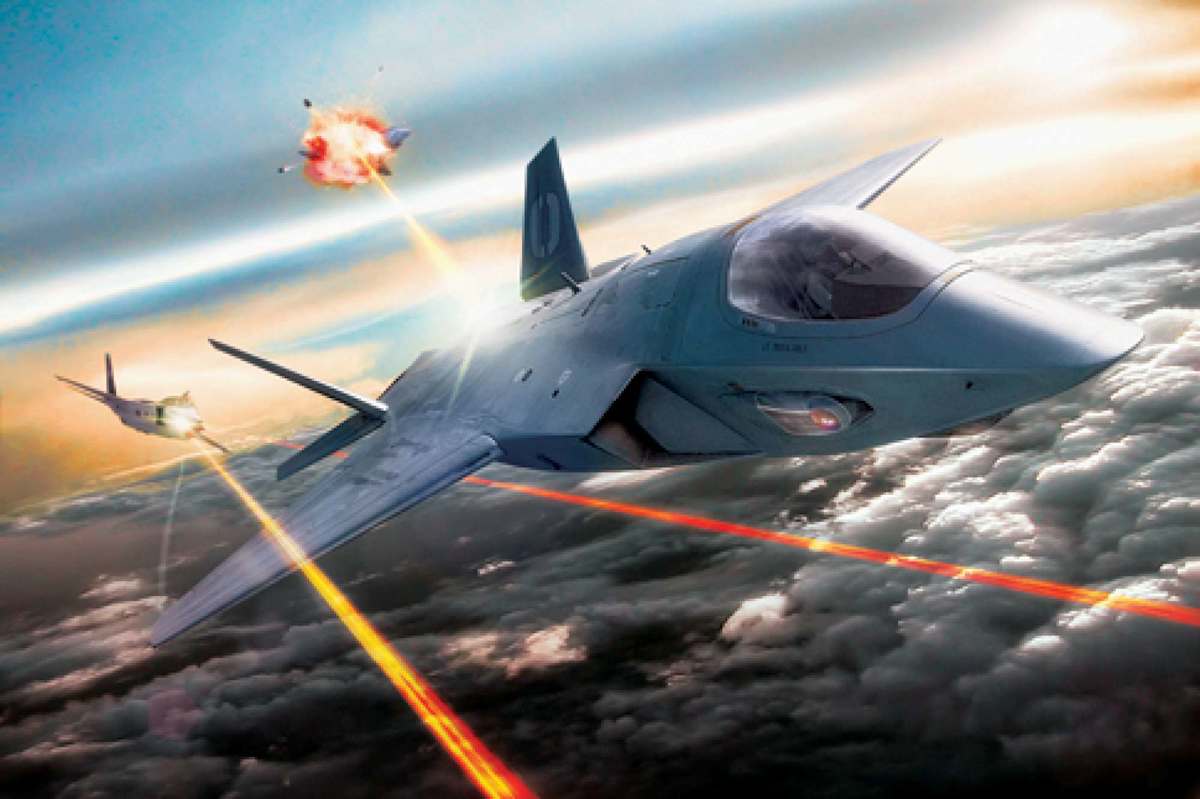
High Energy Liquid Laser Area Defense System (HELLADS)

The name may sound bureaucratic, but the concept behind HELLADS is anything but dull. This project represents DARPA’s push to turn high-powered lasers into practical battlefield weapons. Unlike traditional munitions, lasers travel at the speed of light, offering instant engagement and precision that conventional weapons can’t match.

Laser weapons already exist, but until recently they were simply too large and heavy to deploy effectively. HELLADS aims to change that by producing a laser system powerful enough to destroy incoming threats while remaining compact and lightweight. The goal has long been a weapon in the 150-kilowatt range that could be mounted on tactical aircraft.

In a hypothetical alien encounter, such systems would be invaluable. Swarms of small, fast-moving craft could overwhelm missile defenses, but a laser does not run out of ammunition in the traditional sense. As long as power is available, it can engage multiple targets in rapid succession. Even outside of science fiction scenarios, HELLADS reflects a shift toward directed-energy weapons that may define the next era of aerial combat.
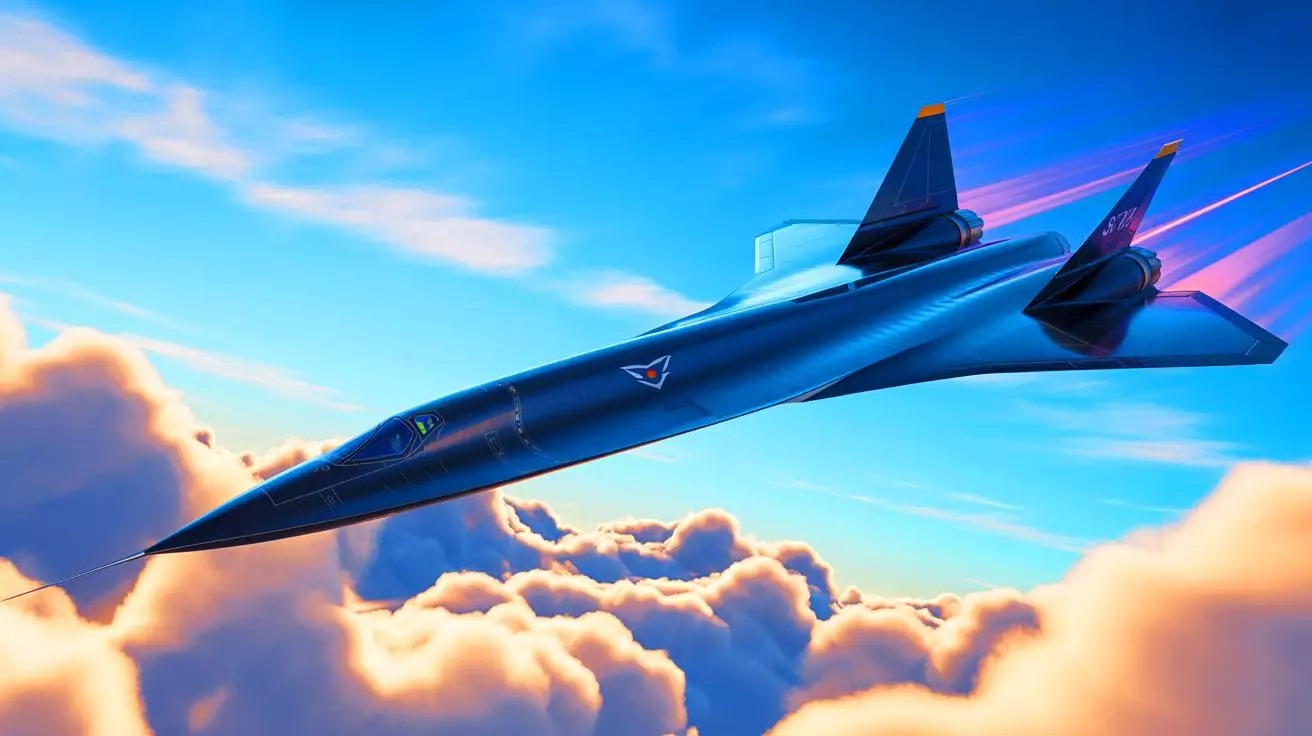
Hypersonic aircraft

If popular science fiction has taught us anything, it is that speed often decides the outcome of battles in space and air alike. Human pilots may be skilled, but reflexes alone cannot compensate for outdated machines. That is where hypersonic platforms like the Falcon HTV-2 enter the picture.

Developed under DARPA’s Falcon program, the HTV-2 was designed as an unmanned, rocket-launched vehicle capable of gliding through Earth’s atmosphere at staggering speeds. At Mach 20, roughly 13,000 miles per hour, it could theoretically travel from New York to Los Angeles in under twelve minutes. At those velocities, interception becomes extraordinarily difficult.

The aircraft was envisioned primarily as a data-gathering platform, packed with sensors to operate in extreme environments. While early test flights struggled — including one where the vehicle was lost after breaking apart under intense conditions — the program demonstrated how close humanity is to mastering sustained hypersonic flight. Against an alien force capable of rapid deployment, matching speed could be the difference between reaction and helplessness.

Aero-adaptive aero-optic beam control

Dogfights are rarely clean, and if alien craft are as agile as fiction suggests, even the most advanced human jets could find themselves outmaneuvered. Aero-adaptive aero-optic beam control is DARPA’s attempt to solve a very specific problem: how to fire high-energy lasers accurately from fast-moving aircraft, even when turbulence and airflow distort the beam.

This technology focuses on stabilizing and steering laser weapons so they remain effective when targeting threats behind or around an aircraft. In practical terms, it allows pilots to defend themselves against incoming missiles or pursuing craft without needing to line up a perfect shot.

In an alien engagement scenario, such systems would be a lifeline. Superior maneuverability on the enemy side could be partially offset by weapons that do not rely on traditional aiming mechanics. Even if they don’t win the fight outright, they could buy critical seconds for reinforcements or escape.

Discrotor helicopters

Alien spacecraft are often portrayed as effortlessly hovering, darting upward without runways or launch systems. Traditional aircraft struggle to replicate that flexibility. Helicopters can take off vertically, but they sacrifice speed and range. Discrotor designs aim to merge the strengths of both.

A discrotor aircraft takes off and lands like a helicopter, then retracts its rotors mid-flight and transitions into a fixed-wing aircraft capable of much higher speeds. This hybrid approach could dramatically expand mission flexibility, especially in unpredictable combat zones.

The idea gained attention after incidents like the damaged stealth helicopter during the raid on Osama bin Laden, which highlighted how vulnerable conventional rotorcraft can be. In a conflict involving unknown technologies and rapidly changing conditions, versatility may be just as important as firepower.

Redesigned nuclear-powered submarines

Not every invasion would begin in the skies. Science fiction has repeatedly reminded audiences that oceans cover most of the planet, offering both concealment and access. Nuclear-powered submarines remain one of humanity’s most powerful deterrents, and their evolution continues.

The U.S. Navy is developing successors to the Ohio-class submarines, platforms that currently form the sea-based leg of the nuclear triad. These future submarines, often referred to as the SSBN-X class, are expected to carry advanced missile systems, improved stealth features, and enhanced endurance.

They are extraordinarily expensive, with per-unit costs projected in the billions. Yet in a scenario where survival is at stake, cost calculations become secondary. Submarines capable of remaining hidden while delivering decisive strikes could serve as a last line of defense if surface forces were compromised.
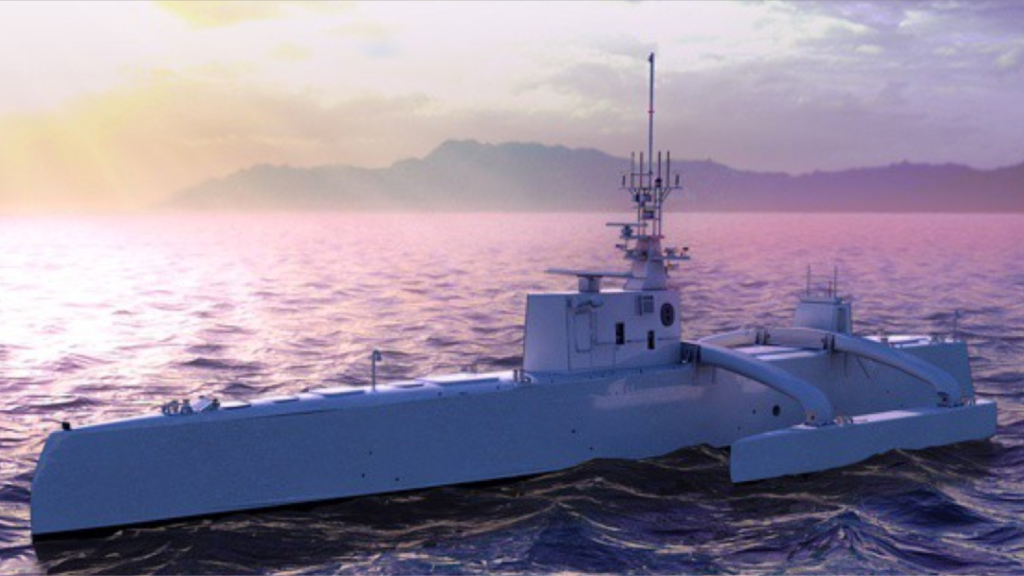
Anti-Submarine Warfare Continuous Trail Unmanned Vessel

If popular culture has taught us anything, it’s that threats don’t always arrive from above. Oceans offer both cover and access, and an advanced adversary would be foolish to ignore them. That’s where the Anti-Submarine Warfare Continuous Trail Unmanned Vessel, known as ACTUV, comes into play.

ACTUV is designed as an autonomous surface ship capable of tracking even the quietest submarines over long distances. Unlike traditional naval assets, it operates without a crew and can remain at sea for extended periods without resupply. Its real advantage lies in persistence. Human-operated vessels rotate crews, return to port, and require complex logistics. ACTUV simply keeps going.

In a speculative alien scenario, such vessels could monitor underwater activity continuously, watching for unusual movements or preparations beneath the waves. Even in present-day terms, the technology represents a shift toward autonomous maritime surveillance. If something unknown were moving silently through Earth’s oceans, systems like ACTUV would likely be among the first to notice.
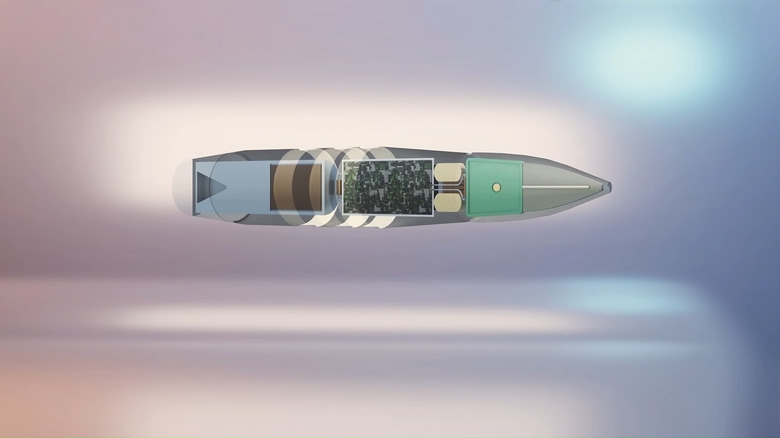
Extreme Accuracy Tasked Ordnance

Fast-moving targets pose a serious problem for conventional weapons. That challenge becomes even more pronounced when facing opponents with superior agility. Extreme Accuracy Tasked Ordnance, or EXACTO, is DARPA’s attempt to rethink one of humanity’s oldest tools: the bullet.

Rather than following a fixed ballistic path, EXACTO rounds are designed to adjust their trajectory mid-flight. Using onboard guidance systems, the projectile can correct for wind, movement, and target changes after it has been fired. In effect, the bullet steers itself toward its objective.

While this technology is intended to improve sniper effectiveness in real-world combat, its implications extend much further. Against unfamiliar biology, unusual movement patterns, or hostile entities that don’t behave like human adversaries, adaptive munitions could compensate for uncertainty. Precision becomes less dependent on perfect conditions and more on smart systems responding in real time.
Crosshairs detection systems

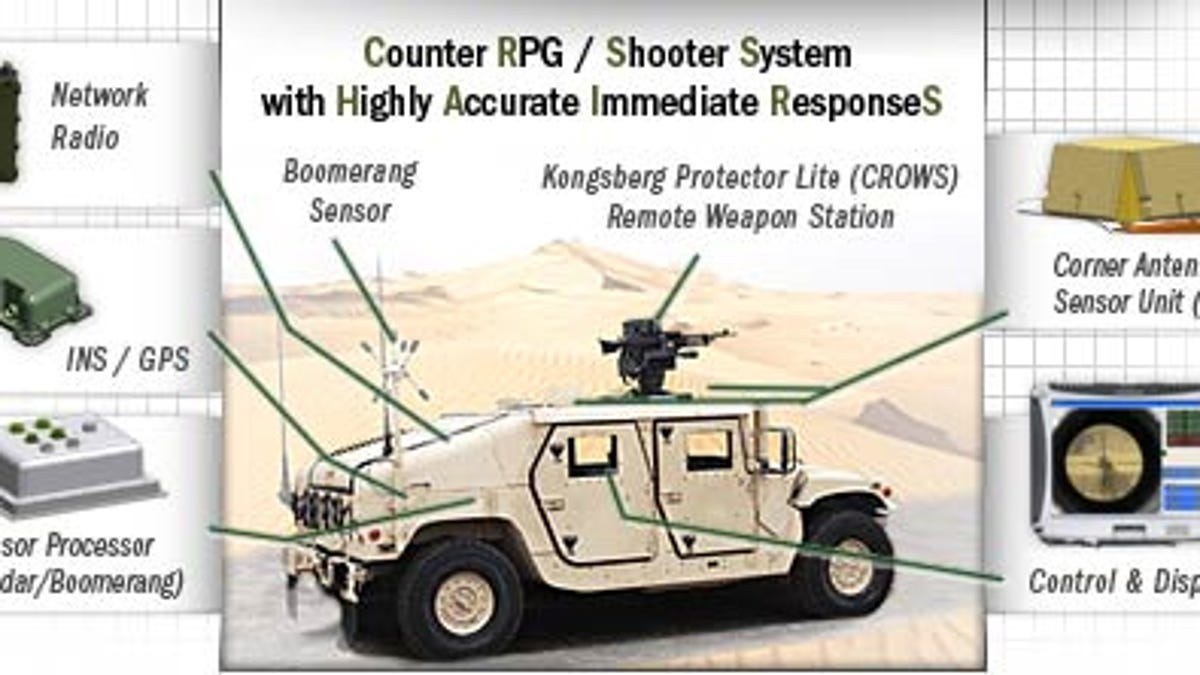
If conflict reached the ground, chaos would likely follow. Visibility would be limited, threats could emerge from unexpected angles, and reaction time would be critical. CROSSHAIRS systems are designed to address exactly that problem.

Mounted on military vehicles, these detection units combine visual and infrared sensors to identify incoming threats almost instantly. Whether facing bullets, rocket-propelled grenades, guided missiles, or indirect fire, the system analyzes trajectories and alerts operators or automated defenses.

In a hypothetical alien encounter, the nature of the threat might be unfamiliar, but the principle remains the same. Detect early, classify quickly, and respond before impact. CROSSHAIRS does not rely on knowing exactly what the enemy is, only that something dangerous is approaching. That adaptability could prove invaluable in any unexpected confrontation.
Magneto hydrodynamic explosive munitions

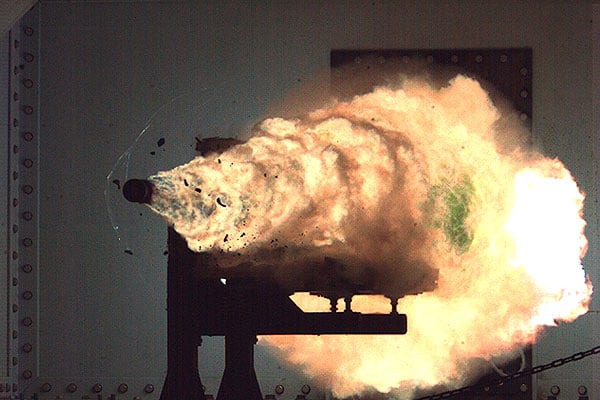
Some weapons sound like they were pulled directly from a comic book, and Magneto Hydrodynamic Explosive Munitions certainly fit that description. Often shortened to the memorable acronym MAHEM, these munitions use magnetic forces to shape and direct molten metal toward a target at extreme velocities.

Rather than relying solely on traditional explosive force, MAHEM rounds generate focused jets of metal using compressed magnetic fields. The result is a projectile capable of penetrating armor with remarkable efficiency. Details remain intentionally vague, but the underlying concept points toward a new class of smart, adaptable munitions.

Against unknown materials or biological defenses, conventional bullets may not behave as expected. Weapons that can alter how energy is delivered to a target provide flexibility when facing the unfamiliar. Whether dealing with advanced armor or something far stranger, MAHEM represents an effort to stay ahead of the unknown.

Adaptive camouflage armor

Many fictional aliens perceive the world differently than humans do. Infrared vision is a common trope, and it’s one that has a basis in reality. To counter that, engineers have developed adaptive armor systems that manipulate thermal signatures.

ADAPTIV armor, created by BAE Systems, uses arrays of hexagonal panels that can rapidly change temperature. By matching the heat profile of the surrounding environment, a vehicle can effectively disappear from infrared detection. It can even mimic the thermal signature of other objects to create deliberate confusion.

In conventional warfare, this kind of camouflage reduces vulnerability to heat-seeking sensors. In a more speculative context, it could help shield forces from opponents who rely on non-visual perception. The ability to hide not just visually, but thermally, adds another layer of deception to the battlefield.
Space-based infrared monitoring systems

Any conflict involving extraterrestrial forces would unfold on a global scale. Detection would need to extend far beyond borders, oceans, or continents. That is where space-based infrared systems come in.

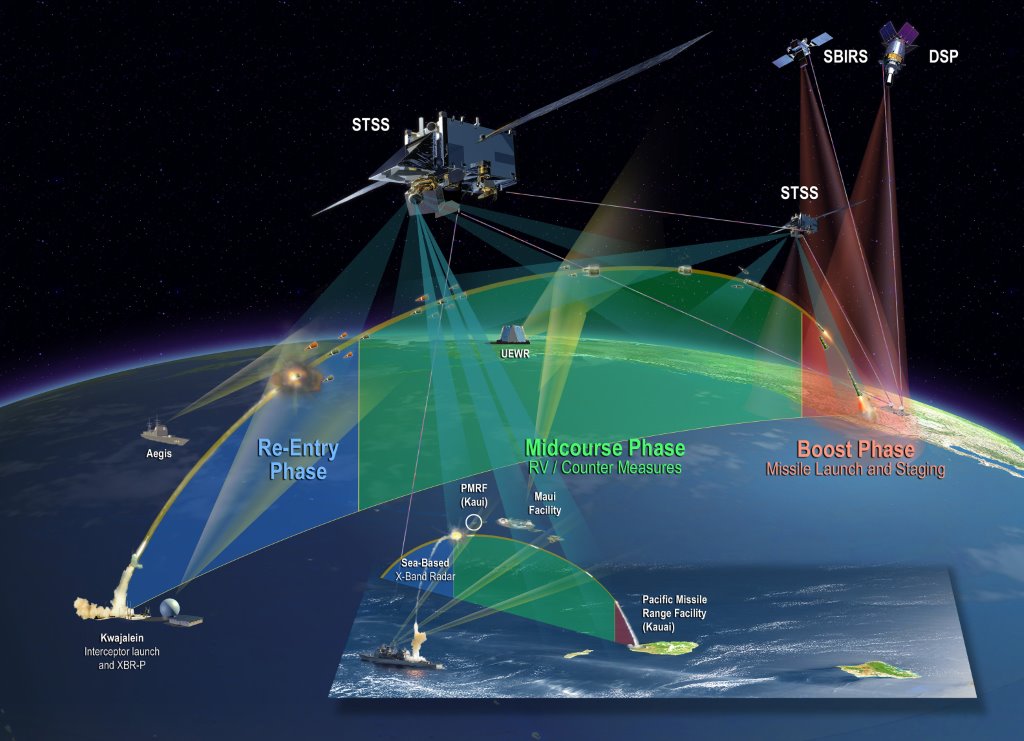
The Space-Based Infrared System, or SBIRS, consists of satellites placed in various orbits, paired with ground-based processing centers. Its purpose is to detect missile launches, explosions, and other heat-generating events anywhere on Earth. Though the program has faced delays and cost overruns, its capabilities are unmatched.

In a scenario involving alien craft or weapons entering Earth’s atmosphere, early detection would be everything. SBIRS provides that early warning, scanning constantly for anomalies that indicate hostile action. Whether tracking ballistic missiles or something entirely unfamiliar, the system gives decision-makers precious time to respond.

Taken together, these technologies reveal something interesting. While none were designed specifically to fight extraterrestrials, many address the exact challenges such a conflict would present: speed, unpredictability, stealth, and global reach. Humanity may not be preparing for an alien invasion in name, but in capability, it is quietly laying the groundwork for defending itself against threats that have yet to be fully imagined.

How Humanity Might Fight Back Against an Alien Attack

How Humanity Might Fight Back Against an Alien Attack

Every summer, blockbuster movies flood theaters with familiar images: massive alien fleets blotting out the sky, cities reduced to rubble, and humanity scrambling to respond with whatever tools it has left. Films like The Avengers, Battleship, and Prometheus tap into a shared anxiety that runs deeper than popcorn entertainment. They all circle the same question: if something vastly more advanced than us arrived tomorrow, would we have any real way to fight back?

On screen, humanity rarely goes quietly. We rally, improvise, and throw everything we have at the invaders. But once the credits roll, an uncomfortable thought lingers. Strip away the dramatic music and cinematic heroics, and the question becomes more serious. What would we actually use to defend ourselves? Would modern weapons even register as a threat against technology capable of crossing interstellar distances?

Surprisingly, the answer is not an outright no. While no one at the Pentagon is openly preparing for a war with extraterrestrials, many of the systems being developed today happen to line up uncannily well with the challenges such a scenario would present. Agencies like the Defense Advanced Research Projects Agency, better known as DARPA, along with major defense contractors, are already working on technologies that sound like science fiction but are grounded in real engineering.

From laser weapons mounted on aircraft to vehicles that blur the line between helicopter and jet, from autonomous sea drones to adaptive armor that can fool thermal sensors, these projects are aimed at future conflicts here on Earth. Still, it is hard not to imagine how they might perform if the threat came from somewhere far beyond our atmosphere. Whether by coincidence or foresight, humanity may be building the foundations of a planetary defense without fully admitting it.

High Energy Liquid Laser Area Defense System (HELLADS)

The name may sound bureaucratic, but the concept behind HELLADS is anything but dull. This project represents DARPA’s push to turn high-powered lasers into practical battlefield weapons. Unlike traditional munitions, lasers travel at the speed of light, offering instant engagement and precision that conventional weapons can’t match.

Laser weapons already exist, but until recently they were simply too large and heavy to deploy effectively. HELLADS aims to change that by producing a laser system powerful enough to destroy incoming threats while remaining compact and lightweight. The goal has long been a weapon in the 150-kilowatt range that could be mounted on tactical aircraft.

In a hypothetical alien encounter, such systems would be invaluable. Swarms of small, fast-moving craft could overwhelm missile defenses, but a laser does not run out of ammunition in the traditional sense. As long as power is available, it can engage multiple targets in rapid succession. Even outside of science fiction scenarios, HELLADS reflects a shift toward directed-energy weapons that may define the next era of aerial combat.

Hypersonic aircraft

If popular science fiction has taught us anything, it is that speed often decides the outcome of battles in space and air alike. Human pilots may be skilled, but reflexes alone cannot compensate for outdated machines. That is where hypersonic platforms like the Falcon HTV-2 enter the picture.

Developed under DARPA’s Falcon program, the HTV-2 was designed as an unmanned, rocket-launched vehicle capable of gliding through Earth’s atmosphere at staggering speeds. At Mach 20, roughly 13,000 miles per hour, it could theoretically travel from New York to Los Angeles in under twelve minutes. At those velocities, interception becomes extraordinarily difficult.

The aircraft was envisioned primarily as a data-gathering platform, packed with sensors to operate in extreme environments. While early test flights struggled — including one where the vehicle was lost after breaking apart under intense conditions — the program demonstrated how close humanity is to mastering sustained hypersonic flight. Against an alien force capable of rapid deployment, matching speed could be the difference between reaction and helplessness.

Aero-adaptive aero-optic beam control

Dogfights are rarely clean, and if alien craft are as agile as fiction suggests, even the most advanced human jets could find themselves outmaneuvered. Aero-adaptive aero-optic beam control is DARPA’s attempt to solve a very specific problem: how to fire high-energy lasers accurately from fast-moving aircraft, even when turbulence and airflow distort the beam.

This technology focuses on stabilizing and steering laser weapons so they remain effective when targeting threats behind or around an aircraft. In practical terms, it allows pilots to defend themselves against incoming missiles or pursuing craft without needing to line up a perfect shot.

In an alien engagement scenario, such systems would be a lifeline. Superior maneuverability on the enemy side could be partially offset by weapons that do not rely on traditional aiming mechanics. Even if they don’t win the fight outright, they could buy critical seconds for reinforcements or escape.

Discrotor helicopters

Alien spacecraft are often portrayed as effortlessly hovering, darting upward without runways or launch systems. Traditional aircraft struggle to replicate that flexibility. Helicopters can take off vertically, but they sacrifice speed and range. Discrotor designs aim to merge the strengths of both.

A discrotor aircraft takes off and lands like a helicopter, then retracts its rotors mid-flight and transitions into a fixed-wing aircraft capable of much higher speeds. This hybrid approach could dramatically expand mission flexibility, especially in unpredictable combat zones.

The idea gained attention after incidents like the damaged stealth helicopter during the raid on Osama bin Laden, which highlighted how vulnerable conventional rotorcraft can be. In a conflict involving unknown technologies and rapidly changing conditions, versatility may be just as important as firepower.

Redesigned nuclear-powered submarines

Not every invasion would begin in the skies. Science fiction has repeatedly reminded audiences that oceans cover most of the planet, offering both concealment and access. Nuclear-powered submarines remain one of humanity’s most powerful deterrents, and their evolution continues.

The U.S. Navy is developing successors to the Ohio-class submarines, platforms that currently form the sea-based leg of the nuclear triad. These future submarines, often referred to as the SSBN-X class, are expected to carry advanced missile systems, improved stealth features, and enhanced endurance.

They are extraordinarily expensive, with per-unit costs projected in the billions. Yet in a scenario where survival is at stake, cost calculations become secondary. Submarines capable of remaining hidden while delivering decisive strikes could serve as a last line of defense if surface forces were compromised.

Anti-Submarine Warfare Continuous Trail Unmanned Vessel

If popular culture has taught us anything, it’s that threats don’t always arrive from above. Oceans offer both cover and access, and an advanced adversary would be foolish to ignore them. That’s where the Anti-Submarine Warfare Continuous Trail Unmanned Vessel, known as ACTUV, comes into play.

ACTUV is designed as an autonomous surface ship capable of tracking even the quietest submarines over long distances. Unlike traditional naval assets, it operates without a crew and can remain at sea for extended periods without resupply. Its real advantage lies in persistence. Human-operated vessels rotate crews, return to port, and require complex logistics. ACTUV simply keeps going.

In a speculative alien scenario, such vessels could monitor underwater activity continuously, watching for unusual movements or preparations beneath the waves. Even in present-day terms, the technology represents a shift toward autonomous maritime surveillance. If something unknown were moving silently through Earth’s oceans, systems like ACTUV would likely be among the first to notice.

Extreme Accuracy Tasked Ordnance

Fast-moving targets pose a serious problem for conventional weapons. That challenge becomes even more pronounced when facing opponents with superior agility. Extreme Accuracy Tasked Ordnance, or EXACTO, is DARPA’s attempt to rethink one of humanity’s oldest tools: the bullet.

Rather than following a fixed ballistic path, EXACTO rounds are designed to adjust their trajectory mid-flight. Using onboard guidance systems, the projectile can correct for wind, movement, and target changes after it has been fired. In effect, the bullet steers itself toward its objective.

While this technology is intended to improve sniper effectiveness in real-world combat, its implications extend much further. Against unfamiliar biology, unusual movement patterns, or hostile entities that don’t behave like human adversaries, adaptive munitions could compensate for uncertainty. Precision becomes less dependent on perfect conditions and more on smart systems responding in real time.

Crosshairs detection systems

If conflict reached the ground, chaos would likely follow. Visibility would be limited, threats could emerge from unexpected angles, and reaction time would be critical. CROSSHAIRS systems are designed to address exactly that problem.

Mounted on military vehicles, these detection units combine visual and infrared sensors to identify incoming threats almost instantly. Whether facing bullets, rocket-propelled grenades, guided missiles, or indirect fire, the system analyzes trajectories and alerts operators or automated defenses.

In a hypothetical alien encounter, the nature of the threat might be unfamiliar, but the principle remains the same. Detect early, classify quickly, and respond before impact. CROSSHAIRS does not rely on knowing exactly what the enemy is, only that something dangerous is approaching. That adaptability could prove invaluable in any unexpected confrontation.

Magneto hydrodynamic explosive munitions

Some weapons sound like they were pulled directly from a comic book, and Magneto Hydrodynamic Explosive Munitions certainly fit that description. Often shortened to the memorable acronym MAHEM, these munitions use magnetic forces to shape and direct molten metal toward a target at extreme velocities.

Rather than relying solely on traditional explosive force, MAHEM rounds generate focused jets of metal using compressed magnetic fields. The result is a projectile capable of penetrating armor with remarkable efficiency. Details remain intentionally vague, but the underlying concept points toward a new class of smart, adaptable munitions.

Against unknown materials or biological defenses, conventional bullets may not behave as expected. Weapons that can alter how energy is delivered to a target provide flexibility when facing the unfamiliar. Whether dealing with advanced armor or something far stranger, MAHEM represents an effort to stay ahead of the unknown.

Adaptive camouflage armor

Many fictional aliens perceive the world differently than humans do. Infrared vision is a common trope, and it’s one that has a basis in reality. To counter that, engineers have developed adaptive armor systems that manipulate thermal signatures.

ADAPTIV armor, created by BAE Systems, uses arrays of hexagonal panels that can rapidly change temperature. By matching the heat profile of the surrounding environment, a vehicle can effectively disappear from infrared detection. It can even mimic the thermal signature of other objects to create deliberate confusion.

In conventional warfare, this kind of camouflage reduces vulnerability to heat-seeking sensors. In a more speculative context, it could help shield forces from opponents who rely on non-visual perception. The ability to hide not just visually, but thermally, adds another layer of deception to the battlefield.

Space-based infrared monitoring systems

Any conflict involving extraterrestrial forces would unfold on a global scale. Detection would need to extend far beyond borders, oceans, or continents. That is where space-based infrared systems come in.

The Space-Based Infrared System, or SBIRS, consists of satellites placed in various orbits, paired with ground-based processing centers. Its purpose is to detect missile launches, explosions, and other heat-generating events anywhere on Earth. Though the program has faced delays and cost overruns, its capabilities are unmatched.

In a scenario involving alien craft or weapons entering Earth’s atmosphere, early detection would be everything. SBIRS provides that early warning, scanning constantly for anomalies that indicate hostile action. Whether tracking ballistic missiles or something entirely unfamiliar, the system gives decision-makers precious time to respond.

Taken together, these technologies reveal something interesting. While none were designed specifically to fight extraterrestrials, many address the exact challenges such a conflict would present: speed, unpredictability, stealth, and global reach. Humanity may not be preparing for an alien invasion in name, but in capability, it is quietly laying the groundwork for defending itself against threats that have yet to be fully imagined.