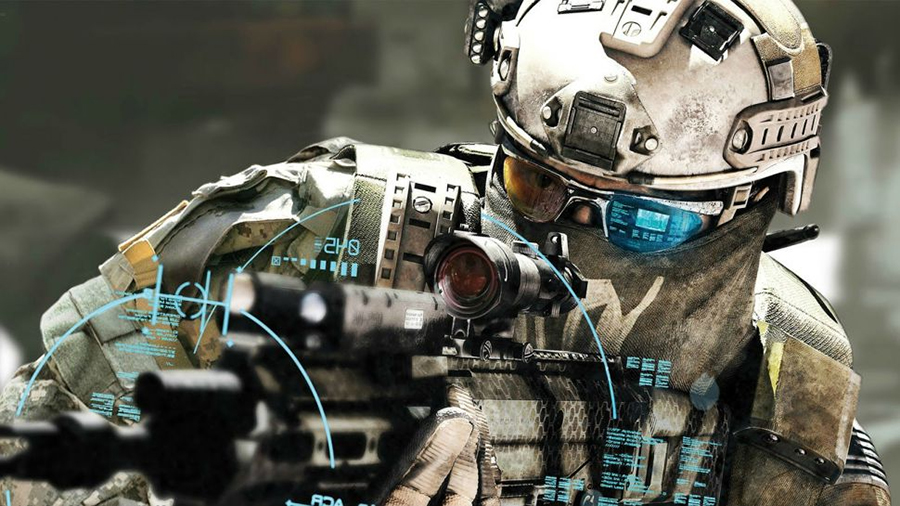
Modern warfare is undergoing a quiet but profound transformation. While headlines often focus on troop movements, geopolitical tensions, and conventional weapons, much of the real change is happening far from the battlefield, inside research facilities, laboratories, and testing grounds. As instability grows across multiple regions of the world, military planners are increasingly convinced that technological superiority—not sheer force—will define success in future conflicts. This belief has pushed military research and development into a period of renewed urgency, with massive investments aimed at reshaping how wars are fought, deterred, and prevented.
The scale of this effort is difficult to overstate. Tens of billions of dollars are being directed each year toward new weapons systems, advanced materials, autonomous platforms, and sensor technologies. These investments are not simply about replacing aging equipment. They are about anticipating threats that do not yet fully exist and preparing for forms of conflict that blur the line between physical and digital, Earth and space, human decision-making and machine autonomy. In this environment, innovation is no longer optional; it is viewed as a strategic necessity.
What makes this new wave of military technology especially notable is where it comes from. While traditional defense contractors still play a major role, many breakthroughs now emerge from university research programs, government-funded science initiatives, and small technology startups willing to experiment with unconventional ideas. These collaborations bring together physicists, engineers, biologists, computer scientists, and materials experts, often crossing disciplinary boundaries that once kept military research narrowly focused. The result is a diverse ecosystem where inspiration can come as easily from marine biology or artificial intelligence as from ballistics or aerodynamics.

Unlike past eras, when new weapons were often designed purely to increase destructive power, many of today’s technologies aim to improve precision, awareness, and survivability. The goal is not always to hit harder, but to see farther, react faster, and operate with fewer risks to personnel. Autonomous systems reduce the need to place humans in harm’s way. Directed-energy weapons promise lower costs and faster response times. Advanced sensors and adaptive materials seek to make forces harder to detect while enhancing their ability to monitor complex environments.
Much of this work is being guided and accelerated by the Defense Advanced Research Projects Agency, an organization long associated with high-risk, high-reward innovation. DARPA’s influence can be seen across air, land, sea, and space, as well as in domains that barely existed a generation ago. The technologies now under development may not all reach widespread deployment, but those that do have the potential to redefine military capability for decades.
What follows is a closer look at several emerging military technologies that illustrate this shift. Together, they offer a glimpse into a future where warfare is shaped as much by algorithms, materials science, and autonomous decision-making as by traditional firepower.
Amazing New Military Technologies
1- Self-Guiding Precision Bullets

Among the most striking developments in small-arms technology is a .50-caliber projectile capable of altering its course while in flight. Packed with miniature sensors and control mechanisms, this bullet is designed to correct for wind, movement, and other variables that normally degrade accuracy over long distances. In practical terms, it could allow even moderately trained shooters to hit moving targets with a level of precision once reserved for elite snipers.
The program, known as EXACTO, is being developed under DARPA sponsorship in collaboration with established defense manufacturers. While the exact guidance method remains classified, similar research conducted at national laboratories has demonstrated laser-guided concepts in which small fins subtly steer the round toward a designated target. Beyond accuracy, cost is a major consideration. These guided bullets are expected to be far cheaper than missiles, potentially filling roles that previously required much larger and more expensive weapons. Testing is ongoing, and operational deployment remains a future goal.
2- Autonomous Submarine Tracking Vessel

As ultra-quiet submarines become more common, particularly in coastal regions, detecting them has grown increasingly difficult. To address this challenge, DARPA has developed an unmanned surface vessel designed specifically for long-duration submarine hunting. Known as Sea Hunter, this ship operates without a crew and can remain at sea for months at a time.
Equipped with sonar, radar, and advanced navigation systems, the vessel is designed to autonomously track submarines through crowded shipping lanes and narrow waterways. By removing the need for onboard personnel, the platform reduces risk and operational costs while extending mission duration. Sea Hunter represents a shift toward persistent, unmanned naval surveillance rather than short, crew-intensive patrols.
3- Operational High-Energy Laser Weapons

Once confined to science fiction, directed-energy weapons are now moving into active military testing. The U.S. Navy has already demonstrated ship-mounted laser systems capable of disabling drones and small boats with focused beams of energy. These systems offer a compelling advantage: they can engage targets repeatedly at a fraction of the cost of conventional munitions.
On land, truck-mounted laser platforms are being developed to counter threats such as incoming mortars, rockets, and unmanned aircraft. Powered by onboard generators, these systems convert electrical energy into concentrated light capable of damaging or destroying targets almost instantly. Their speed, precision, and low per-shot cost make them attractive additions to layered defense networks.
4- Vertical-Takeoff Reconnaissance Aircraft for Ships

Smaller naval vessels have long lacked the aerial surveillance capabilities of aircraft carriers. To close that gap, DARPA’s TERN program aims to create an unmanned aircraft that can take off and land vertically from compact ship decks, even in rough seas.
The design relies on counter-rotating propellers that lift the aircraft straight up before transitioning into forward flight. Once airborne, it can conduct extended reconnaissance missions, transmitting real-time data back to the ship. Landing reverses the process, allowing recovery without large runways or arresting gear. A full-scale demonstrator is planned to validate the concept under real-world conditions.
5- Directional Plasma Blast Deflection

One of the more unconventional ideas under exploration involves using ionized air to reduce the impact of explosive blasts on military vehicles. By generating a localized plasma field, the system aims to deflect or weaken shockwaves before they strike armor, potentially reducing damage and injuries.
This concept is not intended to replace existing active-protection systems that intercept incoming projectiles. Instead, it would complement them by mitigating blast effects that cannot be physically intercepted. The technology remains experimental, but it highlights how defensive measures are expanding beyond traditional armor and interception.
6- Adaptive Camouflage Inspired by Marine Life

Traditional camouflage is increasingly ineffective against infrared and multispectral sensors. To address this vulnerability, researchers have turned to biology for inspiration. Scientists studying squid have identified a protein that allows these animals to rapidly change the reflectivity of their skin across different wavelengths.
By adapting this protein, known as reflectin, researchers hope to create materials that can dynamically alter their appearance not only in visible light but also in infrared ranges. Such technology could one day help conceal soldiers and vehicles from advanced sensors, though scaling the concept into durable, field-ready materials remains a long-term challenge.
7- Next-Generation Stealth Bomber

The future of long-range air power is being shaped by a new bomber designed to combine extreme stealth, speed, and payload capacity. Still in development, this aircraft is intended to replace aging bombers while complementing existing stealth platforms.
Research efforts focus on advanced materials capable of reducing radar detection while adapting visually to environmental conditions. Precision navigation systems, including high-grade gyroscopes, are also under development to ensure accuracy over intercontinental distances. The program represents a multi-decade investment and a cornerstone of future strategic deterrence.
8- Passive Orbital Anti-Satellite System

Rather than destroying enemy satellites with visible explosions, a more subtle approach is being explored. This concept involves a spacecraft that gradually destabilizes an adversary’s satellite by reflecting sunlight onto it, slowly increasing its temperature over time.
If successful, the target satellite would eventually lose altitude and burn up upon reentry, all without a dramatic or easily attributable event. The approach relies on basic physics rather than overt force, making detection and attribution difficult. Such systems illustrate how space has become a critical and contested domain in modern military planning.