
Why Giant Flying Boats Disappeared

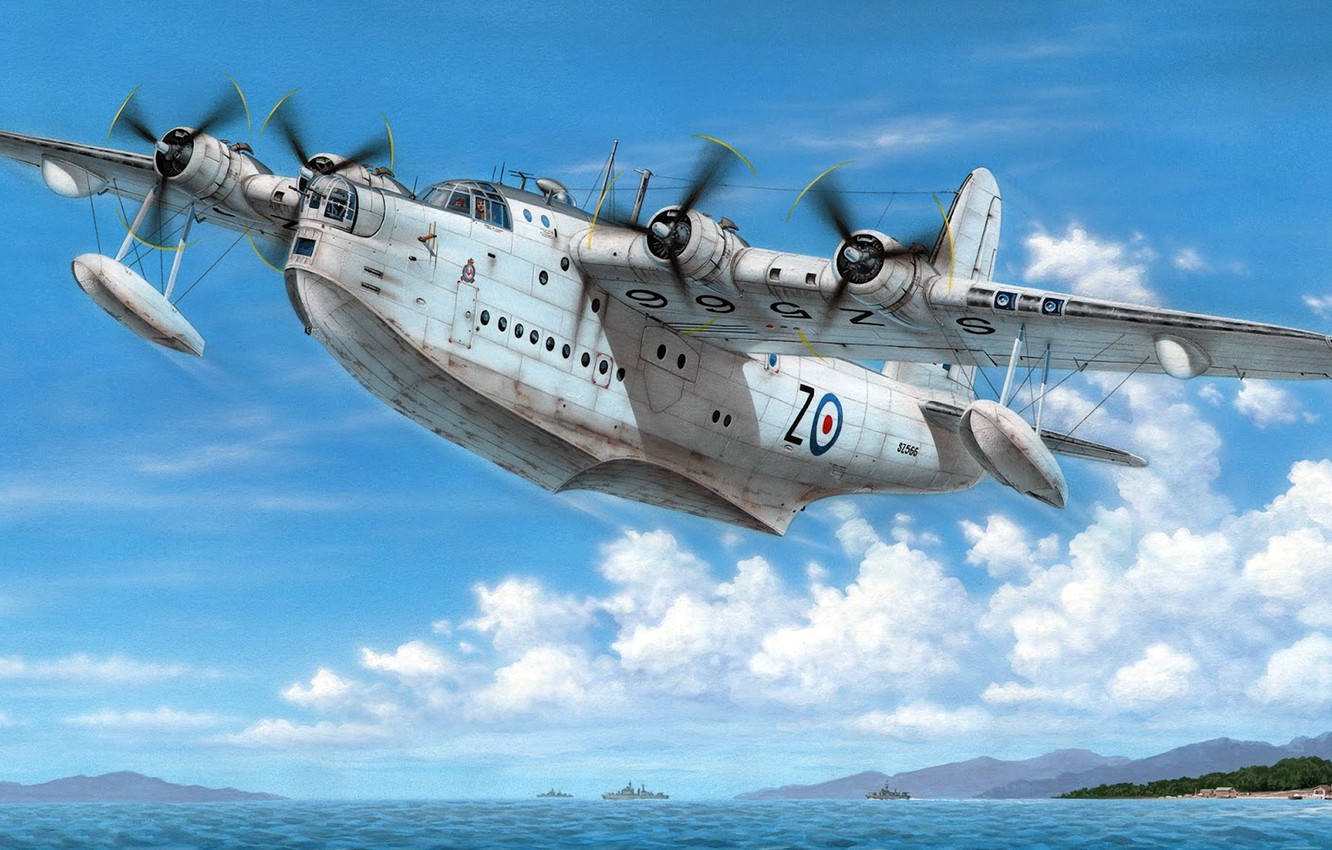
There was a time when the future of long-distance air travel didn’t point toward concrete runways and sprawling airports, but toward oceans, bays, and wide, calm harbors. In the early decades of aviation, water was not an obstacle to flight — it was the solution. Long before modern airports became common, flying boats offered a practical and surprisingly elegant way to connect continents.

The rapid development of aircraft in the 1920s and 1930s far outpaced the infrastructure needed to support them. Purpose-built runways were rare, often nothing more than grass fields suitable only for small, lightweight aircraft. Major cities lacked proper airports, and intercontinental aviation was still more ambition than reality. But commercial aviation wasn’t going to wait. Airlines needed a way to fly farther, carry more passengers, and operate safely across oceans.

Water provided that opportunity. Coastlines, rivers, and natural harbors already existed, required no expensive construction, and could support aircraft far larger than anything that could safely land on land at the time. Flying boats emerged as the bridge between early aviation limits and global ambition.

Why Flying Boats Made Sense in Early Aviation

Flying boats solved several problems at once. They removed the need for long runways, allowed aircraft to grow in size, and offered natural emergency landing options over water routes. Designers quickly realized that hull-based aircraft could be built larger and heavier than their land-based counterparts without the structural penalties of wheeled landing gear.

By the early 1930s, large flying boats were already carrying passengers across oceans. Routes that once took weeks by ship could now be completed in days. Transoceanic flight stopped being a stunt and became a scheduled service. For passengers, flying boats represented not just speed, but comfort. Cabins were spacious, noise levels were lower than early land planes, and long flights were treated more like ocean liner voyages than modern economy travel.

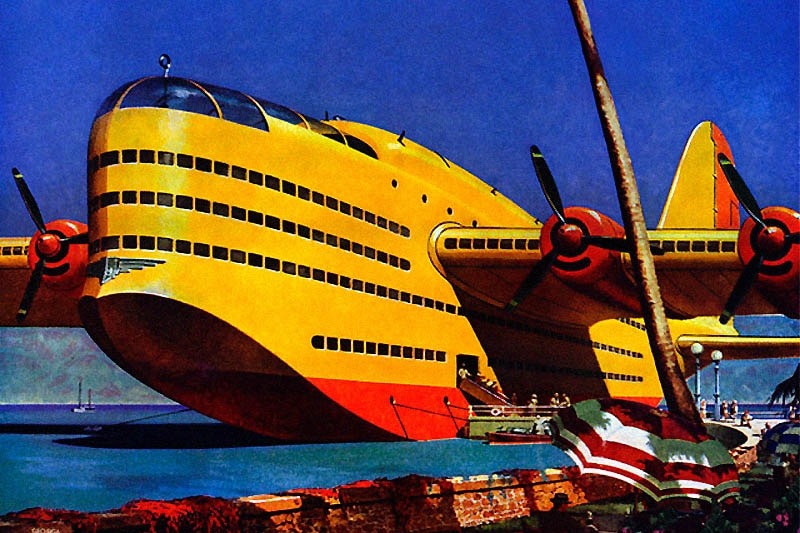
These aircraft weren’t designed for mass transportation. They were built for prestige, luxury, and technological leadership. Airlines marketed flying boats as the pinnacle of travel, complete with lounges, sleeping berths, fine dining, and attentive service. To the public, flying boats looked like the future.
The Golden Age of Giant Flying Boats

During the 1930s, flying boats reached their golden age. Aircraft such as the Boeing 314 Clipper became symbols of global connectivity. These massive machines crossed the Atlantic and Pacific, linking continents long before jet travel existed. They were engineering marvels, combining shipbuilding techniques with cutting-edge aeronautical design.

Flying boats also benefited from political and geographic realities. Many countries lacked the space, money, or stability to build modern airports, but nearly all had access to water. Colonial routes, island chains, and remote coastal cities were far easier to serve with flying boats than with land planes. As a result, flying boats became the backbone of early international air travel.

At the time, many aviation experts believed this was only the beginning. As aircraft grew larger and heavier, it seemed logical that water-based operations would dominate long-range aviation. Bigger planes needed more space, and water offered nearly unlimited runway length. For a while, the logic appeared sound.

War, Innovation, and Changing Priorities

The Second World War dramatically accelerated aircraft development. Engines became more powerful, airframes stronger, and navigation more precise. At the same time, military necessity forced governments to build proper runways, airfields, and support infrastructure across the world. Concrete replaced grass. Length replaced improvisation.

Ironically, the war that pushed aviation forward also undermined the future of flying boats. As land-based aircraft became capable of carrying heavier loads over longer distances, their advantages multiplied. Wheels became less of a limitation, and airports became strategic assets worth investing in.

Still, not everyone believed flying boats were finished.
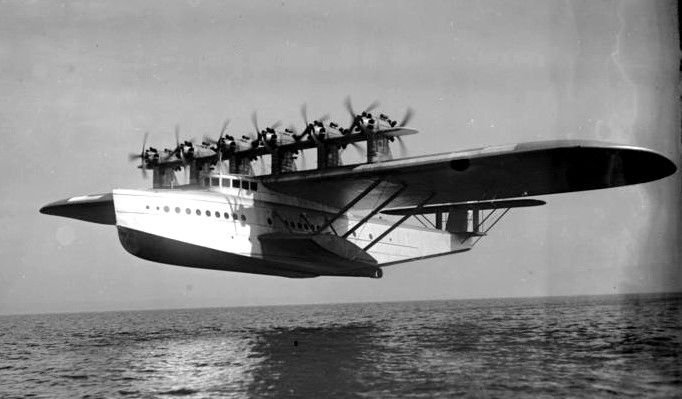
The Saunders-Roe Princess and a Future That Never Came

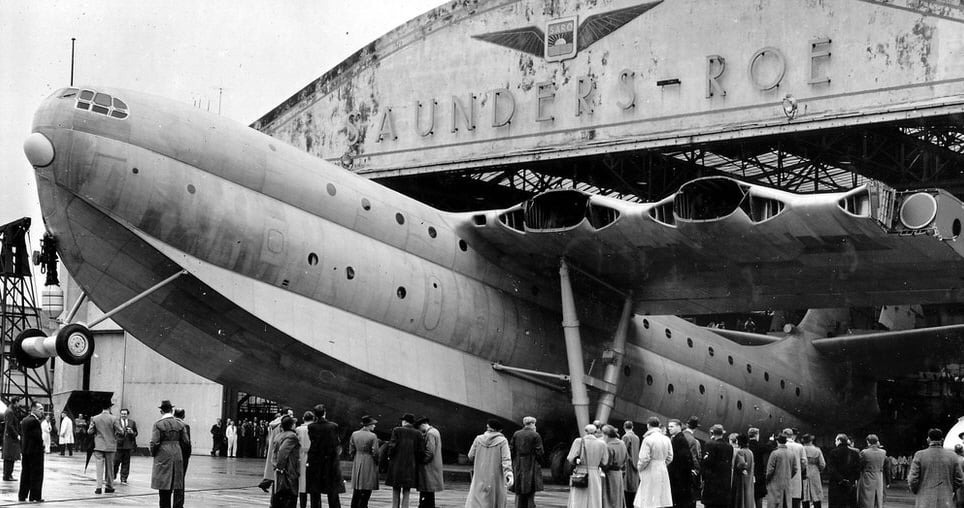
In 1943, in the middle of global conflict, British aircraft manufacturer Saunders-Roe looked beyond the war and envisioned a new era of luxury air travel. They began designing what would become the largest and most ambitious flying boat ever built: the Saunders-Roe Princess.

The Princess was intended to be a next-generation aircraft — larger, heavier, faster, and more luxurious than anything before it. It was designed to carry dozens of passengers across oceans in unmatched comfort, restoring flying boats to the top of the aviation world once peace returned.

But aviation was changing faster than designers could anticipate.

By the time the Princess finally took flight, the world had been transformed. Runways were everywhere. Airports had expanded rapidly. Land-based aircraft had improved so dramatically that they no longer needed water to support their size or range. The Princess had been built for a future shaped by pre-war assumptions — a future that no longer existed.

Why Land-Based Aircraft Took Over

As the post-war world rebuilt itself, aviation followed a very different path than flying boat designers had expected. Wartime investment had left behind a global network of long, paved runways, maintenance facilities, navigation aids, and trained ground crews. What had once been rare infrastructure was now widespread, standardized, and improving every year.

Land-based aircraft benefited immediately from this shift. Without the need for a boat-like hull, designers could focus purely on aerodynamic efficiency. Fuselages became lighter and stronger, drag was reduced, and fuel efficiency improved. Aircraft could climb higher, fly faster, and travel farther on the same amount of fuel.

Flying boats, by contrast, carried unavoidable compromises. Their hulls had to withstand repeated impacts with water, adding weight and structural complexity. Saltwater corrosion increased maintenance demands. Rough seas could delay or cancel flights, something airlines increasingly viewed as unacceptable as schedules tightened and expectations rose.

What once looked like flexibility began to look like limitation.

The Jet Age Sealed Their Fate

The arrival of jet propulsion in the late 1940s and 1950s effectively ended the debate. Jet engines favored smooth, streamlined airframes and high-speed operations at altitude — conditions that flying boats were poorly suited for. Designing a jet-powered flying boat introduced even more challenges, including spray ingestion, structural stress, and limited performance benefits.

Meanwhile, jet airliners such as the de Havilland Comet and later the Boeing 707 demonstrated that land-based aircraft could cross oceans faster, higher, and more reliably than any flying boat ever could. Passenger expectations shifted rapidly. Speed mattered more than scenery. Efficiency mattered more than elegance.

Airlines followed the economics. Airports concentrated traffic, reduced turnaround times, and simplified logistics. Water-based operations, once a clever workaround, now looked inefficient and outdated.

Operational and Economic Reality

Beyond performance, flying boats faced practical disadvantages that became harder to ignore. Docking facilities, specialized crews, and maritime support added complexity. Weather conditions on water were unpredictable, and many prime harbors became crowded with shipping traffic, creating safety concerns.

Insurance costs rose. Maintenance schedules lengthened. As passenger numbers increased and air travel moved toward mass transportation, the luxury-focused model of flying boats no longer fit the market. Airlines wanted standardized fleets that could operate from the same airports, use the same ground equipment, and follow the same procedures worldwide.

Flying boats were simply too specialized for a rapidly globalizing industry.

Military and Niche Survival

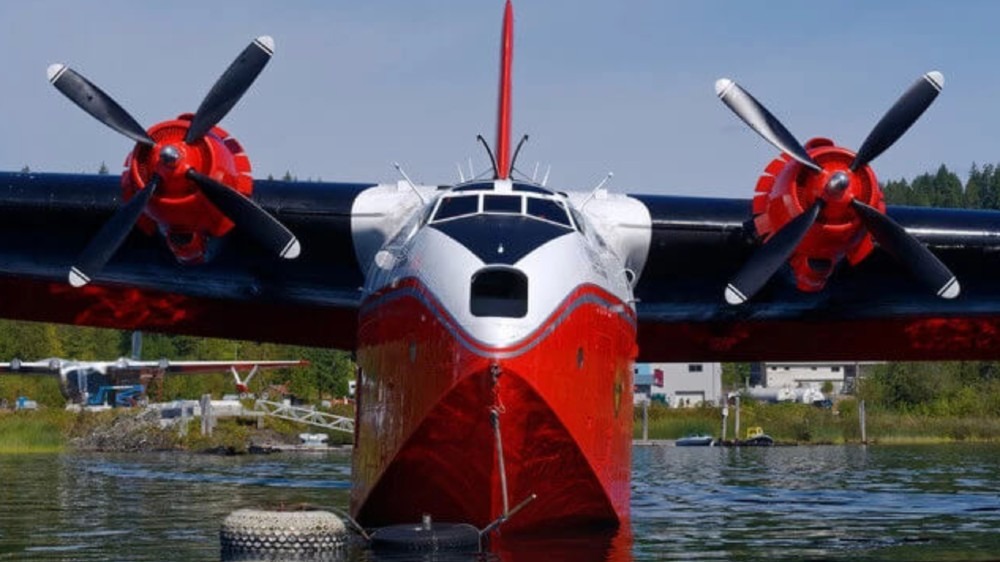
While commercial flying boats faded, they did not disappear entirely. Military roles offered a temporary refuge. Amphibious aircraft remained valuable for maritime patrol, search and rescue, anti-submarine warfare, and firefighting. These missions played directly to the strengths of water-capable aircraft.

Aircraft such as patrol flying boats and later amphibious planes proved that the concept still had relevance when flexibility mattered more than speed or efficiency. Even today, specialized amphibious aircraft are used for firefighting and remote operations where runways are unavailable.

But these roles were limited. They could not sustain the large-scale industrial ecosystem that once supported giant passenger flying boats.

Why They Never Came Back

From time to time, the idea of reviving large flying boats resurfaces. Rising airport congestion, environmental concerns, or romantic visions of oceanic travel occasionally spark renewed interest. Yet the same obstacles remain.

Modern airports, despite their flaws, are incredibly efficient. Aircraft are optimized for runway operations, and global aviation systems are built around them. Reintroducing large flying boats would require rebuilding infrastructure, retraining crews, and redesigning aircraft — all for marginal benefit.

Technology has moved on, but the basic economics have not changed. Flying boats solved a problem that no longer exists.

A Legacy Written on Water

Giant flying boats were not a dead end in aviation history. They were a necessary step in its evolution. They carried passengers across oceans when no other aircraft could. They proved that long-range air travel was possible, reliable, and even comfortable. Without them, global aviation would have taken much longer to mature.

Their disappearance was not the result of failure, but of success elsewhere. Runways improved. Aircraft advanced. The world adapted.

Today, flying boats live on in museums, photographs, and the imagination of aviation enthusiasts. They remain symbols of a brief but remarkable era when the future of flight skimmed the surface of the sea — elegant, ambitious, and ultimately overtaken by a world that moved faster than anyone expected.

Why Giant Flying Boats Disappeared

Why Giant Flying Boats Disappeared

There was a time when the future of long-distance air travel didn’t point toward concrete runways and sprawling airports, but toward oceans, bays, and wide, calm harbors. In the early decades of aviation, water was not an obstacle to flight — it was the solution. Long before modern airports became common, flying boats offered a practical and surprisingly elegant way to connect continents.

The rapid development of aircraft in the 1920s and 1930s far outpaced the infrastructure needed to support them. Purpose-built runways were rare, often nothing more than grass fields suitable only for small, lightweight aircraft. Major cities lacked proper airports, and intercontinental aviation was still more ambition than reality. But commercial aviation wasn’t going to wait. Airlines needed a way to fly farther, carry more passengers, and operate safely across oceans.

Water provided that opportunity. Coastlines, rivers, and natural harbors already existed, required no expensive construction, and could support aircraft far larger than anything that could safely land on land at the time. Flying boats emerged as the bridge between early aviation limits and global ambition.

Why Flying Boats Made Sense in Early Aviation

Flying boats solved several problems at once. They removed the need for long runways, allowed aircraft to grow in size, and offered natural emergency landing options over water routes. Designers quickly realized that hull-based aircraft could be built larger and heavier than their land-based counterparts without the structural penalties of wheeled landing gear.

By the early 1930s, large flying boats were already carrying passengers across oceans. Routes that once took weeks by ship could now be completed in days. Transoceanic flight stopped being a stunt and became a scheduled service. For passengers, flying boats represented not just speed, but comfort. Cabins were spacious, noise levels were lower than early land planes, and long flights were treated more like ocean liner voyages than modern economy travel.

These aircraft weren’t designed for mass transportation. They were built for prestige, luxury, and technological leadership. Airlines marketed flying boats as the pinnacle of travel, complete with lounges, sleeping berths, fine dining, and attentive service. To the public, flying boats looked like the future.

The Golden Age of Giant Flying Boats

During the 1930s, flying boats reached their golden age. Aircraft such as the Boeing 314 Clipper became symbols of global connectivity. These massive machines crossed the Atlantic and Pacific, linking continents long before jet travel existed. They were engineering marvels, combining shipbuilding techniques with cutting-edge aeronautical design.

Flying boats also benefited from political and geographic realities. Many countries lacked the space, money, or stability to build modern airports, but nearly all had access to water. Colonial routes, island chains, and remote coastal cities were far easier to serve with flying boats than with land planes. As a result, flying boats became the backbone of early international air travel.

At the time, many aviation experts believed this was only the beginning. As aircraft grew larger and heavier, it seemed logical that water-based operations would dominate long-range aviation. Bigger planes needed more space, and water offered nearly unlimited runway length. For a while, the logic appeared sound.

War, Innovation, and Changing Priorities

The Second World War dramatically accelerated aircraft development. Engines became more powerful, airframes stronger, and navigation more precise. At the same time, military necessity forced governments to build proper runways, airfields, and support infrastructure across the world. Concrete replaced grass. Length replaced improvisation.

Ironically, the war that pushed aviation forward also undermined the future of flying boats. As land-based aircraft became capable of carrying heavier loads over longer distances, their advantages multiplied. Wheels became less of a limitation, and airports became strategic assets worth investing in.

Still, not everyone believed flying boats were finished.

The Saunders-Roe Princess and a Future That Never Came

In 1943, in the middle of global conflict, British aircraft manufacturer Saunders-Roe looked beyond the war and envisioned a new era of luxury air travel. They began designing what would become the largest and most ambitious flying boat ever built: the Saunders-Roe Princess.

The Princess was intended to be a next-generation aircraft — larger, heavier, faster, and more luxurious than anything before it. It was designed to carry dozens of passengers across oceans in unmatched comfort, restoring flying boats to the top of the aviation world once peace returned.

But aviation was changing faster than designers could anticipate.

By the time the Princess finally took flight, the world had been transformed. Runways were everywhere. Airports had expanded rapidly. Land-based aircraft had improved so dramatically that they no longer needed water to support their size or range. The Princess had been built for a future shaped by pre-war assumptions — a future that no longer existed.

Why Land-Based Aircraft Took Over

As the post-war world rebuilt itself, aviation followed a very different path than flying boat designers had expected. Wartime investment had left behind a global network of long, paved runways, maintenance facilities, navigation aids, and trained ground crews. What had once been rare infrastructure was now widespread, standardized, and improving every year.

Land-based aircraft benefited immediately from this shift. Without the need for a boat-like hull, designers could focus purely on aerodynamic efficiency. Fuselages became lighter and stronger, drag was reduced, and fuel efficiency improved. Aircraft could climb higher, fly faster, and travel farther on the same amount of fuel.

Flying boats, by contrast, carried unavoidable compromises. Their hulls had to withstand repeated impacts with water, adding weight and structural complexity. Saltwater corrosion increased maintenance demands. Rough seas could delay or cancel flights, something airlines increasingly viewed as unacceptable as schedules tightened and expectations rose.

What once looked like flexibility began to look like limitation.

The Jet Age Sealed Their Fate

The arrival of jet propulsion in the late 1940s and 1950s effectively ended the debate. Jet engines favored smooth, streamlined airframes and high-speed operations at altitude — conditions that flying boats were poorly suited for. Designing a jet-powered flying boat introduced even more challenges, including spray ingestion, structural stress, and limited performance benefits.

Meanwhile, jet airliners such as the de Havilland Comet and later the Boeing 707 demonstrated that land-based aircraft could cross oceans faster, higher, and more reliably than any flying boat ever could. Passenger expectations shifted rapidly. Speed mattered more than scenery. Efficiency mattered more than elegance.

Airlines followed the economics. Airports concentrated traffic, reduced turnaround times, and simplified logistics. Water-based operations, once a clever workaround, now looked inefficient and outdated.

Operational and Economic Reality

Beyond performance, flying boats faced practical disadvantages that became harder to ignore. Docking facilities, specialized crews, and maritime support added complexity. Weather conditions on water were unpredictable, and many prime harbors became crowded with shipping traffic, creating safety concerns.

Insurance costs rose. Maintenance schedules lengthened. As passenger numbers increased and air travel moved toward mass transportation, the luxury-focused model of flying boats no longer fit the market. Airlines wanted standardized fleets that could operate from the same airports, use the same ground equipment, and follow the same procedures worldwide.

Flying boats were simply too specialized for a rapidly globalizing industry.

Military and Niche Survival

While commercial flying boats faded, they did not disappear entirely. Military roles offered a temporary refuge. Amphibious aircraft remained valuable for maritime patrol, search and rescue, anti-submarine warfare, and firefighting. These missions played directly to the strengths of water-capable aircraft.

Aircraft such as patrol flying boats and later amphibious planes proved that the concept still had relevance when flexibility mattered more than speed or efficiency. Even today, specialized amphibious aircraft are used for firefighting and remote operations where runways are unavailable.

But these roles were limited. They could not sustain the large-scale industrial ecosystem that once supported giant passenger flying boats.

Why They Never Came Back

From time to time, the idea of reviving large flying boats resurfaces. Rising airport congestion, environmental concerns, or romantic visions of oceanic travel occasionally spark renewed interest. Yet the same obstacles remain.

Modern airports, despite their flaws, are incredibly efficient. Aircraft are optimized for runway operations, and global aviation systems are built around them. Reintroducing large flying boats would require rebuilding infrastructure, retraining crews, and redesigning aircraft — all for marginal benefit.

Technology has moved on, but the basic economics have not changed. Flying boats solved a problem that no longer exists.

A Legacy Written on Water

Giant flying boats were not a dead end in aviation history. They were a necessary step in its evolution. They carried passengers across oceans when no other aircraft could. They proved that long-range air travel was possible, reliable, and even comfortable. Without them, global aviation would have taken much longer to mature.

Their disappearance was not the result of failure, but of success elsewhere. Runways improved. Aircraft advanced. The world adapted.

Today, flying boats live on in museums, photographs, and the imagination of aviation enthusiasts. They remain symbols of a brief but remarkable era when the future of flight skimmed the surface of the sea — elegant, ambitious, and ultimately overtaken by a world that moved faster than anyone expected.