Aviation has always attracted bold thinkers—the kind of engineers and test pilots who look at the sky and wonder what might happen if they twisted the rules a little, ignored tradition, or pushed a strange idea further than anyone else dared. Beyond the sleek commercial jets and familiar military aircraft lies a hidden gallery of unconventional machines: flying discs, inflatable wings, tail-landing fighters, floating hybrids, and stealth prototypes that look like they came straight from a sci-fi storyboard. These aren’t the aircraft most people see in airports or documentaries. They’re the experiments that challenged expectations, blurred categories, and revealed how creative aviation can become when boundaries are intentionally shattered.
Each entry in this collection earned its place not only because of how unusual it looks, but because of the daring ambition behind it. Some were built to solve very specific military problems. Others attempted to revolutionize efficiency, test extreme aerodynamics, or prove that even a tank or a balloon-shaped aircraft could—at least for a moment—take flight. A few succeeded enough to influence later technology, while others failed spectacularly but still left behind valuable lessons.
This list takes a deeper look into these extraordinary aircraft, exploring how they were built, why they existed, and what made them so unforgettable in the long story of aviation experimentation.
TOP 10 World's Most Unusual Planes
10. Bartini Beriev VVA-14
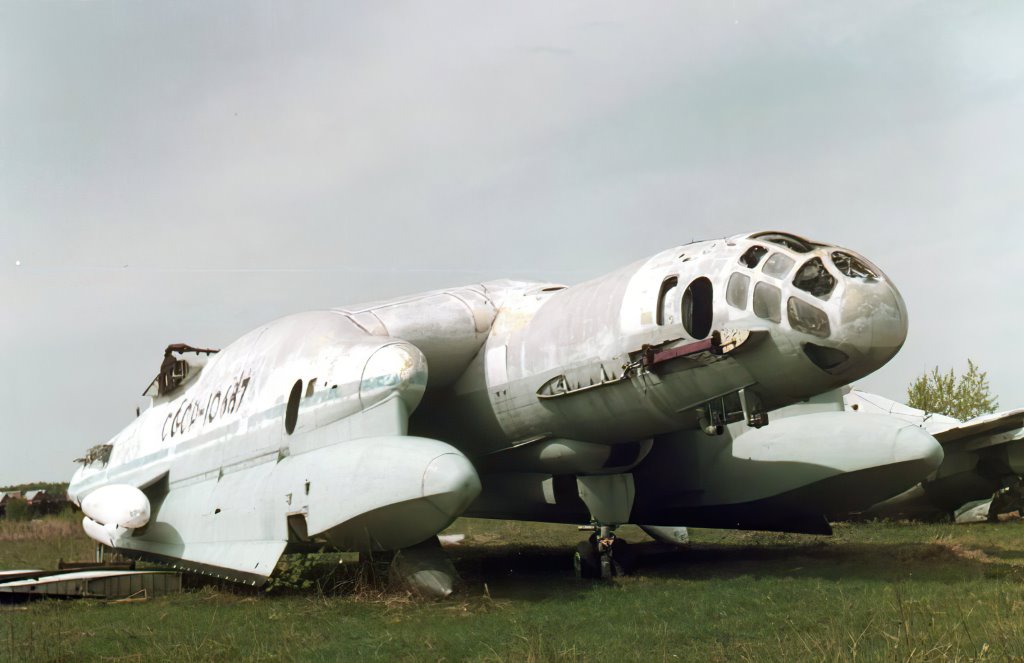
The Bartini Beriev VVA-14 stands out as one of the most ambitious Soviet aviation experiments of the early 1970s. Designed by visionary engineer Robert Bartini, this strange machine attempted to merge the capabilities of an airplane, a seaplane, and an ekranoplan into one futuristic craft. It could take off from water, skim low over waves using ground-effect lift, and theoretically launch vertically once fitted with additional lift engines—though those were never completed.
The VVA-14’s odd, pod-like fuselage and detachable wing structure gave it a distinctive silhouette that looked half submarine, half aircraft. Engineers hoped it could patrol vast coastal waters and counter NATO submarines, offering range and versatility no other aircraft had. But as development dragged on and its complex systems proved difficult to perfect, the full vision never materialized. Only a handful of prototypes flew, each revealing promising lift characteristics but also major control challenges. Today, the surviving frame sits in a museum, a reminder of how bold Cold War experimentation could become when engineers were encouraged to chase seemingly impossible ideas.
9. AD-1 Oblique Wing
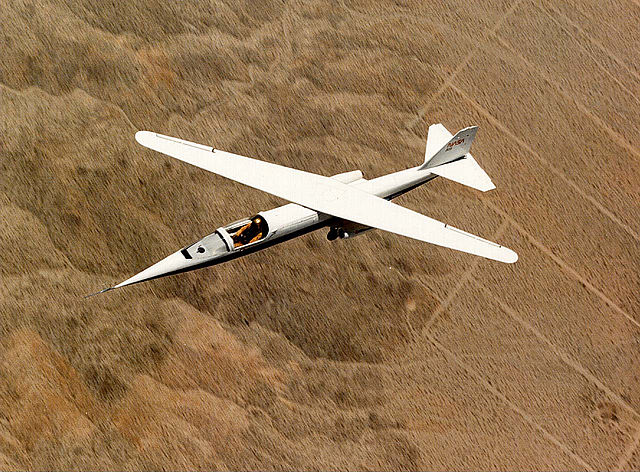
The AD-1 Oblique Wing was born from one radical concept: a pivoting wing that could rotate dramatically during flight to reduce drag and improve fuel efficiency. NASA and Ames Research Center invested in this unusual idea in the late 1970s and early 1980s, believing that an asymmetric wing sweep might give high-speed performance without sacrificing low-speed handling.
During tests, the wing could rotate to nearly 60 degrees, giving the aircraft a surreal, skewed appearance in the sky—almost like it was trying to twist itself mid-air. While the aerodynamic theory proved sound, the reality of flying such a machine was a different story. Test pilots reported that the extreme wing angle created unsettling flight characteristics, including sluggish responses and odd yaw movements. The small research aircraft was never meant for operational use, but it provided enormous insight into swept-wing aerodynamics, eventually influencing future design studies and stealth aircraft research.
8. Tacit Blue
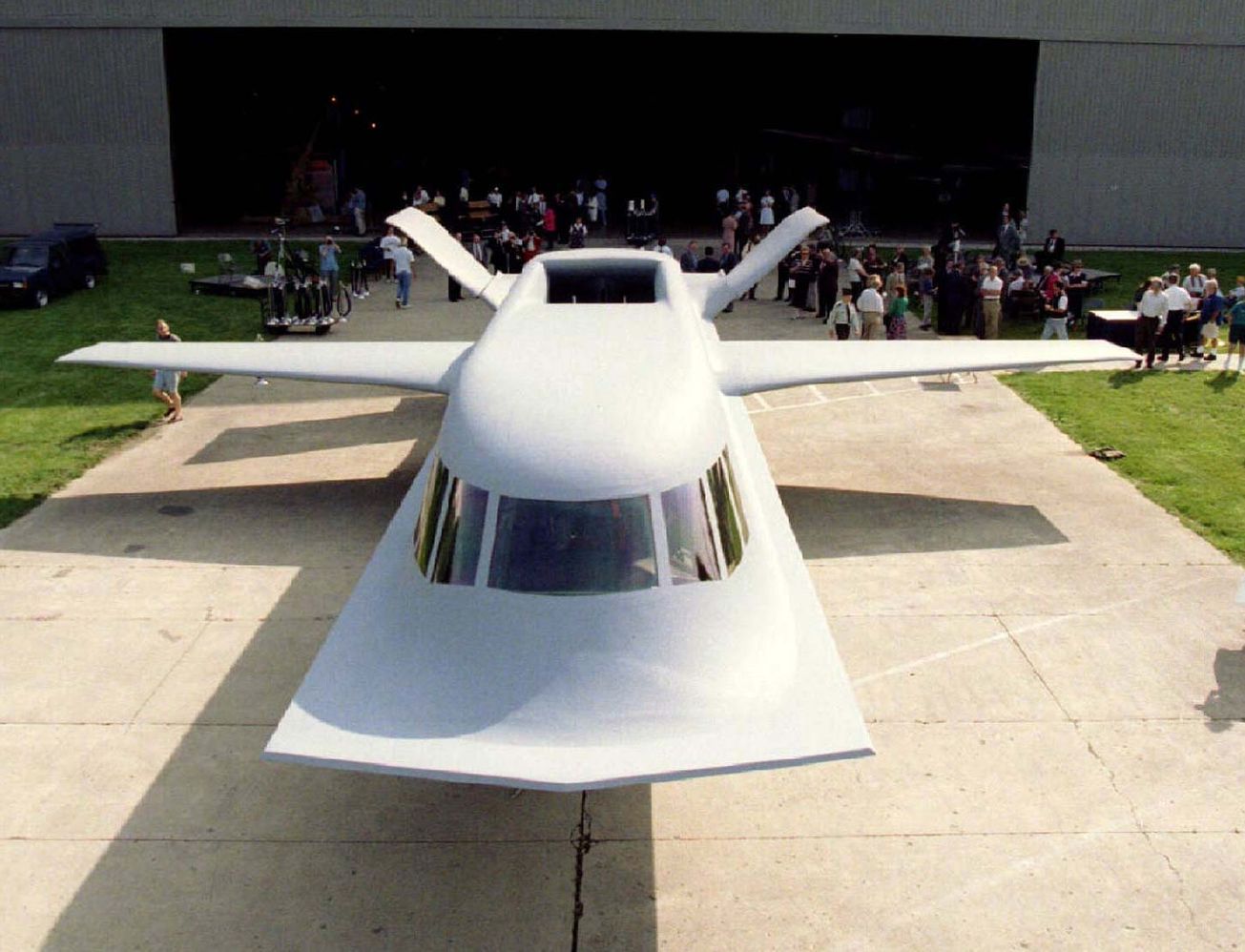
Tacit Blue, sometimes nicknamed “the whale” or “the alien school bus,” remains one of the strangest stealth prototypes ever flown. Developed in the early 1980s under a secret U.S. Air Force program, the aircraft featured a boxy, bulbous body designed to scatter radar waves rather than glide smoothly through them. Its curved sides, awkward proportions, and unconventional air intakes made it look more like an experimental pod than a tactical reconnaissance aircraft.
What Tacit Blue lacked in elegance, it made up for in innovation. It tested surveillance technologies that would later influence the design of the B-2 Spirit stealth bomber. Its unusual shape allowed it to loiter quietly above battlefields, providing continuous radar updates without giving away its position. The program stayed classified for many years, and only after declassification did the public learn how pivotal this “weird-looking” machine was in shaping modern stealth warfare. Though it never entered mass production, its breakthroughs changed the way designers approached low-visibility aircraft.
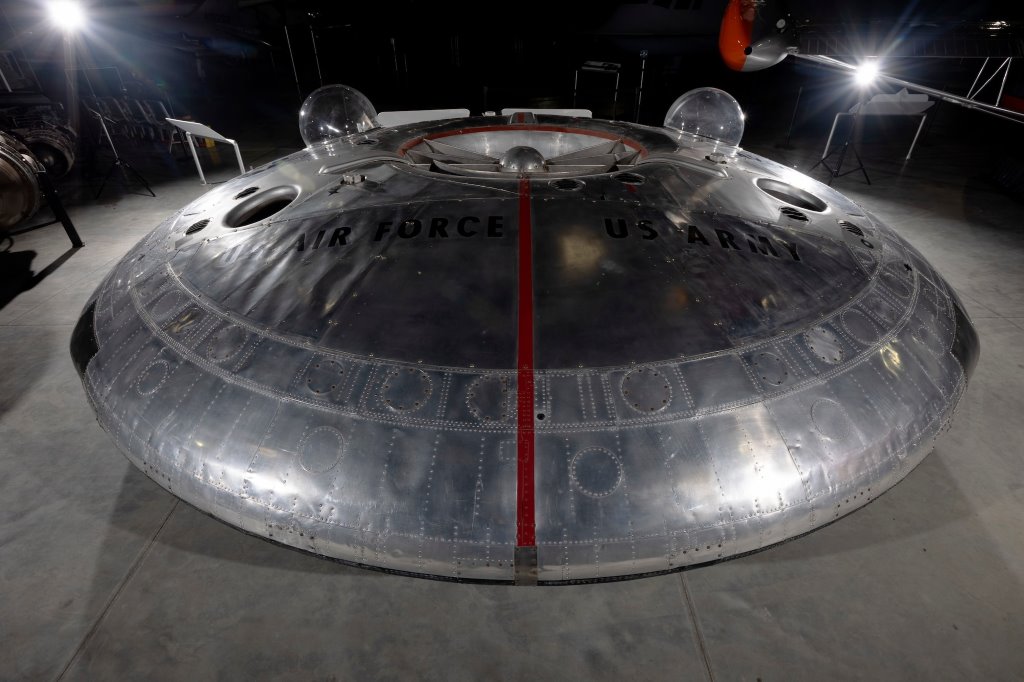
7. Avro Canada VZ-9AV Avrocar
The Avrocar was perhaps the boldest attempt to build a genuine flying saucer. Developed in the 1950s during a period of intense fascination with both UFOs and vertical takeoff technology, the Canadian engineers behind the project envisioned a circular aircraft that could hover like a helicopter and zip through the air like a fighter jet. Its central turbo-rotor was meant to generate lift across the entire disc, creating smooth, stable airflow.
In reality, the craft struggled with stability from day one. During tests, the Avrocar wobbled, drifted, and oscillated uncontrollably whenever engineers attempted to lift it higher than a few feet off the ground. This “air cushion” effect meant it could only float hover-craft style, never achieving the agile flight originally promised. Still, the project offered valuable data on vertical-lift concepts, and even today the Avrocar remains a favorite among aviation enthusiasts simply because it embodied the sci-fi dreams of its era.

6. McDonnell XF-85 Goblin
The XF-85 Goblin was one of the most imaginative and impractical ideas in Cold War aviation. Designed to be carried inside a larger bomber—the B-36 Peacemaker—this tiny fighter was meant to be deployed mid-air to defend bombers from enemy aircraft deep behind enemy lines. Once the threat was gone, the Goblin would latch back onto the bomber using a retractable hook system.
On paper, it was clever. In practice, it was chaotic. Pilots found re-docking to be incredibly dangerous, especially in turbulent air. The Goblin bounced, swung unpredictably, and narrowly avoided striking the host aircraft multiple times during tests. Although it demonstrated decent maneuverability once released, the enormous risks involved in retrieval sealed its fate. Only two prototypes were built, both serving as fascinating examples of how far engineers were willing to go to solve long-range escort problems before aerial refueling and long-range fighters rendered such ideas unnecessary.
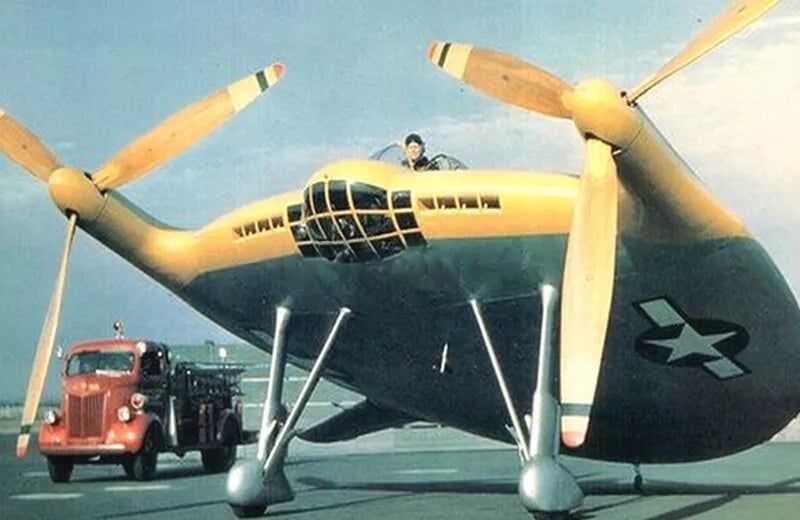
5. Vought V-173
Known affectionately as the “Flying Pancake,” the V-173 was a compact, disk-shaped aircraft created during World War II to explore extreme short-takeoff performance. Its entire body acted as a lifting surface, which meant the aircraft could generate significant lift even at very low speeds. This made it ideal for operations from small naval decks or improvised runways where conventional fighters struggled.
Pilots who flew the V-173 often described it as surprisingly stable, almost glider-like despite its unusual shape. Its propellers were positioned at the wing tips to maintain smooth airflow and minimize drag. While testing went well and the craft demonstrated real potential, the Navy ultimately decided that conventional aircraft designs were advancing fast enough that a radical new airframe wasn’t worth transitioning into production. Even so, the Flying Pancake remains one of the most visually striking experimental planes ever built.
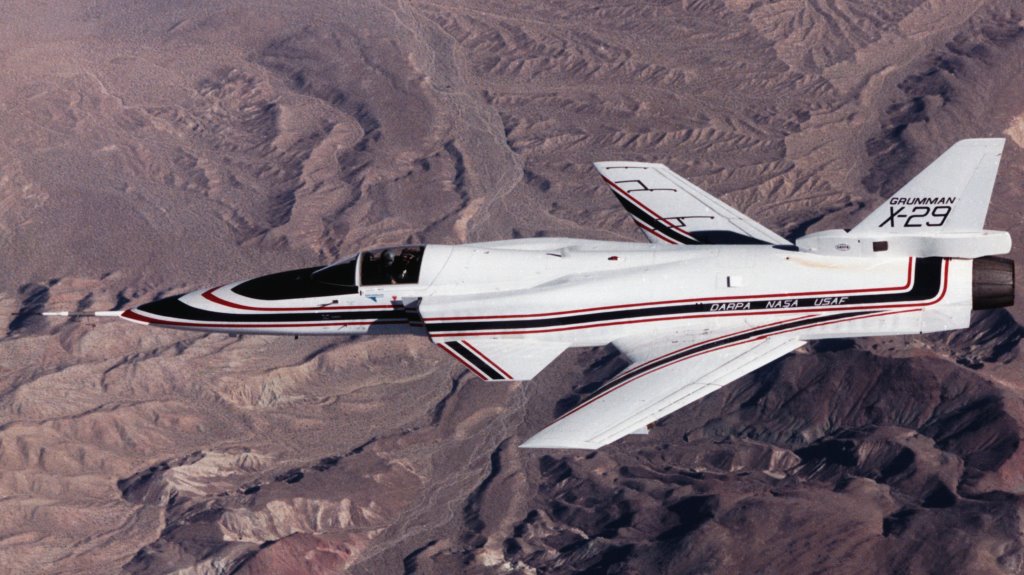
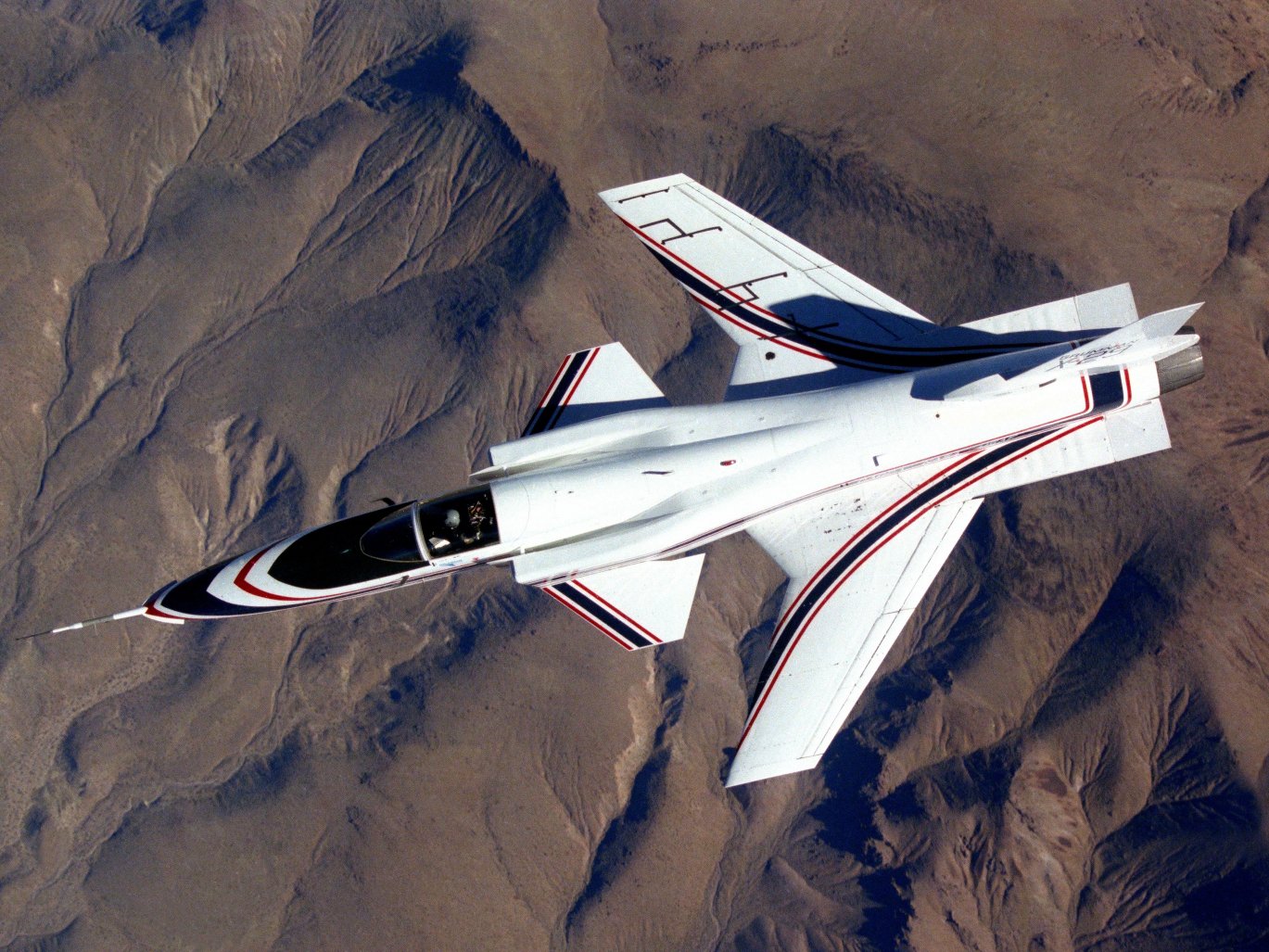
4. X-29 Forward Swept Wing Jet
The X-29 looked like an optical illusion in motion thanks to its wings sweeping forward rather than backward. This unconventional configuration promised superior maneuverability, reduced drag, and enhanced agility at high angles of attack—qualities fighter jets desperately pursue. But to make such a wing stable, the aircraft required highly advanced computers constantly making micro-adjustments to keep it flying straight.
This dependence on computer-controlled stability meant a single failure would make the jet uncontrollable for a human pilot. Despite this, the X-29 performed remarkably well in tests throughout the 1980s and helped pave the way for fly-by-wire systems used in modern jets. Its composite materials also demonstrated how lightweight structures could withstand aerodynamic forces that would destroy traditional wings. Although it never became an operation-ready fighter, the knowledge gained from the X-29 continues to influence next-generation aircraft design.
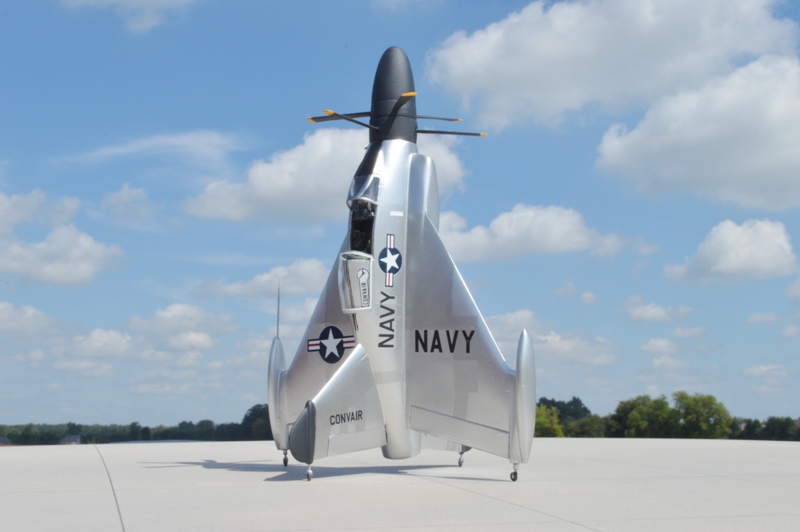
3. Convair XFY-1 Pogo
The Convair Pogo was an attempt to merge the vertical landing capabilities of a helicopter with the speed of a fighter jet. It took off vertically on its tail, climbed like a rocket, then transitioned to horizontal flight. When returning to land, the pilot had to rotate the aircraft back upright and descend tail-first onto its landing gear.
This maneuver required incredible precision, essentially forcing pilots to land while looking over their shoulders toward the ground. Although engineers admired the twin-propeller power and the Pogo demonstrated impressive climb rates, the impractical nature of vertical tail landings eventually killed the project. Still, it remains a remarkable attempt to solve logistical problems like operating fighters from small or improvised locations without the need for long runways.
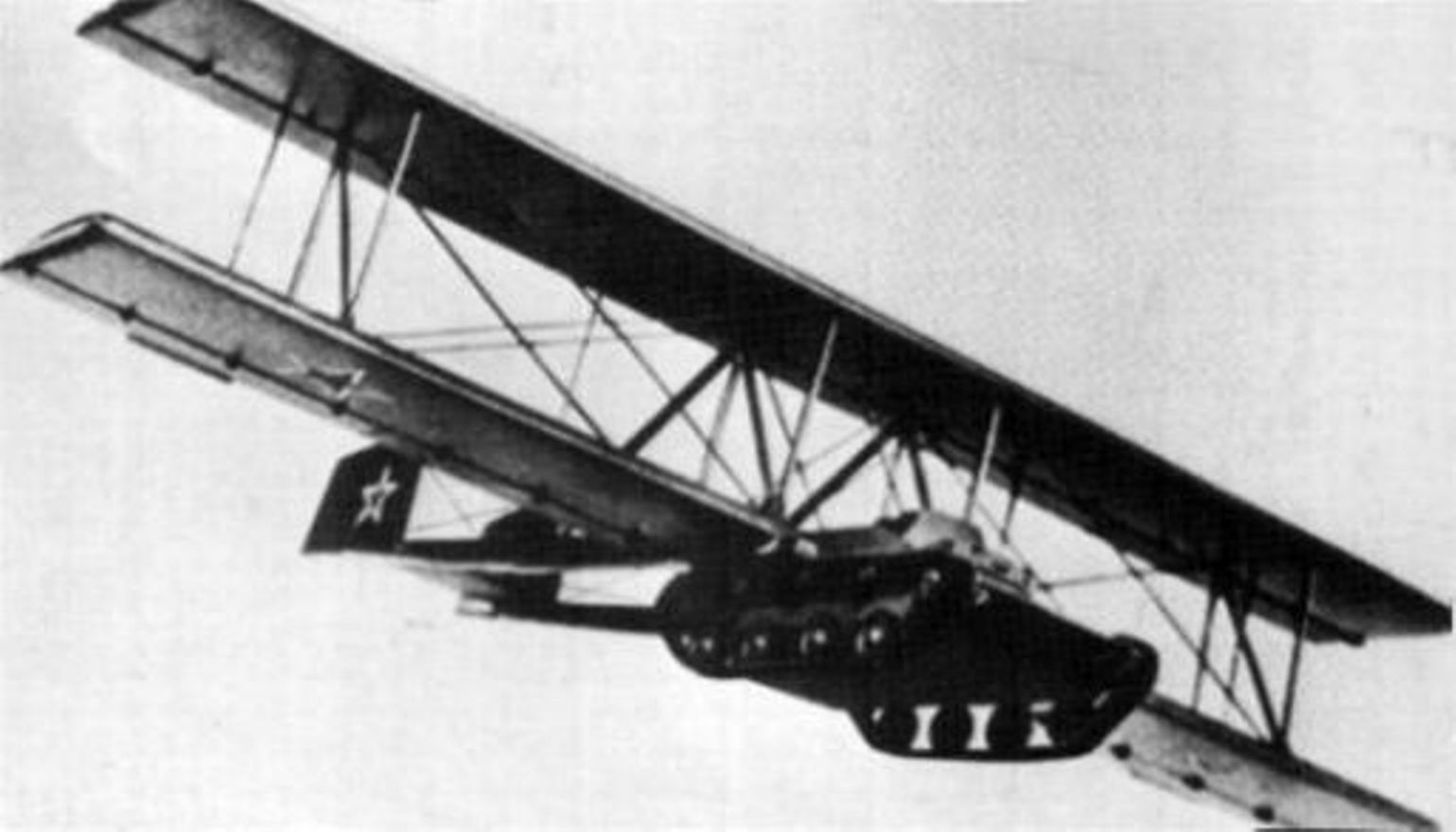
2. Antonov A-40
The Antonov A-40 stands alone as the world’s only attempt at creating a “flying tank.” Soviet engineers in the 1940s attached massive wooden wings and a tail assembly to a modified light tank, hoping it could glide into battle behind friendly aircraft. The goal was to deliver armored vehicles directly to remote front lines without waiting for roads or transport convoys.
In its one and only test, the A-40 managed to lift off while towed by a bomber, but the drag was so immense that the towing aircraft risked stalling. The pilot of the tank released the tow cable early, gliding and landing safely—but clearly demonstrating that the idea was unworkable. The concept was abandoned, but remains an unforgettable symbol of wartime creativity pushed well beyond practical limits.
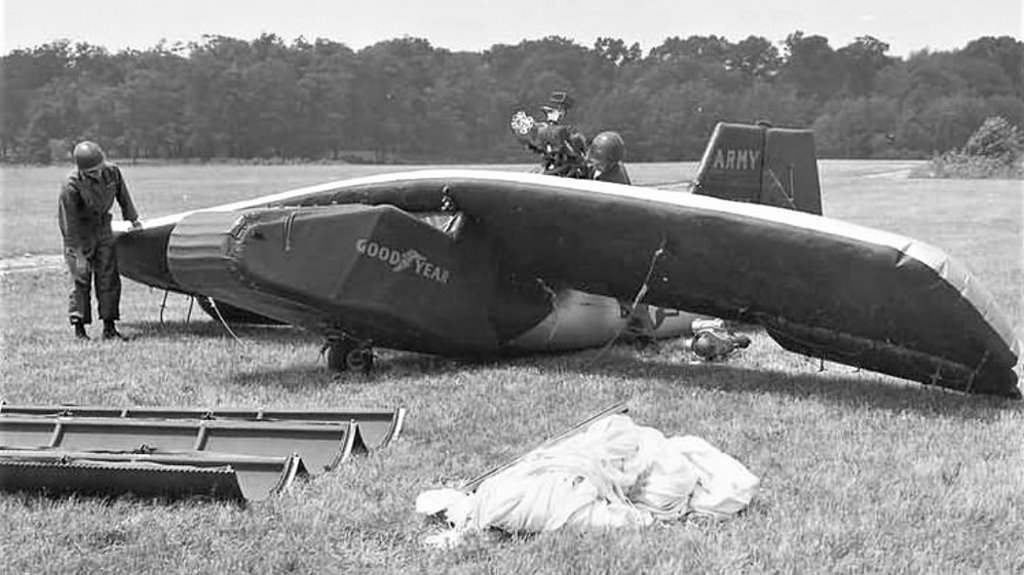
1. Goodyear Inflatoplane
The Goodyear Inflatoplane was one of the strangest aviation experiments of the 1950s: a fully inflatable aircraft made of rubberized fabric stretched over a collapsible frame. It could be packed into the trunk of a vehicle, assembled quickly, and filled with air like an oversized balloon before takeoff. Once airborne, it performed surprisingly well, reaching altitudes up to 16,000 feet and speeds over 70 mph.
Its potential military use included rescue missions behind enemy lines, rapid deployment, and even covert transport. But its major flaw was obvious: a single puncture could compromise the entire structure. Despite attempts to reinforce the material and create multi-chamber redundancy, the Inflatoplane was ultimately judged too fragile for serious service. It remains one of the most unusual and ambitious ideas from an era filled with bold experimentation.